LR - Experts & Thought Leaders

















Latest Lloyd's Register news & announcements

Helm Operations has announced that nine electronic record books within Helm CONNECT Logbook have been officially approved for use in accordance with MARPOL requirements by both Lloyd’s Register and the Republic of the Marshall Islands. This dual certification confirms that Helm CONNECT’s electronic record books meet the standards outlined under MARPOL, the NOx Technical Code 2008, and the Ballast Water Management Convention. It provides operators with a certified, compliant alternative to paper logbooks — supporting the maritime industry’s broader transition toward digital documentation and streamlined compliance management. Compliance for maritime operators “Our mission has always been to reduce inefficiency and simplify compliance for maritime operators,” said James Wadsworth, CEO of Helm Operations. He adds, “These certifications are a powerful validation that digital recordkeeping isn’t just the future — it’s ready for real-world use right now.” Nine Helm CONNECT record books The following nine Helm CONNECT record books are now certified for use by Lloyd’s Register on Marshall Islands–flagged vessels: Oil Record Book, Part I – Machinery Space Operations Oil Record Book, Part II – Cargo/Ballast Operations Garbage Record Book, Part I Garbage Record Book, Part II Cargo Record Book Ozone-Depleting Substances Record Book Record Book of the Tier and On/Off Status of Marine Diesel Engines Record Book of Engine Parameters Record Book of Fuel Oil Changeover Operations The approval is now officially listed on the Republic of the Marshall Islands’ website, reinforcing Helm CONNECT’s standing as a trusted compliance platform for global operators seeking to modernise their fleet management systems.

The Maritime Standard recently held its most successful Tanker Conference yet, as over 400 delegates registered to attend in person at the Atlantis, the Palm, Dubai on Thursday October 25th. The tenth conference in this series, which had the theme “Tanker Shipping Negotiates Challenging Market Headwinds’ was dominated by market uncertainties, caused primarily by geopolitical factors. Impact on tanker shipping Conference editor, Clive Woodbridge, said: “During the morning session, the word ‘uncertainty’ was heard so many times I lost count! There is no doubt that external factors are having a great impact on tanker shipping right now, with new tariffs and port charges, sanctions, the trade tensions between the USA and China, conflicts in Gaza and Ukraine, the IMO’s pause on net zero regulations and the fast pace of technological change all coming into the mix." "Rarely if ever have tanker shipping executives had to make strategic decisions against a backdrop of such volatility and unpredictability.” Importance of tanker shipping This year’s keynote speakers were HE Sheikh Khaled Al Sabah, Acting CEO of Kuwait Oil Tanker Company (KOTC) and Dr Ibrahim Al Nadhari, CEO of ASYAD Shipping & Drydocks. Sheikh Khaled noted the fast pace of change driven by geopolitics, particularly highlighting the impact of sanctions and the presence of the so called ‘dark fleet’. But positively, he stressed the continued importance of tanker shipping as the “backbone of oil supply chains.” Geopolitics was one of a number of factors that Dr. Al Nadhairi said were keeping him awake at night, along with operational disruptions, insurance premiums, regulatory compliance and market volatility. His overall message was that there is a clear need to balance operational actions with long-term strategic planning. “This is key to navigating uncertainties and sustaining profitability in a volatile market,” he added. Long-term commitment to decarbonisation Other panelists in the first session of the conference, which focussed on sustainable strategies to combat uncertainties, included Abdul Bari Alzubaidi, Senior Vice President, Ship Management, ADNOC Logistics & Services; Ali Abouda, Group Financial Officer, Gulf Navigation Holdings; Nafeesa Moloobhoy, Managing Director, Moloobhoy Group of Companies; Navin Kumar, Director, Drewry Maritime Research; Bard Poulsson, Senior Vice President, Lockton; Captain Ankara Arora, Global Market Leader, Tankers, Bureau Veritas Marine & Offshore; and Dipak Karki, Managing Director, DK2. Abdul Bari stressed the need for a long-term commitment to decarbonisation but said there was a need to strike a balance with commercial day-to-day business requirements. Ali Abouda made the point that, “You can no longer separate geopolitics from shipping profit and loss forecasting,” echoed by Navin Kumar who argued that “Geopolitics is now driving tanker earnings more than market fundamentals.” He presented the audience with a ‘World Uncertainties Index’ which not surprisingly had risen sharply, almost off the scale, during 2025. Session 2 in the afternoon, was expertly moderated by Ali Shehab, Global Director of Special Projects at DNV, who was joined on stage by Richard De Vries, Vice President, Business Development, Lloyds Register; Han Ning, General Manager, ShipBid.Net; Captain Gargan Dhillon, CEO (Dubai), West of England P&I Club; Katherine Yakunchenkova; General Manager, Al Safina Security; Captain Onur Yildrim, Marine General Manager, Advanced Polymer Coatings; Alexandra Burke, CEO, K2 Bunker Fuel Supply; Roger Harfouch, Sales Director, Marlink Communications; Captain Vikas Pandey, Founder and CEO of Shipfinex; and Ramee Rashid, Director, Seamaster Maritime Group. Focus on green shipping Collectively, these panelists discussed how best to boost operational efficiency while maintaining a focus on green shipping. Alexandra Burke argued that the bunker sector can no longer afford to separate profitability from environmental accountability and urged collaboration between stakeholders to reshape bunker trades for a sustainable market future. Han Ning said she believed market volatility can create both risk and opportunities for tanker shipping. “Crises should be seen as being an opportunity to strengthen market position, build flexibility and capitalise on global shipping trade dynamics,” she suggested. Embrace insurance strategies Gagan Dhillon stressed the need for companies to embrace insurance strategies. This he said would “help mitigate the financial impact of operational disruptions, while supporting long-term planning for fleet renewal and green investments.” Reflecting on the positive impact of the 2025 Tanker Conference, TMS Managing Director, Trevor Pereira, added, “It was fantastic to have a packed house right through to the end this year and to hear so many high-quality presentations. Everyone is battling with the unpredictability of market conditions, and this was a terrific opportunity for people to discuss strategies and network to evaluate ways of combating this unprecedented period of instability in the markets.”

The Port Authority of Valencia (APV) has renewed its Port Environmental Review System (PERS) certification from the European Sea Ports Organisation (ESPO), the most widely recognised environmental standard in the European port sector. Valenciaport was the first European port to obtain this certification in 2003, and this year it has been renewed for the eighth consecutive time. This distinction highlights the port’s environmental management and the joint efforts of the entire port community to move towards a more sustainable model. The president of the APV, Mar Chao López, emphasised that this ‘endorses the path we are taking towards Valenciaport’s zero emissions target, reconciling the reduction of environmental impact with commercial and technological growth’, and that it is in line with the 2035 Strategic Plan, which includes promoting sustainable growth and innovation among its objectives. A commitment that is measured and improved PERS certification attests to transparency and continuous improvement in environmental management at ports, and compliance is independently assessed by Lloyd’s Register, an international organisation specialising in maritime engineering and technology. The certificate is valid for two years, after which it is reviewed to ensure that the port continues to meet the required standards. Valenciaport is an active member of EcoPorts, the leading environmental network in the European port sector, which brings together more than 100 ports from 25 countries committed to sustainability and cooperation on environmental issues. Sustainable growth and innovation The APV’s actions are carried out under the premise of reconciling growth with sustainability. Its Ecoport programme, in which numerous companies from the port community participate, establishes common environmental objectives, such as the implementation of energy and environmental management systems, the calculation of carbon footprints and the transparent communication of results to society. Valenciaport is registered with the European Union’s Eco-Management and Audit Scheme (EMAS) and has an energy management system certified under the ISO 50001 standard. It was also the first Spanish Port Authority to register the carbon footprint of a port facility with the Ministry for Ecological Transition. The 2035 Strategic Plan, presented this year, reinforces this sustainable and digital vision. Among its goals, it aims to concentrate 45% of the Spanish port system’s import and export container traffic, create 80,000 direct and indirectjobs, and consolidate Valenciaport as a benchmark for innovation and energy transition in the Mediterranean.
Insights & Opinions from thought leaders at LR
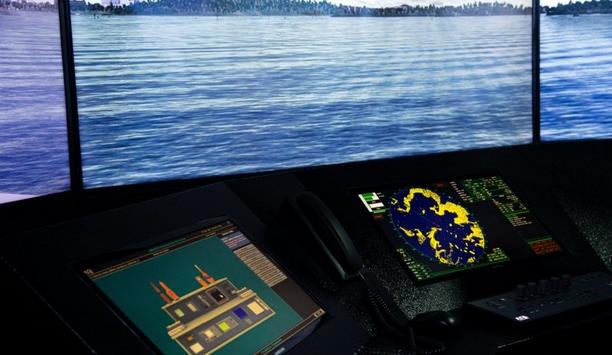
More than almost any trend, decarbonisation is driving the future of maritime. That reality alone makes decarbonisation the perfect topic for our first-ever Expert Panel Roundtable column. Traditional maritime fuels, like heavy fuel oil, release harmful pollutants that contribute to air pollution and have adverse health effects. We have to do better, and discussions in the maritime industry centre on which combination of alternative fuels and other technologies can solve the shorter- and longer-term challenges of decarbonisation. For an update on the various approaches, we asked our Expert Panel Roundtable: What are the latest maritime technology trends in decarbonisation?

Fleet planning as a strategic asset
Download