Viking Life Saving Equipment Limited - Experts & Thought Leaders










Latest Viking Life Saving Equipment Limited news & announcements

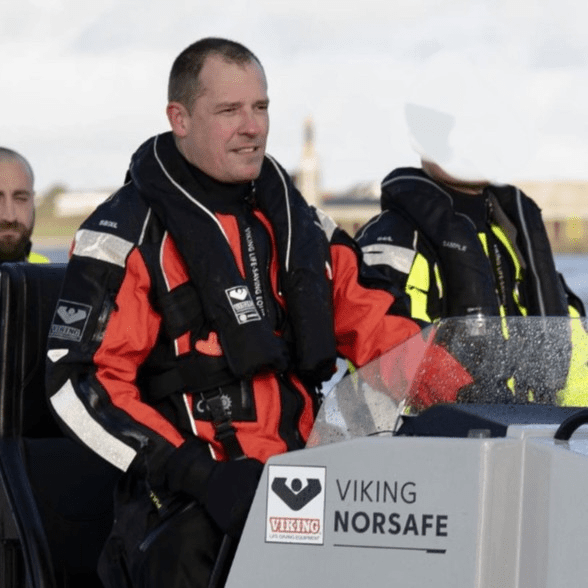
VIKING Life-Saving Equipment, a global pioneer in maritime safety solutions and supplier of high-performance boats for professional applications, has signed a contract with Tolletaten (the Norwegian Customs Service) to deliver a new fleet of cutting-edge patrol and fast response craft. The new boats will strengthen Tolletaten’s maritime capabilities and support its law enforcement and inspection duties in Norwegian waters. The contract further reinforces VIKING’s position as a trusted partner to Nordic authorities and maritime professionals worldwide. The agreement covers the delivery of four VIKING Norsafe boats including one Marathon S-900, powered by twin 350 HP Mercury engines, and three Munin S-1400 patrol boats, each equipped with triple 500 HP Mercury engines. Purpose-built for demanding professional operations Combining speed, control and endurance, the boats are purpose-built for demanding professional operations. Deliveries are scheduled for 2026 and 2027, with options for additional vessels. The total contract value is approximately NOK 43 million. “We would like to commend Tolletaten for a procurement process that has been both thorough and constructive, with valuable input from users and clear dialogue throughout,” says Eirik Møllergaard, Sales Manager at VIKING Life-Saving Equipment. He adds, “Succeeding on this tender is a recognition we value highly, and we look forward to delivering vessels that will support Tolletaten’s important work in Norwegian waters.” Designed for speed, control and reliability Designed for speed, control and reliability, the VIKING Norsafe Marathon and Munin series are purpose-built for professional maritime operations. Their advanced hull designs, combined with powerful Mercury propulsion systems, ensure rapid acceleration and precise manoeuvring in challenging sea conditions. Both models feature shock-mitigation technology and flexible deck layouts to support maritime law enforcement and patrol operations, where endurance and crew safety are paramount. The boats will be built at VIKING’s production facilities in Arendal, Norway, combining Norwegian design heritage with world-class safety and performance standards.

Regularly assessing the condition of lifeboats and related equipment is crucial to ensuring safety at sea. A new iPad-based inspection and reporting solution from VIKING will enhance the accuracy, consistency, and timely delivery of servicing documentation. Standard industry practice for lifeboat servicing relies on inspection reports that are compiled after the inspection has taken place. Aside from the wait customers can experience for relevant documentation to arrive, post-event reporting poses a risk for consistency, while accuracy may vary depending on the experience and workload of the engineer. iPad-based lifeboat servicing solution A new iPad-based lifeboat servicing solution being implemented by VIKING for 2021 looks to overcome these issues by creating a standard reporting format that builds-in consistency and can deliver the service documentation inspection report immediately. David Torres, VIKING’s global service director for boats and davits, explains. “Current reporting methods for lifeboat servicing take time and could also be improved in terms of uniformity,” he says. “With our new system, our engineers use a digital checklist to follow a standardised process and issue documentation on the spot, allowing the customer to resume operations without delay.” Rules of reporting Documentation adheres to VIKING’s ‘rules of reporting’, Torres adds, which state that all service technicians must describe why they were on board the vessel, what they found during their visit, what they did to rectify any issues and what the result of their actions was. The client thereby gains detailed and transparent insight into the procedure. Transparency is key While inspecting onboard equipment, the technician assigns each item a value from one to five Further clarity is achieved through VIKING’s rating system. While inspecting onboard equipment, the technician assigns each item a value from one to five, with ‘1’ denoting ‘possible unsafe condition’ and ‘5’ ‘new condition’. Each rating is in turn linked to a response, so a product that receives a rating of 1 requires ‘immediate action’, while equipment rated 4 or 5 requires ‘no action’. Ratings of ‘2’ to ‘3’ call for ‘follow-up service’ and ‘minor action’, respectively. “Conventional practice is more black and white,” says Torres. “If you simply tell the client, ‘This winch is in poor condition; it needs replacing,’ or, ‘It’s fine; you don’t need to do anything,’ you’re not giving them the full picture, and they will wait until something goes wrong and end up having to pay for expensive emergency repairs.” More proactive means more productive In contrast, VIKING’s proactive approach helps the client to plan and budget for maintenance work before the next inspection, avoiding unforeseen outlays and equally costly downtime. “By providing more specific feedback, we are moving away from OK – not OK and reactive maintenance towards condition monitoring, which will ultimately help in preparing the vessel’s maintenance budget, save our customers time and money while improving the operational safety,” says Torres. Moreover, thanks to VIKING’s multibrand approval and comprehensive product knowledge, the same proactive maintenance service can will be applied to third-party equipment as well as their own OEM products. The system is currently being rolled out across VIKING’s global network and is due to go live in early 2021.

Ship fires are on the rise, posing serious risks to crews, vessels, and operations. Ensuring the firefighting equipment meets the latest safety standards is not just essential — it’s lifesaving. The latest update to the Marine Equipment Directive (MED), (EU) 2024/1975, mandates significant changes to the approval and use of firefighting suits onboard European vessels. Here's what they need to know to stay compliant and protect the crew. Key regulation updates From August 2024: All new firefighting suits placed on the market or onboard vessels must comply with the EN469:2020 standard. From June 2025: All new firefighting suits placed on the market and onboard EU vessels must meet level 2 classification for enhanced protection in high-risk firefighting situations. What does this mean for shipowners? Supplementing or replacing suits with level 2 models ensures both compliance and enhanced crew safety To comply with the updated MED directive, shipowners must evaluate and future-proof their firefighting equipment. Existing suits in good condition can remain in use, but they advise planning for a timely upgrade. Supplementing or replacing suits with level 2 models ensures both compliance and enhanced crew safety. The VIKING YouSafe™ Torch firefighting suit meets the latest EN469:2020 standard and is classified as level 2 for maximum protection. This suit is specifically designed for marine environments, combining superior heat resistance and waterproofing with crew comfort and durability. What is a level 2 classified firefighting suit? Level 2 suits are designed to handle the challenges of firefighting in enclosed spaces. They offer: Superior heat resistance for high-temperature environments Enhanced water penetration protection, which is critical when dealing with steam or water exposure Good breathability, ensuring crew comfort and performance during extended operations To identify a level 2 suit, users must look for the X2, Y2, and Z2 marks. Note: Level 1 suits remain compliant until worn out, but do not offer the same advanced protection. Fire in electric vehicles poses a significant risk VIKING understands the unique safety requirements for electric vehicles and AFVs, and can provide them with the equipment and expertise needed to ensure the appropriate fire protection. The VIKING YouSafe Torch firesuit is EN469:2020 certified, meeting the updated regulations. The EMSA recommends fire suits with level 2 water penetration resistance when fighting fires in electric vehicles and AFVs.

Fleet planning as a strategic asset
Download
Viking PS4111 Constant wear suit - VIKING YouSafe™ Boras

Viking PS4191 Constant wear suit - VIKING YouSafe™ Hurricane+

Viking PS4190 Constant wear suit - VIKING YouSafe™ Hurricane