Nor Shipping - Experts & Thought Leaders


Latest Nor Shipping news & announcements

KONGSBERG has the wind at its back. Geir Håøy, CEO, explains how renewable energy will power the group’s ambitious growth plans, with particular focus on consolidating a major global position in offshore wind. With Nor-Shipping 2023 on the horizon, Håøy says #PartnerShip will help unlock value and drive development throughout the ocean space. Geir Håøy isn’t the kind of CEO who suffers from over-enthusiastic language and grandiose promises. Instead, he speaks with a calm-headed clarity that is, appropriately enough for a man at the helm of a global technology group with 12,000 staff, extremely ‘business-like’. Growth in operating revenues As such, when he refers to the group’s 2022 results, which revealed a record order backlog of NOK 63.5 billion, an order intake of NOK 45.15 billion, and a 15.9% year-on-year climb in operating revenues, he uses the word “good”. Not “fantastic”, not “incredible”, but good. It’s an understated approach that communicates a sense of ‘solidity’, or trust. In other words, he’s not selling, he’s telling. Doubling up Therefore, as he outlines KONGSBERG’s plans for the renewable energy sector, with particular reference to offshore wind, it’s clear he means exactly what he says. And what he says screams opportunity. “The market for our solutions is growing here,” Håøy states. “In 2022 we signed orders for around NOK 1.7 billion relating to the offshore wind market. But this is just the start. Our goal now is to grow that to achieve double-digit (NOK billion) group income from offshore wind and the renewables segment by 2030.” “We have the technology, solutions and ambition to enable a fast, safe and sustainable scale-up of renewable energy offshore. This is critical for the future – both our own, and that of our partners and customers worldwide.” Portfolio of solutions This includes solutions stretching from outer space, with satellite technology, to the deep sea KONGSBERG, Håøy argues, is uniquely placed to benefit from, and support, the forecasted explosion in offshore wind activity in the years to come (DNV’s 2022 Energy Transition Outlook report stated the segment could grow “56-fold” between now and 2050). Grounded in over half a century of offshore energy experience, he says the group already has a portfolio “spanning the renewables value chain” to help customers seize on opportunity. This includes solutions stretching from outer space, with satellite technology, to the deep sea, with hydroacoustic and subsea mapping innovations, while all periods of windfarm operational lifecycles are catered for, from surveying and turbine installation through to maintenance, life extension, and decommissioning. Involvement in the industry “We’ve been involved in the industry from day one,” Håøy notes, “and that helps us to understand, and influence, its evolution, while tailoring our offering in line with the very latest needs.” “You can see that in the new generation of vessel orders we’ve achieved success with.” Industry’s growth ambitions The KONGSBERG chief says that any hope of realising the industry’s growth ambitions rests on an ability to install and service huge numbers of turbines (of ever-increasing sizes) as cost- and operationally-efficiently as possible. That requires large, and technologically advanced, vessels, capable of maximising operational weather windows in demanding offshore environments. “That’s where we’re perfectly positioned to help,” Håøy comments, pointing to a selection of orders that provide a neat snapshot of the latest industry developments. Supplying technology and engineering KONGSBERG has been selected to supply technology and engineering for Cadeler’s newbuild F-class wind turbine For example, KONGSBERG has been selected to supply technology and engineering for Cadeler’s newbuild F-class wind turbine and foundation installation vessels. These two giant jack-up ships will be amongst the world’s largest specialist offshore wind vessels, with the capacity to transport and install seven 15-MW turbine sets per load, minimising the number of voyages per project. KONGSBERG’s remit includes a thruster package, electrical solutions, and integrated controls, including dynamic positioning, and an array of cutting-edge digital tools. Similar contracts Similar contracts have also recently been secured with Integrated Wind Solutions Similar contracts have also recently been secured with Integrated Wind Solutions (delivering equipment packages to newbuild Commissioning Service Operation Vessels, CSOVs), Sembcorp (technology for a Wind Turbine Installation Vessel), and Pelagic Wind Services (a NOK 300million contract including the design of a UT 5519 HL CSOV, a complete hybrid propulsion system, and a comprehensive equipment package). “We’re leveraging existing experience with offshore oil and gas, while innovating for a new age of maritime wind power,” Håøy stresses, adding, “We see it as a natural evolution for a company that has built its reputation on being an ocean space expert.” Renewable drive For many, KONGSBERG’s primary reputation is inextricably linked to either vessel deliveries (and especially pioneering dynamic positioning) or the world of defence (where the need for security in a changing geopolitical landscape is also driving current growth). But, as previously alluded to, the group’s offering is far, far broader, ranging from autonomous underwater vehicles (the HUGIN), through to environmental mapping and monitoring, digital solutions for more efficient industrial processes (e.g. advanced digital twins) and energy management systems. These, Håøy says, have an important role to play for both the group’s growth and the industry’s transition – a belief underpinning the launch of a new entity last year; Kongsberg Renewable Technologies. Foundation for the future Håøy describes this as “sitting alongside” the existing divisions to help facilitate the envisaged double-digit renewable growth. It will, he notes, provide “focus” for a range of solutions that are already available throughout the group, while cementing a strong foundation for future developments and innovation. “The existing group structure is aligned with specialist domain expertise,” Håøy notes. “What Kongsberg Renewables Technologies allows us to do is to bring together solutions from across the business that can help with the support, scaling-up and roll-out of renewable energy.” Demand for expertise and solutions “There’s a market demand for our expertise and solutions – and we’re seeing that more and more in offshore wind, and especially floating offshore wind, where we see huge potential. So, it makes sense to strengthen what we have, while also providing the platform for new developments, alliances and acquisitions.” He continues: “Strategically, we see this as a very important step. We always work closely with our customers and we believe this will help us, and them, unlock new opportunities in solid partnerships. We want to grow together.” Nor-Shipping 2023, taking place 6-9 June in Oslo and Lillestrøm, looks set to be an important platform for taking this message to the market. Long-term vision KONGSBERG has taken the position of Leading Partner for this year’s exhibition and event programme KONGSBERG has taken the position of Leading Partner for this year’s exhibition and event programme. Håøy indicates the group will use this “local” opportunity to consolidate its major position within maritime technology and innovation, while also communicating its growing role in enabling sustainable ocean business and energy success. “Norway is obviously a key market for us in terms of maritime, energy and developing offshore wind, and we want to demonstrate our support. But, more than that, this is an arena where decision makers from across the world gather to connect, share knowledge and do business,” he says. “Our ambitions, with wind and the ocean space in general, are global, so Nor-Shipping, which brings the industry world together in one location, is ideal.” Long-term relationships The fact that the theme for the event week is #PartnerShip is also helpful, he adds, sitting perfectly with the way KONGSBERG likes to do business. “We value long-term relationships in every part of our business,” Håøy states. “And now, with the need for industry to transition – and, in the case of floating offshore wind, build entirely new segments and domain expertise – the need to work together, and do so efficiently, is greater than ever.” “Partnerships are critically important, so it’ll be interesting to see how Nor-Shipping can translate that across its events and exhibition halls.” Trusted for tomorrow Returning to wind and renewables to conclude, Håøy repeats the global nature of his vision as the group looks ahead to that double-digit growth in 2030. “We want to be a key partner in enabling this industry internationally,” he stresses. “Norway and Northern Europe may be seen as our ‘home market’ in a sense, with the North Sea almost working as a laboratory/testing ground for innovations, but that’s the foundation rather than the whole. We’re always looking to build from there. We see huge potential in Asia and in the US to accelerate growth.”

“It is a constantly changing picture, which is extremely challenging for a lot of our clients. Basically, there has been a huge increase in the volume of cases when it comes to sanctions-related issues.” How does one navigate their way through a plethora of new and constantly changing rules that can affect large parts of their business, some of which one may not even be aware of until the very last minute? Combine that with those rules being made by several different jurisdictions across the world, some with differing agendas, and one has a recipe for trouble. Russia’s invasion of Ukraine Russia’s invasion of Ukraine has had knock-on effects across many sectors of business Russia’s invasion of Ukraine has had knock-on effects across many sectors of business, and the shipping industry has been particularly affected. Hence the dramatic increase in workload at major international law firm Wikborg Rein and a more than doubling of its sanctions and compliance team. “We now have by far the biggest compliance group in a Norwegian firm dealing with sanctions-related issues, both in Norway and internationally,” says Wikborg Shipping Partner Herman Steen, who is also head of the Shipping and Offshore Dispute Practice at the Oslo office. “Our clients have suddenly found themselves in very complex legal situations with sanctions having a potential impact on their business. It has meant navigating especially US, EU, UK, and national sanctions, so there is a lot of different jurisdictions to understand,” adds Steen. “On top of that, sanctions keep changing, some are reversed, and reversed again.” Covering all the bases Wikborg Partner Oddbjørn Slinning, who is part of the firm’s Shipping Offshore group, points out that there are not exactly a lot of unemployed sanctions specialists just waiting for moments like these, so the firm has especially benefitted from already having such a strong compliance team based in its Oslo and London offices. “We are in a unique position having lawyers who cover the main sanctions regimes that apply, including the EU, which Norwegian law closely models after EU sanctions are implemented, plus we have English lawyers covering the UK sanctions regime, and US lawyers covering US sanctions,” says Slinning. “You need to be able to advise on all of these areas, to avoid anything falling through the cracks.” Combining expertise “On these very complicated issues we often put together teams of sanctions lawyers and shipping lawyers, so we are able to combine expertise – it makes a big difference,” says Slinning. “Wikborg Rein has a lot of different specialists under many areas of law, including English law, which is highly relevant for charter parties and insurance contract assessments.” Evolving rules “These rules are being developed quickly and they do not always fit well for all types of business,” warns Steen. “One thing is compliance, to what extent are the clients allowed to continue their business or to do new business,” he adds. “And secondly, what are the possibilities to suspend performance – to get out of contracts? We have seen some clients being very cautious when it comes to business involving Russia.” Impact on insurance agreements The ongoing war has also had an impact on insurance agreements and a lot of different cases The ongoing war has also had an impact on insurance agreements and a lot of different cases that maybe at first sight have little connection to Russia but can still have a big impact, with one or more of the contract parties or cargo included having some link in the chain feeding back to Russia. There are also issues surrounding war risk cover. “A question at the top of everyone’s mind in the insurance world is what about the total loss claims for vessels stuck in the Ukraine,” says Steen. “There are about 80 vessels at the moment. Some vessels have a total loss time limit of six months, some 12, some have Nordic conditions, some English or other conditions, or a mix, so there has been a lot of advice in that respect." Rescuing vessels In today’s market, some of the ships are worth more than the insured values, so a lot of owners are hoping to get the vessels out through the grain corridor or some other way rather than claiming for a total loss. In addition, there are disputes related to claims for loss or hire under the relevant insurances, as well as charterparty disputes concerning payment of continued war risks cover, unsafe port claims and many other issues. Experience at the helm One reason for Wikborg Rein having all these tools to hand is its enduring presence in the shipping sector One reason for Wikborg Rein having all these tools to hand is its enduring presence in the shipping sector as it will be celebrating its 100th year in 2023. The firm began life as a shipping and marine insurance practice before evolving into a full commercial law practice with a presence across the globe. Some of these celebrations will be held at the 2023 edition of Nor-Shipping on 6-9 June in Oslo and Lillestrøm as Wikborg Rein will be participating as a main partner in the Blue Talks programme – hour-long collaborative sessions that address the most important issues defining the future of the sustainable ocean economy. Self-propelled prophecy There have been many changes to the shipping industry over the course of Wikborg Rein’s 100 years, but none have matched the pace now required to meet the challenges of new regulations and the need to cut emissions. Advances in technology are opening new routes to cost-effective efficiencies and improved sustainability. Autonomous shipping is one innovation that has recently started this journey, but what direction will it take? The Norwegian maritime cluster is at the forefront of the autonomous shipping field, and Wikborg Rein has seen this new trend develop up close through its headquarters in Oslo. Autonomous shipping “We have been involved in several of the autonomous projects,” says Steen. “I think over time you will see a skyrocketing when it comes to autonomous technology. We have many clients who are doing a lot of work in this area, on the cargo side, the vessel and operations side, and among insurers, who are going fully fledged into this area.” The push towards autonomous shipping is moving quickly, partly to reduce costs and manpower, but it is also driven by a desire to improve safety at sea and the need to cut emissions by reducing fuel consumption. “Autonomous ships are much more accurate doing small adjustments. For example, ferries burn less fuel when docking autonomously. If you add that up, with several dockings a day over time, that becomes a big difference in fuel consumption,” Steen explains. Removing the human error “You will see ships that can sail more and more autonomously. You will still have some crew on board, at least in the near future, but you will probably have a reduced amount of crew. Most accidents are caused by human error, so by removing the human error, the idea is that autonomous support will remove a lot of the risks causing accidents. But of course, you introduce new risks.” “Maybe you will have a need for a different type of competency, especially when you combine autonomous ships with other fuel technologies, such as batteries for the short sea traffic, but you will definitely see more autonomous systems as decision support for the crew,” Steen adds. Linking up the chain Businesses with cargo interests have been quick to see the benefits of adopting these new technologies Some businesses with cargo interests have been quick to see the benefits of adopting these new technologies on shorter routes with multiple berthings per day and Wikborg Rein has seen a very evident and growing change in the ownership chain as a result. “We see from cargo interests that there is a developing trend – and I think a big driver,” says Steen. “Cargo interests are to a large degree taking ownership of the entire logistical chain and an example of that is ‘Yara Birkeland’, the world’s first battery driven and autonomous container ship, and the ASKO vessels in Norway that will sail across Oslo fjord between Horten and Moss.” “Cargo interests are doing the transportation at both ends, to and from their own facilities, but they are now also looking at doing the maritime sea transport in-between. These projects are based on sustainability as well, to take trucks off the roads and move the cargo to vessels. The ‘Yara Birkeland’ alone is estimated to be taking 40,000 truck journeys a year off the road,” Steen adds. Short and sweet These types of short journeys in domestic waters will certainly lead the way for the development and growth of autonomous shipping. “I think you will see some ferries and a lot of short sea traffic. That is not very difficult to do regulatory-wise, because you are operating in one sea territory,” explains Steen. The IMO launched a project several years ago to try to develop international rules to either amend existing conventions or draft new overarching conventions for autonomous shipping. International Ship Autonomy and Sustainability Summit “But that is going to take many, many years,” says Steen. “It may be possible to do international trade between two or more countries, but it is much more complicated than doing autonomous shipping within one country’s sea territory. It will be quite some time, if at all, before we will see pure deep sea autonomous ships.” These issues will chime with the 4th International Ship Autonomy and Sustainability Summit also at Nor-Shipping on 8 June in Oslo, where there will be presentations and panel discussions on the future for autonomous ships by a range of experts from all areas of the shipping industry. “Nor-Shipping is one of the few arenas that includes the entire industry,” adds Slinning. “Everyone from ship owners, shipyards, insurers, banks, investor groups, down to the manufacturer of a pump and a pipe. It is a fantastic arena to take part in.”

Nor-Shipping has announced that its 2023 event, taking place in Oslo and Lillestrøm, 6-9 June, will feature a dedicated offshore wind pavilion for the very first time. Hosted by specialist cluster organisation Norwegian Offshore Wind (NOW), the area aims to showcase national expertise to a global audience, opening up business opportunity for stakeholders throughout the maritime and ocean industries. Floating offshore wind will be a key focus, highlighting the potential of an energy niche set for “explosive growth”. Offshore wind industry “The offshore wind industry is the global ‘talk of the town,” comments Arvid Nesse, NOW’s Manager. “At Nor-Shipping we aim to demonstrate that Norwegian companies are primed to hit the markets now, accelerating global development in a sector that has huge promise for delivering long-term, sustainable energy.” Established range of expertise “With over 350 member organisations, we have a diverse and established range of expertise, solutions and services to showcase. In effect, we offer a complete value chain that can be world leading in unlocking enormous value and growth, especially in floating offshore wind, where our members have truly unique competency.” “The fact that Nor-Shipping attracts such a high-quality, global audience of industry decision makers makes it the perfect place to supercharge developments. Come and see for yourself in Hall T next June,” concluded Arvid Nesse. Potential to profit The new pavilion complements both Nor-Shipping’s overall mission of enabling sustainable, profitable commercial opportunity in the ocean space, while also dovetailing with 2023’s main theme of #PartnerShip. “We see this as an evolutionary step forward for Nor-Shipping,” states Sidsel Norvik, Nor-Shipping Director. “The need to facilitate ways of accessing truly renewable energy sources is evident to all, and here we have an organisation with the membership to make this a reality.” “Combining their expertise with our platform will, we believe, create awareness, understanding and a desire to seize the business opportunity that is open to many beyond the energy field, including our core maritime audience. We see this as profitable #PartnerShip in action. It’s an exciting move, for all our stakeholders.” Major industry players Norway aims to position itself as a major international ‘brand’ for offshore wind development With members ranging from start-ups to major industry players, including names such as Equinor, ABB, Fred Olsen Seawind and Mainstream, NOW is targeting a global market share of over 10%, with considerably more than that relating to floating offshore wind. The body, located in Haugesund, Oslo, Stavanger and Kristiansand, has grown out of Norway’s Marine Energy Test Centre, where the world´s first floating wind turbine is currently being tested. Norway aims to position itself as a major international ‘brand’ for offshore wind development, with this pavilion being utilised as a key measure in enabling that strategy. Major markets on show Alongside the Offshore Wind Pavilion, Nor-Shipping offers visitors and exhibitors a range of national pavilions covering key maritime and ocean industry markets, including Japan, Germany, South Korea, Turkey and Singapore, amongst others. Nor-Shipping 2023 will feature five main exhibition halls, spanning some 22,000 m2. Your Arena for Ocean Solutions also boasts an activity programme that includes the C-level Ocean Leadership Conference, Blue Talks, The Fourth International Autonomy Summit, AfterWork social schedule, and much more.
Insights & Opinions from thought leaders at Nor Shipping
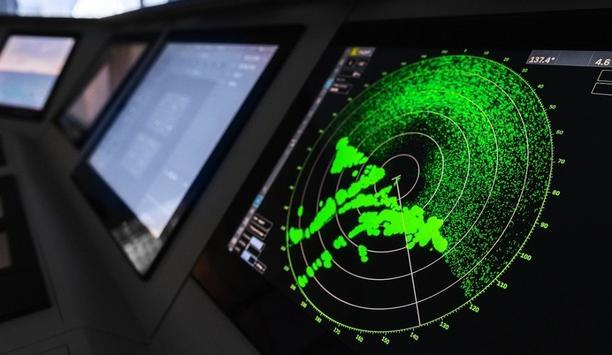
Maritime digitalisation, decarbonisation and autonomy were the dominant themes at this month's Nor-shipping conference, where mariners from around the world gathered to discuss the industry's future. But beneath these headline topics, a fundamental shift in maritime navigation is quietly underway. S-100, the next generation of maritime data standards, will transform today's static navigation systems into dynamic, real-time communication networks that revolutionise everything from autonomous navigation to sustainable voyage planning. Overcome implementation challenges All vessels will be required to have S-100 compatible ECDIS, but S-57 charts will continue We have been working closely with NAVTOR to develop S-100 compatible Electronic Chart Display and Information System (ECDIS). I spoke alongside Bjørn Kristian Sæstad and John K Klippen at the NAVTOR panel to explore how S-100 builds on the success of S-57 and what is being done in the lead up to 2029, when all vessels will be required to have S-100 compatible ECDIS but S-57 charts will continue to be supported. As the world's pioneering authority in maritime navigation, the UK Hydrographic Office (UKHO) is spearheading industry education and industry adoption of the S-100 framework. This preparation phase is critical. Success will require collaboration between maritime operators, technology providers, port authorities, and regulatory bodies to overcome implementation challenges and establish industry-wide best practices. Building on proven success The maritime industry has successfully navigated major technological transitions before, from GPS adoption to AIS system implementation. S-100 represents the next chapter in this evolution, building on S-57's proven foundation while introducing flexible and extendable capabilities to support safer, more efficient, and more sustainable maritime operations. The S-57 data platform standardised electronic chart data for over 50,000 vessels worldwide The S-57 data platform standardised electronic chart data for over 50,000 vessels worldwide. But where these charts are standalone files requiring periodic updates, S-100 takes this to the next level. As a universal hydrographic data model, S-100 enables vessels to communicate with each other, shore-based systems, and maritime infrastructure in real-time. It collates a range of data such as weather, tides and traffic into one interoperable ECDIS, providing mariners with a complete picture of their surroundings, optimising high-quality data and enhancing situational awareness. Smooth industry transition The transition from S-57 to S-100 is already underway, with many hydrographic offices preparing to produce and distribute S-100-based products by the 2026 IMO milestone. To ensure a smooth and gradual transition for maritime operators, S-100-compatible ECDIS will continue to support existing Electronic Navigational Charts (ENCs) using the current S-57 standard. This dual capability should eliminate concerns about operational disruption during the transition period. It provides time both for companies to develop S-100 compatible ECDIS and mariners to gradually incorporate S-100 enhanced capabilities and customise their displays based on the information they need. By 2029, S-100 technology will be mandatory for all vessels. Dual capability should eliminate concerns about operational disruption during the transition period To further support mariners becoming familiar with S-100 capabilities before widespread implementation, the UKHO has launched Explore S-100, an online platform where maritime professionals can experience the technology firsthand. Users can browse and interact with 'phase 1' S-100 data layers, including S-101 (ENCs), S-102 (bathymetric surface), S-104 (water levels), and S-111 (surface currents). This comprehensive educational tool is designed to make S-100 feel more like reality, allowing mariners to familiarise themselves with its new capabilities. Real-world testing Real-world testing is now moving from theory to practice. At the recent Nor-shipping conference, I spoke with NAVTOR about the first practical demonstrations of S-100 technology, including sea trials that tested the system under challenging maritime conditions. The St Lawrence River in Canada provides an ideal testing ground, featuring tidal influences, varied currents, narrow dredged navigation channels with deep-water sections, seasonal continuous survey activities, bridges, overhead cables and navigational aids. Testing standards in real-world scenarios allows us to gather feedback and make adjustments before full-scale implementation. This enables developers to fine-tune products based on actual operational experience rather than theoretical requirements. Different areas of the maritime community UKHO has partnered with SeaTrade Maritime to launch a comprehensive survey assessing industry Understanding how the technology performs in practice is only part of the picture. Gauging industry readiness for this transition is just as important. The UKHO has partnered with SeaTrade Maritime to launch a comprehensive survey assessing industry understanding of S-100. By identifying knowledge gaps, implementation concerns, and specific training needs across different areas of the maritime community, we’re informing educational programmes that address real industry requirements. Enabling tomorrow's maritime operations We are seeing major social and political change as the maritime sector works to ensure decarbonisation is at the top of the industry’s agenda. While S-100 will not be the silver bullet to facilitating decarbonisation and sustainability efforts, certain features will enable more sustainable operations. Fuel consumption and port area emissions when vessels ultimately need to wait outside congested terminals Route optimisation technology, for example, can help address one of the industry's most pressing environmental challenges: the widespread "sail fast then wait" approach. This increases fuel consumption and port area emissions when vessels ultimately need to wait outside congested terminals. S-100's real-time data sharing capabilities support just-in-time arrival strategies, enabling vessels to receive current information about port conditions, berth availability, and optimal arrival windows. This shift toward efficiency-focused voyage planning becomes increasingly critical as the industry works toward FuelEU Maritime compliance. S-100 common framework with port operators Route optimisation extends beyond individual vessels to support coordinated traffic management. When multiple ships can access the same real-time port and traffic information, the entire system operates more efficiently, reducing delays and environmental impact across the maritime supply chain. Route optimisation extends beyond individual vessels to support coordinated traffic management Sharing data using the S-100 common framework with port operators and charter parties could help to reduce demurrage penalty payments when the agreed-upon time for cargo operations (laytime) is exceeded. Sharing real-time data (ETA, berth availability, weather, cargo readiness, etc.) helps all stakeholders, charterers, shipowners, and terminal operators plan better. The impact is that it reduces idle time and delays caused by poor coordination or unexpected changes. For example, if bad weather is forecasted using S-100-compliant data, cargo operations can be rescheduled in advance, avoiding idle time that counts against laytime. Cross-industry collaboration As the maritime sector approaches the 2026 implementation milestone, the UKHO remains committed to supporting industry readiness through initiatives like Explore S-100 and comprehensive training resources. The transition offers genuine opportunities for improved operational efficiency, enhanced safety, and reduced environmental impact. These benefits require careful planning, comprehensive education, and ongoing collaboration across the maritime community. By hydrographic offices, shipping companies, technology providers, and regulatory authorities all working together, the industry can ensure S-100 delivers its full potential while maintaining the safety and reliability that mariners depend on every day.

Fleet planning as a strategic asset
Download