MacGregor - Experts & Thought Leaders













Latest MacGregor news & announcements

MacGregor has secured a contract to deliver a newly developed high-performance lightweight 165-tonne active heave compensated (AHC) crane to Hong Hua Yard in China. The vessel owner is Atlantic Navigation. Equipment delivery is scheduled for completion by the second quarter of 2027, with an option included for one additional crane. The order is booked into MacGregor’s fourth quarter 2025 order intake. The scope of supply includes the complete delivery of a modern 165-tonne AHC crane to be installed on a 90-metre Construction Support Offshore Vessel built to ABS Class standards. This newly developed crane represents the next generation of offshore lifting technology, and is designed to offer superior performance and a competitive edge over traditional 150-tonne solutions. Delivery and customer confidence “This order demonstrates delivery and customer confidence in our next-generation offshore crane technology,” says Pasi Lehtonen, Executive Vice President, Offshore Solutions, MacGregor. “Our lightweight 165-tonne AHC crane provides higher lifting capacity for the same weight as competitor systems, giving our customers a real operational advantage.” The project reinforces MacGregor’s strong local presence in China. With a dedicated sales team, a large service office, and production located close to Hong Hua Yard, MacGregor can ensure smooth communication and close collaboration throughout the installation and commissioning phases. Experienced local and global personnel will work closely to ensure efficient delivery and meet its customers’ expectations. Building on a track record of execution excellence MacGregor Offshore Solutions continues to strengthen its reputation for delivering complex projects on time and to the highest standards. “We’ve built a stronger foundation for smarter project execution, on-time delivery, and customer confidence,” Pasi Lehtonen continues. “Our ability to combine proven global experience with local execution and service capability ensures that each delivery adds real lifetime value for our customers.” "We are very satisfied with the collaboration and with the technical competence demonstrated by MacGregor,” a Hong Hua Yard spokesperson commented. “This lightweight, high-performance AHC crane will enhance the vessel's capability and reliability." This order highlights MacGregor’s role as a trusted global partner to the offshore energy industry. With technology that improves lifting efficiency and operational capability, MacGregor continues to enhance lifetime value for customers and contribute to the evolving offshore energy sector.

MacGregor has been selected to supply cargo access solutions for nine new RoPax vessels as part of the Grimaldi Group’s major fleet renewal plan. This significant order includes cargo access equipment for three vessels for Finnlines, four for Grimaldi Euromed, and two for Minoan Lines. The vessels will be built at China Merchants Industry Weihai Shipyard Co., Ltd. The order was booked to MacGregor’s third quarter 2025 orders received. Two different vessel designs This order is the result of a collaborative approach with all project stakeholders, ensuring the delivery of solutions that perfectly meet the specific requirements of the vessels and the customer. The order includes two different vessel designs: Three ships for Finnlines, with a capacity of 5,400 lane metres and 1,000 passengers, destined for the Baltic Sea. Six ships (four for Grimaldi Euromed and two for Minoan Lines), with a capacity of 3,300 lane metres and 2,500 passengers, for the Mediterranean and Adriatic Sea networks. Fantastic achievement “This is a fantastic achievement that reinforces our commitment to our customers,” says Magnus Sjöberg, Executive Vice President, Merchant Solutions Division, MacGregor. He adds, “By collaborating closely with the owner and our key partners, we were able to demonstrate our ability to deliver the right solutions to meet their specific.”

Q&A with Pasi Lehtonen, Executive Vice President, Offshore Solutions, MacGregor How well is MacGregor positioned in the offshore sector under Triton’s new ownership? MacGregor’s lifecycle-focused strategy is closely aligned with Triton’s commitment to sustainable growth and value creation, and with the support of our new owner, we are strategically positioned across the maritime and offshore sectors to deliver lasting value. Our solutions are proven, by performance, to drive safer, smarter, and more sustainable operations across both industries. In addition to a strong market position, we have a broad portfolio of sustainable and high-quality products, a global network of service centres, and skilled personnel with robust capabilities in innovation, engineering, and delivery. Please summarise MacGregor’s track record in the offshore industry. MacGregor’s offshore solutions are backed by decades of proven performance. We have delivered bow-loading systems (BLS) for over 40 years and motion-compensated cranes for more than 25, with over 250 of our active heave-compensated (AHC) cranes now in operation worldwide. In 1991, we delivered the first offloading system for a floating production storage and offloading unit. By ensuring consistent uptime in extreme weather and sea conditions, we have earned the trust of leading offshore operators worldwide. We pride ourselves on providing certainty in offshore operations. Can you mention any recent high-profile projects in the offshore sector? We recently delivered the MacGregor Horizon walk-to-work gangway to IWS’s fleet of commissioning service operation vessels (CSOVs). According to the fleet managing director, the company chose MacGregor for its “unique technology”, the “total package” we proposed, and our “strong track record as a supplier to the offshore market”. IWS also reported that initial performance data from the gangway, as well as client feedback, verified that its CSOVs were among the most effective available on the market today. MacGregor's crane packages, including 100-tonne AHC cranes, are also supporting accurate high-capacity subsea lifts aboard Prysmian’s advanced cable-laying vessels, Prysmian Leonardo da Vinci and Prysmian Monna Lisa. Delivered in February 2025 by Norway-based shipbuilder VARD Group, a subsidiary of Italy’s Fincantieri Group, Prysmian Monna Lisa recently received the Ship of the Year 2025 award. The accolade recognises the vessel’s status as the most advanced ship of its kind at sea – a title previously held by the 2021-built Prysmian Leonardo da Vinci. With every project, we prove our value through performance – not promises. We have strengthened our foundation for smarter project execution through a proactive process- and data-driven approach. What does the future hold for MacGregor’s offshore solutions division? Looking ahead, we intend to build on a strong track record of delivering complex projects with precision, reliability, and high customer satisfaction while strengthening our aftermarket platform with Triton’s support. We reaffirm our commitment to the offshore sector with a clear focus on profitable growth. Following a successful turnaround, we are now well-positioned to expand our offshore business. Supported by a strong orderbook and an extensive portfolio of products and services, we are dedicated to delivering sustainable value and strengthening partnerships with our customers. We are also approaching the emerging carbon capture and storage market with the objective of setting the industry standard and becoming the first-choice provider of offshore transfer systems for liquefied CO₂, building on our recognised offering in BLS and reel-loading systems. To reduce technology risk, we are maximising the reuse of standardised products and remain committed to following the technology qualification process, engaging DNV, SINTEF, and other recognised experts and suppliers.
Insights & Opinions from thought leaders at MacGregor

Given the diverse stakeholders in the maritime industry, it is understandable that collaboration is a challenge. However, the interconnected ecosystem of maritime makes collaboration essential. From ship owners and operators to port authorities, from shippers to shipbuilders, from classification societies to marine service providers and others, there are vast opportunities to work together and cooperate. To gain insight, we asked our Expert Panel Roundtable: How can the maritime industry increase collaboration, and what are the benefits?
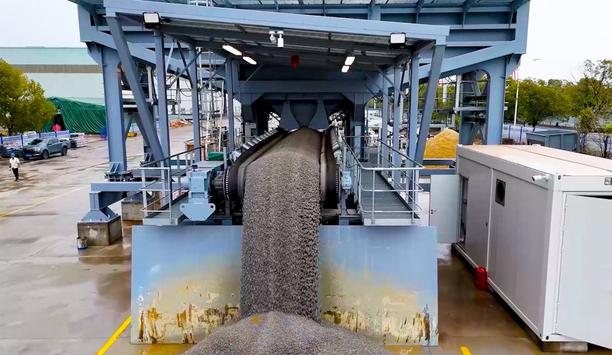
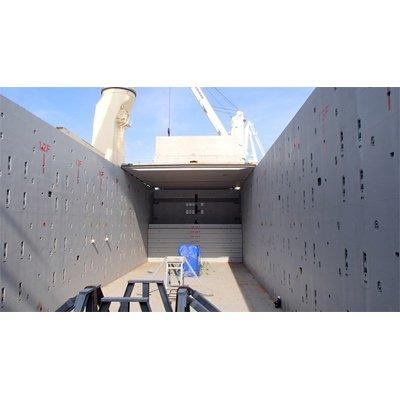
Traditionally, bulk cargo unloading has faced challenges around operational efficiency, safety risks, environmental impacts, and high operational costs. Rough discharges, equipment wear, vibration damage, and limited weather operating windows have all constrained vessel utilisation and performance. Moreover, older unloading systems are energy-intensive and labour-dependent, increasing both costs and environmental footprint. Cargo unloading systems Many bulk cargo unloading systems depend on steep slope angles, which limit the types of materials that can be carried efficiently. MacGregor’s GravityVibe directly addresses this factor by allowing efficient discharge with significantly lower slope angles, thus broadening the range of cargo that can be handled. Many bulk cargo unloading systems depend on steep slope angles. Ship structures and unloading equipment “GravityVibe reduces reliance on gravity alone by augmenting the flow with controlled vibration,” says Mikael Hägglund, Senior Manager, Cranes at MacGregor. “This approach improves operational efficiency, enhances safety through more predictable material flow, and reduces wear on ship structures and unloading equipment.” Challenges of space utilisation and cargo versatility MacGregor is a provider of cargo and load handling solutions to maximise efficiency Additionally, the GravityVibe system will, in most cases, require only one hold conveyor and no cross conveyor in the hold, making the operations both cost-effective and sustainable, says Hägglund. MacGregor, based in Helsinki, Finland, is a provider of cargo and load handling solutions to maximise efficiency of maritime operations. As an augmented gravity self-unloading system, GravityVibe enhances cargo flow using vibration, enabling bulk materials to be discharged efficiently at lower slope angles (15–20 degrees). It reduces material blockages and optimises discharge without requiring steep holds, addressing the challenges of space utilisation and cargo versatility. Mechanical strain on vessel structures The system lessens mechanical strain on vessel structures, and supports safer, smoother, and more efficient operations across different cargo types. “Using lower slope angles allows ships to maximise cargo hold volume and transport a wider variety of bulk materials, including those that would not flow well with conventional systems,” says Hägglund. “It improves operational flexibility.” Integrity of the vessel Vessels benefit from a more compact and efficient hold design, optimising stability and construction Structurally, vessels benefit from a more compact and efficient hold design, optimising stability and potentially lowering construction and maintenance costs, adds Hägglund. “Managing vibration and sound levels is critical for maintaining the structural integrity of the vessel and ensuring crew safety and comfort,” he says. “Excessive vibration can lead to accelerated wear on ship components and fatigue damage over time.” GravityVibe’s design GravityVibe’s design ensures that both vibration and sound levels stay well below class-defined thresholds, preserving vessel longevity and reducing long-term maintenance and repair costs. Bulk cargoes have widely varying properties such as particle size, cohesiveness, moisture content, and chemical reactivity, all of which impact flow behaviour. Sticky, wet, or coarse materials require different unloading strategies to avoid blockages, segregation, or structural strain. Bulk cargoes have widely varying properties like particle size and cohesiveness. Broader spectrum of cargo types Key elements to achieve automation include fine-tuning self-optimisation algorithms GravityVibe’s vibration-driven approach adapts to these material differences, maintaining consistent discharge rates and ensuring operational reliability across a broader spectrum of cargo types without manual intervention or excessive mechanical modification, says Hägglund. More automated systems are on the horizon. Fully automated discharge is rapidly approaching reality, thanks to intelligent unloading systems like GravityVibe. Key remaining elements to achieve automation include fine-tuning self-optimisation algorithms, integrating predictive maintenance solutions, and standardising automation interfaces between vessels and ports. GravityVibe features MacGregor is actively working to refine onboard software, improve material recognition capabilities, and enhance real-time adjustment features. Wider industry adoption and regulatory frameworks are also crucial for achieving fully autonomous and seamless bulk unloading. GravityVibe features a built-in self-optimisation system that uses sensors to monitor material flow characteristics during discharge. Based on live data, it automatically adjusts vibration frequency and intensity to match the properties of each specific cargo, ensuring optimal unloading performance without manual recalibration. MacGregor is working to refine onboard software and improve material recognition. GravityVibe’s performance GravityVibe’s performance has been verified through a combination of laboratory studies MacGregor is fine-tuning this system by gathering real-world data from full-scale test rigs, analysing operational performance across various cargo types, and incorporating feedback loops to continually improve discharge efficiency and system responsiveness. Real-world validation is essential to prove that unloading systems perform reliably under operational conditions. GravityVibe’s performance has been verified through a combination of laboratory studies and full-scale rig testing. In-house tests and studies For example, validation by bulk solids researcher TUNRA showed efficient unloading across diverse materials such as wood chips, manufacturing sand, and gravel. In-house tests and studies with external specialists like KTH have confirmed low vibration levels, consistent discharge flow, and high operational reliability, providing strong evidence for commercial deployment. TUNRA showed efficient unloading across diverse materials such as sand. GravityVibe’s system design GravityVibe’s system design is based on long-lasting parts and improved cargo flow High maintenance requirements traditionally have led to significant downtime and increased operational costs. GravityVibe’s system design is based on long-lasting components and improved cargo flow that reduce risks for failures and needed service, thereby lowering maintenance costs/needs. “With real-time monitoring and smart diagnostics, potential issues can be detected and addressed before they escalate, minimising service interruptions,” says Hägglund. “This proactive approach enhances equipment availability and ensures better operational continuity for vessel operators.” MacGregor GravityVibe system When unloading standard bulk carriers, there is a need to clean the holds with manpower and external machines as the port cranes or the vessel cranes will not be able to empty the holds. The weather could also be a factor for delay in cases where the cargo is sensitive to water. For the MacGregor GravityVibe system, all material will be removed from the hold without any extra efforts. GravityVibe demonstrates that with intelligent use of vibration and lower slope angles can achieve the same — or even better — results. This approach not only enables broader cargo flexibility but also reduces structural stress, energy consumption, and environmental footprint.

Achieving optimal return on investment (ROI) for a maritime company involves a strategic combination of operational efficiency, revenue enhancement, cost control, careful financial management, attention to sustainability and regulatory compliance, and other factors. Given all the variables in play, profitability can be elusive, but our Expert Panel Roundtable has some ideas. We asked: How can maritime companies maximise return on investment (ROI)?

Fleet planning as a strategic asset
Download