Chevron Corporation - Experts & Thought Leaders




Latest Chevron Corporation news & announcements

The Oil Companies International Marine Forum (OCIMF) celebrates the first anniversary of SIRE 2.0, its updated and enhanced Ship Inspection Report Programme, recognising a year since the global implementation of the overhauled tanker inspection programme. Since its launch on 2 September 2024, following a gradual roll-out to the industry to replace the paper-based SIRE (VIQ7) programme, over 22,000 SIRE 2.0 inspections have been completed worldwide. Adoption of the new programme SIRE 2.0 inspections have been conducted in 2,100 ports by 460 SIRE 2.0 accredited inspectors SIRE 2.0 inspections have been conducted in 2,100 ports by 460 SIRE 2.0 accredited inspectors. With only 0.2 percent of inspections having to use the paper-based contingency in the past 12 months, the adoption of the new programme has been a marked success. “SIRE 2.0 represents one of the most significant evolutions in our industry’s approach to safety assurance,” said Karen Davis, OCIMF Managing Director, adding “Its success over the past year is a direct result of meaningful collaboration between members, operators, inspectors and our technical teams. We are proud of what we’ve achieved together and are fully committed to ensuring the programme continues to reflect industry’s needs.” Looking ahead: continuous improvement OCIMF is committed to building on the strong foundations laid in year one and is now focusing its attention on ensuring the programme is further optimised and incorporates emerging industry risks. Planned developments for the year ahead include: Leveraging improved data insights to inform OCIMF’s wider approach to safety advocacy and sharing of best practices across industry through its publications, programmes and engagement with industry. Providing ongoing Inspector training programmes to support the delivery of consistently high-quality inspections. Integration of data insights with guidance materials to help inspectors, operators and members identify and mitigate risks earlier. Ensuring continued and productive engagement with programme users to facilitate continuous learning, improvement and best-practice sharing. Roll-out of SIRE 2.0 successfully concluded Cudbertson will oversee the work of all OCIMF’s programmes, including SIRE 2.0 With the roll-out of SIRE 2.0 successfully concluded and the programme embedded within the industry, Capt. Aaron Cooper has concluded his secondment to OCIMF as its Programmes Director and has returned to Chevron, his parent company, to take up the position of Senior Manager, Marine Operations Performance and Projects. Dave Cudbertson, formerly Manager, Global Maritime Assurance Downstream & Renewables at Shell and previously a member of the SIRE 2.0 Steering Committee, has begun his secondment to OCIMF by taking on the role of Programmes Director. Cudbertson will oversee the work of all OCIMF’s programmes, including SIRE 2.0. Adoption of SIRE 2.0 “For industry, the adoption of SIRE 2.0 required a significant amount of work and dedication over several years, resulting in the improved inspection regime being embedded within operations. We now move into a new phase of optimisation and innovation and aim to ensure the programme not only keeps pace with industry change but also anticipates it,” said Dave Cudbertson. OCIMF extends its thanks to all stakeholders for contributing to the success of SIRE 2.0’s first year. To ensure the programme continues to serve industry in the future, OCIMF encourages stakeholders to support it by providing feedback via the SIRE 2.0 Suggestions for Improvement (SFI) portal available to programme users.
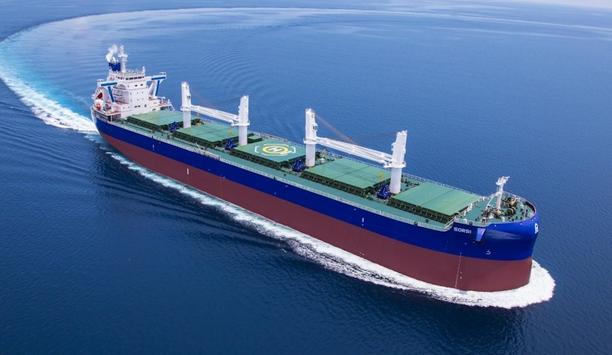
Turkish shipowner, Susesea, has successfully upgraded the cylinder lubrication strategy across its fleet of six bulk carriers by adopting Chevron’s Taro® Ultra Advanced 40 (TUA 40). Working closely with Chevron Marine Lubricants and its regional distributor, Petrol Ofisi, Susesea has streamlined vessel operations and reduced cylinder oil feed rates by approximately 33 percent, delivering both technical and commercial benefits. MAN Mark 9 engines Susesea’s engineers rotated between MAN Category I and Category II lubricants to manage this need The six Japanese- and Chinese-built vessels, each with an average deadweight of 64,000 tons, are all equipped with MAN Mark 9 engines. These two-stroke engines demand high detergency lubrication to help maintain piston and ring land cleanliness, particularly when operating on very low-sulphur fuels. Previously, Susesea’s engineers alternated between MAN Category I and Category II lubricants to manage this requirement, following a set schedule of three days on Taro Ultra 40 (Cat I) and one day on Taro Ultra 100 (Cat II). The system was effective, but complex. Susesea onboard practices By transitioning to a single Category II 40BN product, Susesea not only simplified onboard practices but also opened up new opportunities for procurement efficiency and long-term maintenance planning. Chevron’s TUA 40 has since become the preferred choice for all six vessels. “Upgrading to a single Taro 40 solution means that we can now complete large-scale purchases in strategic ports like Singapore and carry a full year’s supply. That has proven to be extremely efficient for our operations,” said Mr. Bilge Kagan Dogan, Technical Manager at Susesea. Modern two-stroke engines Susesea worked with Chevron and Petrol Ofisi to conduct scavenge port inspections at each port Mr. Bilge Kagan Dogan continues, “We initially decided to switch to Chevron Cat II 40BN cylinder oil based on two main advantages: improved cleaning performance compared to 100BN oils, and cost reduction. Altogether, Cat II 40BN oil has delivered great value for performance.” Chevron’s Taro Ultra Advanced 40 is a high-performance 40 Base Number (BN) Category II cylinder lubricant approved by MAN Energy Solutions for use in modern two-stroke engines. As part of the implementation, Susesea worked with Chevron and Petrol Ofisi to conduct scavenge port inspections at each port of call and track iron content and base number retention onboard. Inventory management and maintenance planning Feed rates were reduced in controlled increments of 0.1 g/kWh, with all six vessels ultimately achieving consistent operation at 0.8 g/kWh. The results confirmed not only compliance with Original Equipment Manufacturer (OEM) cleanliness targets, but also improved piston ring and ring land condition across the fleet. With visual inspections reporting improved scavenge cleanliness and liner condition, the shift to TUA 40 also helped reduce task complexity for onboard crews. Inventory management and maintenance planning have since become more straightforward and less prone to error, supporting higher levels of operational uptime. How Chevron’s TUA 40 can help the technically focused Chevron’s aid throughout the process included version monitoring, crew guidance, and lubrication strategy The success of the Susesea transition demonstrates how Chevron’s TUA 40 can help technically focused operators reduce feed rates while meeting the demands of modern engine architecture and very low sulphur fuel oil (VLSFO) operation. By simplifying from a two-oil to a one-oil strategy, operators can achieve greater control over procurement and logistics while reducing cylinder oil consumption and maintenance burden. Chevron’s support throughout the process included performance monitoring, crew guidance, and lubrication strategy alignment with MAN ES specifications. The partnership model used with Susesea is part of Chevron’s broader commitment to supporting shipowners with compliant, field-proven solutions for the evolving fuel and regulatory landscape. Adoption of Taro Ultra Advanced 40 “It was a pleasure working with Susesea to support their adoption of Taro Ultra Advanced 40,” said Georgia Chaloulou, Technical Field Specialist at Chevron Marine Lubricants, adding “By closely monitoring the results and managing each step together, we helped ensure a successful outcome. Chevron is committed to providing practical, data-driven lubrication solutions tailored to each customer’s operational needs.” “We are grateful for the guidance from Georgia Chaloulou, who supported us throughout the process,” states Mr. Dogan from Susesea, adding “Her expertise was instrumental in giving us confidence in the product.”
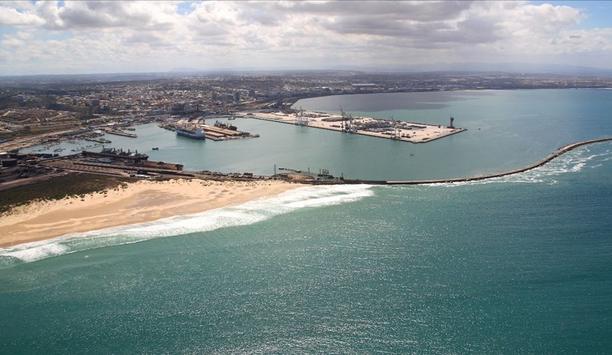
Chevron Marine Lubricants, a subsidiary of Chevron Corporation, has further extended its global supply capacity to include Port Elizabeth, South Africa. This expansion notably enhances the company’s ability to serve vessels taking the longer route to avoid current conflict areas. It also represents a strategically important addition to Chevron’s distribution network in the southern region. Customer service and supply The expansion has been made possible through close collaboration with local partners, demonstrating the power of partnerships to enhance customer service and supply. By ensuring supply availability in Port Elizabeth, Chevron’s range of marine lubricants' overall reliability is endorsed and improved. Service reliability “This marks a significant milestone in developing our distribution network in southern waters,” says Ayten Yavuz, Global Marine Lubricants General Manager at Chevron. Ayten Yavuz adds, “Port Elizabeth is a major port of call, and having Chevron lubricants available will certainly increase the service reliability for visiting vessels. We have worked closely with our local partners to make this strategic expansion possible, and I wish to thank them for their excellent cooperation.” Taro Ultra range In addition to bulk and container handling, Port Elizabeth has a berth for liquid cargo operations Chevron’s current range of marine engine lubricants, including the popular Taro Ultra range, will be available to ships calling at Port Elizabeth, a multi-cargo port located on the western perimeter of Algoa Bay. The port is operational 363 days a year. In addition to bulk and container handling, Port Elizabeth has a berth for liquid cargo operations. Vehicle carrier passings The port's significance can be seen from the fact that, before 2023, records indicate an average of 1050 visiting vessels over 36 months. However, since October 2023, vehicle carrier passings have risen substantially, and many operators are currently routing ships via the Cape of Good Hope.

Fleet planning as a strategic asset
Download
Chevron Havoline® ATF III-H Automatic Transmission Fluid

Chevron Delo® Gear EP-5 SAE 80W-90 Automotive Gear Lubricant

Chevron 1000 THF Hydraulic Fluid