International Maritime Organization News

The International Flag-State Association (IFA), an association of the world’s three largest registries, Liberia, the Republic of the Marshall Islands, and the Republic of Panama, has been meeting since 2021. IFA is the first alliance of its kind and was designed to allow its members to have a platform to more formally engage with respect to global challenges, stakeholder insight, and the development and implementation of international instruments to enhance maritime safety, security, the...

Anemoi Marine Technologies, the UK-based pioneering designer of Rotor Sails for wind-assisted ship propulsion, is to install Rotor Sails on two newbuild chemical tankers under construction for Union Maritime Limited. The 18,500 DWT vessels, to be built by Wuhu Shipyard Co in China, will feature a combination of technologies and retrofit readiness to safeguard cost-effective decarbonisation across their lifecycle. The Rotor Sails are set to be installed at Wuhu in early 2026 after construction a...

As the maritime industry prepares to enter 2026, technology group Wärtsilä has identified four important trends that will affect global shipping in 2026. From the rise of digitalisation and big data to the growing importance of flexible decarbonisation strategies, these trends are set to redefine competitiveness, efficiency, and sustainability for vessel owners and operators worldwide: Lifecycle optimisation: With rapid technological advances and evolving regulation...

KR (Korean Register) signed a Memorandum of Understanding (MoU) with HD Hyundai Samho on September 9 at Gastech 2025 in Milan, the world’s largest gas and energy exhibition. The two companies will jointly develop a water circulation system for the double-wall pipe annular space of ammonia-fueled vessels, aiming to enhance the safety of next-generation ships powered by ammonia. Ship design and operation Ammonia is drawing watch as a next-generation carbon-free fuel, but its toxicity and...

Marine industry pioneers gathered at Nor-Shipping in June, with a focus on the key challenges and opportunities driving the transition to a lower-carbon future. With regulations such as the Carbon Intensity Indicator (CII), FuelEU Maritime, the EU Emissions Trading System (EU ETS) and the upcoming International Maritime Organisation (IMO) carbon levy, fouling control systems continue to play a vital role in the shipping industry as the regulatory bodies chart a course towards net-zero emissions...

Electrification plays an important role in addressing the environmental challenges facing the maritime sector, and electric propulsion is the key component in this transition. Energy-efficient propulsion, which encompasses both efficient drivetrain and less weight, will contribute to meeting environmental challenges, while providing unwavering reliability for the operators. Cleaner propulsion solutions Ease of integration and maintenance helps streamline system design and installation, cruci...
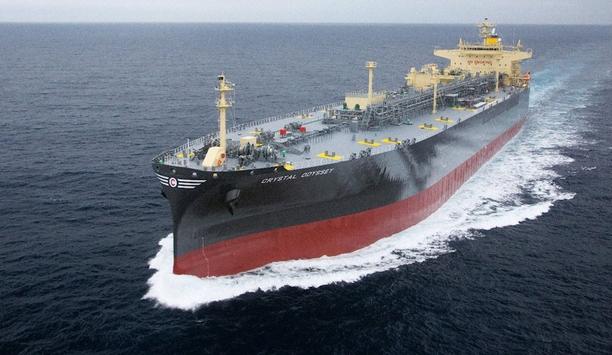
Under Zero-Emission Accelerating Ship Finance (‘the Program’), which is jointly operated by Development Bank of Japan Inc. (DBJ) and ClassNK, ClassNK evaluated the LPG dual-fuel LPG/ammonia carrier, ‘CRYSTAL ODYSSEY’ (IMO 9997177), which is owned by Kumiai Navigation (Pte) Ltd (Kumiai Navigation). DBJ provided financing to Kumiai Navigation. In the shipping industry, where environmental regulations are becoming stricter as the industry moves towards decarbonisation, Clas...
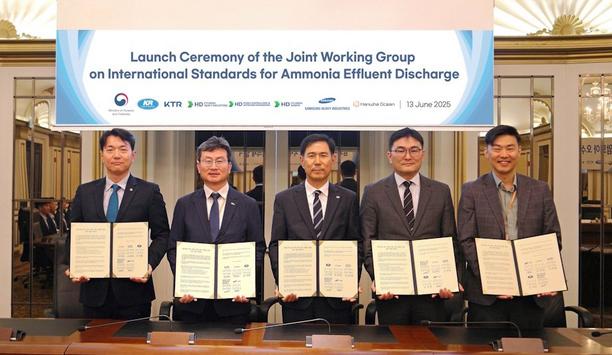
KR (Korean Register) has officially launched a joint working group to establish international standards for the safe discharge of toxic ammonia effluent generated from ammonia-fueled ships. The initiative brings together Korean major shipbuilders—HD Hyundai Heavy Industries (HD HHI), HD Korea Shipbuilding & Offshore Engineering (HD KSOE), HD Hyundai Samho, Samsung Heavy Industries (SHI), and Hanwha Ocean—as well as the Korea Testing & Research Institute (KTR), a national ce...

Fincantieri, a pioneer in complex shipbuilding, presented a series of papers focused on research and innovation activities in the maritime sector at the 21st edition of NAV, the International Conference on Ship and Maritime Research, held in Messina. These studies highlighted the company's role as a pioneer in the industrialisation of new digital solutions for the shipping industry, which, in addition to improving the efficiency, safety, and sustainability of its operations and produc...
Ballast Water Management Systems (BWMS) prevent the spread of invasive aquatic species, which pose significant ecological, economic, and health threats. The systems treat and purify a ship's ballast water before it is discharged into a new environment. Regulations dictate how ballast water is managed and discharged. The IMO Ballast Water Management Convention was adopted in 2004 and ratified on 8 September 2017. In addition, the U.S. Coast Guard (USCG) has also regulated discharges in the USA t...
ABB announced the launch of the AMXE Marine Motor, a next-generation electric propulsion solution engineered to withstand the tough conditions at sea, including continuous exposure to corrosive saltwater and powerful ocean currents. Drawing on decades of experience in marine applications and heavy-duty industries like mining and rail, ABB has developed this motor specifically for small to mid-sized electric and hybrid vessels and open deck applications, combining proven durability, high perform...

In a major push toward decarbonising maritime logistics, President Jae-young Byeon of the Ulsan Port Authority (UPA) and Chief Executive Sun-bae Hong of the Korea Maritime Cooperation Centre (KMC) jointly announced the successful conclusion of the “2nd Forum on the Commercialisation of Biofuels for Maritime Vessels,” held on 23 April at the Caradium Hall of the PJ Hotel in Seoul. The forum, hosted by the Ministry of Oceans and Fisheries and co-organised by UPA and KMC, drew around 3...

Transport Secretary, Heidi Alexander, said: “Today we mark significant progress in our journey to creating a greener, cleaner planet with a landmark agreement at the International Maritime Organization." “We have worked closely with international partners to forge a path for sustainable shipping internationally and secure a prosperous, resilient sector, laying a strong foundation for the future." Development of clean fuels Alexander added: “This deal means t...
Fuels of the future and shipping charge points in harbours are at the centre of a major new strategy to make Britain’s shipping fleet net zero by 2050 and drive growth in coastal communities. The Maritime Minister has revealed the Government’s new goals for all vessels that operate in UK waters and dock at UK ports to be carbon-free and help vessel owners, operators and scientists make emission-free voyages a reality. Maritime Decarbonisation Strategy Maritime Decarbonisation Stra...

Ammonia is gaining traction as a future fuel in the maritime industry, primarily due to its potential to significantly reduce greenhouse gas emissions. A key driver for ammonia's interest is that it can be carbon-free when combusted, which aligns with the maritime industry's increasing pressure to meet emissions regulations. However, most ammonia production currently relies on fossil fuels. Transitioning to "green ammonia" production is crucial for sustainability. If "green ammonia" is produced...
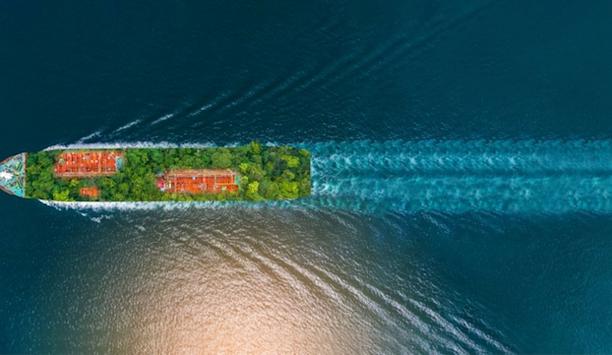
The shipping industry is currently navigating a profound transformation driven by environmental concerns, new emissions targets, and evolving regulations. As vessel owners and operators seek to reduce emissions while remaining competitive, determining the right strategy has become increasingly complex. Factors such as alternative fuel availability, fluctuating prices, and an ever-expanding range of technological solutions have made decision-making anything but straightforward. Lack of motivat...

Compliance with global maritime safety regulations is not optional but the reasoning behind a given set of rules can often be opaque, with the user sometimes finding fault with individual requirements or tempted to see a dislocation between dry legal language and real-life situations. But the legalese is a manifestation of the precision regulators bring to their craft and reflects repeated consideration of the same issues, lessons learned from actual maritime incidents and investigations, and c...

Under Zero-Emission Accelerating Ship Finance (the Program), which is jointly operated by Development Bank of Japan Inc. (DBJ) and ClassNK, ClassNK evaluated the LNG-fueled car carrier ‘OCEANUS HIGHWAY’ (IMO No. 1046049), owned by Kawasaki Kisen Kaisha, Ltd. ("K" LINE). DBJ provided financing to "K" LINE. In the shipping industry, where environmental regulations are becoming stricter as the industry moves towards decarbonisation, ClassNK evaluates ships based on a comprehensive scor...

Baltic Exchange, the world's only independent source of maritime market information for the trading and settlement of physical and derivative contracts, and Veson Nautical, a global pioneer in maritime data and freight management solutions, have joined forces to launch the latest version of the official Baltic99 Questionnaire for the dry bulk sector. The questionnaire, which remains the industry standard for collecting and collating detailed information about the global dry bulk fleet, is desig...

The UK is well positioned to lead the safe development and deployment of new nuclear power systems for commercial ships and Floating Nuclear Power Plants (FNPPs), according to a new report from CORE POWER, NorthStandard and Lloyd’s Register (LR). Technology company CORE POWER, global marine insurer NorthStandard and maritime professional services provider LR have jointly published Advanced Maritime Nuclear: A unique opportunity for the UK. Deployment of small nuclear reactors...
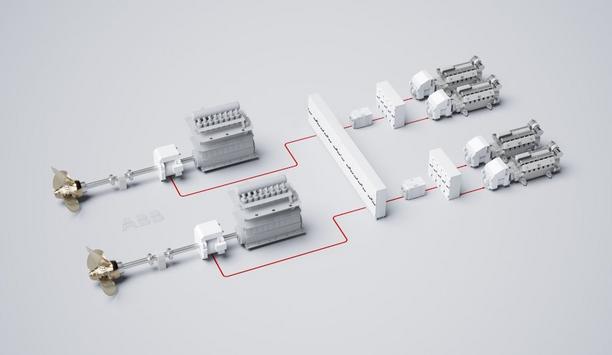
ABB has secured orders from shipbuilders in China and South Korea to equip 18 and 12 liquified natural gas (LNG) carriers, respectively, with permanent magnet shaft generator technology. The ships are due for delivery between 2028 and 2030. Enhancing operational efficiency by utilising the power from the main engine, ABB’s permanent magnet shaft generator system improves fuel economy compared to solutions where power is provided by auxiliary engines. Magnet shaft generator solution The...

With the Hong Kong Convention (HKC) set to take effect this year, shipowners should ensure compliance with regulatory controls and inspections governing ship recycling for their vessels. DNV’s latest guidance paper “Safe and Green Recycling for Ship Owners” outlines how they can work in line with both existing EU Ship Recycling Regulations (EU SRR) and the HKC, coming into effect on June 26, 2025. Ship recycling process Ships often contain hazardous materials that can pose s...

DNV has launched a new family of class notations, Autonomous and Remotely Operated Ships (AROS), providing a framework for how autoremote vessels can achieve equivalent or higher safety compared to conventional vessels. Autonomous shipping, ranging from remote control operations to fully unmanned vessels, marks a major advancement in the maritime industry. Regulatory frameworks While these progress hold great promise, regulatory frameworks are still being developed These solutions can delive...

The European Space Agency (ESA) has initiated a new flagship project, Decarbonisation through the Digitalisation in Shipping (DECARDIS), together with optimisation platform company Awake.AI, technology pioneer ABB and shipping company Wallenius Marine. The consortium, funded by ESA and led by Awake.AI, will collaborate on a port call optimisation solution, which focuses on helping ships cut greenhouse gas emissions by overcoming inefficiencies in the ship-port interaction. Smart ship te...

The Brun Bear Foundation, a registered charity established by Edwin Lampert, executive editor of Riviera Maritime Media, is pleased to announce the launch of “Mealtimes With My Maritime Friends.” This unique cookbook celebrates the global maritime community while raising funds for important causes. Featuring 60 inspiring recipes from around the world, contributed by prominent figures in the maritime industry, this book offers a taste of maritime culture alongside the personal storie...

INTERCARGO, the International Association of Dry Cargo Shipowners, has announced significant changes to its leadership following its Annual General Meeting. The new appointments will take effect from 1 January 2025. In recognition of their distinguished service, Mr. Dimitrios Fafalios has been appointed Honourary Chairman following six years as Chairman. Mr Fafalios, President of Fafalios Shipping S.A., has led INTERCARGO through significant developments in the shipping sector since 2019, havin...
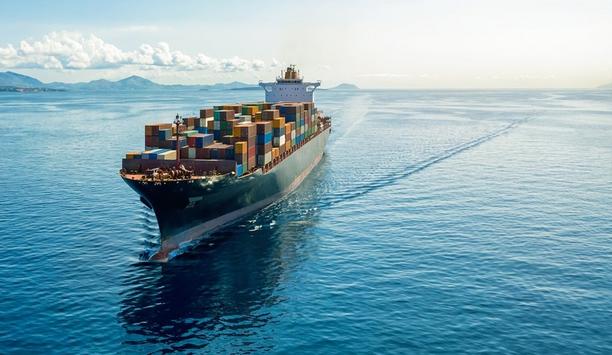
The International Maritime Organization (IMO) has achieved key progress in negotiations towards a set of binding global regulations on the IMO net-zero framework, aimed at achieving the greenhouse gas (GHG) reduction objectives set out in the 2023 IMO Strategy on Reduction of GHG Emissions from Ships. GHG reduction At the conclusion of the 82nd session of IMO’s Marine Environment Protection Committee held from 30 September to 4 October 2024, Member States had identified further a...

World Maritime Day on 26 September will highlight the importance of safety at sea in an era of significant transformations and new risks. Fifty years since the adoption of the International Convention for the Safety of Life at Sea (SOLAS) - the world’s most important treaty for the safety of merchant ships – the maritime community is at a crossroads, facing rapid advances in technology, global security challenges and the shift to green energy. Facing rapid advances This year&r...

Amogy, a provider of mature, scalable, and efficient ammonia-to-power solutions, announced that the world’s first carbon-free, ammonia-powered maritime vessel successfully completed its maiden voyage. The NH3 Kraken, a tugboat originally constructed in 1957 and retrofitted with Amogy’s ammonia-to-electrical power system, sailed on a tributary of the Hudson River, upstream from New York City. Net-zero emissions by 2050 A significant step towards reducing global carbon emissio...

KR (Korean Register) has awarded an Approval in Principle (AiP) to HD Hyundai Mipo (HD HMD) for their innovative 23K Ammonia Bunkering Vessel and 18K LNG Bunkering Vessel on September 18, at GASTECH 2024, paving the way for green shipping. The development of these vessels represents a significant advancement in the maritime industry’s efforts to meet the International Maritime Organisation’s (IMO) ambitious greenhouse gas reduction targets, which include at least 20% by 2030 an...
Browse maritime news
- By event