Rising costs

JLA Media Ltd has rebranded as JLA Communication and responded to growing demand to offer reputation management to maritime, offshore and logistics executives by adding JLA Reputation to its portfolio of services. Brought to market by the pioneering team of PR and communications professionals in the sector, JLA Reputation offers full consultative services for industry pioneers. Focusing on the opportunities and challenges individuals face in their public and media engagement...

A new report, released now, has found that adopting methanol as the primary fuel for voyages between the Port of Tyne, Newcastle and Port of IJmuiden, Amsterdam could avoid up to £420 million in future regulatory costs and deliver an 80% reduction in greenhouse gas (GHG) emissions. Green shipping corridors are specific routes where vessels use low-emission propulsion. The study, led by Ricardo, an environmental, energy and engineering consultancy and world pioneers in maritime decarbonisa...

Major carrier - CMA CGM has announced its INDAMEX service will transit Suez Canal on fronthaul and backhaul voyages between India/Pakistan and US East Coast in a notable step towards a large-scale return of container ships to the Red Sea region. The first vessel to complete a full service loop via Suez Canal will be CMA CGM VERDI, sailing from Karachi to New York on 15 January. eeSea by Xeneta data shows voyages via Suez Canal rather than Cape of Good Hope reduces full loop transit time on this...

As the industry explores multiple decarbonisation pathways, methanol is gaining attention as a practical and scalable alternative fuel for deep-sea shipping. This is supported by over 450 methanol-capable vessels in operation and on order and technical solutions now available for all major ship types. Low-GHG methanol production DNV’s latest white paper, “Methanol fuel in shipping,” highlights that methanol-fuelled engines and technical systems have reached high readiness le...

NorthStandard has advised Members of a 5% increase in P&I premiums for the marine insurance year, starting 20 February 2026, to reflect ongoing market unpredictability and risk. The global marine insurer projects a rise in premium income for 2025-26, as well as better returns on investments, higher reserves, and continued success for its diversification strategy. However, it believes a modest increase for 2026-27 is prudent in the current risk environment. S&P Global ‘A’ ra...

The US and China reached a 12-month trade war truce this week, including lowering fentanyl tariffs by 10% and suspending port fees – but it will not halt the decline in ocean container freight rates in 2026. Average spot rates from China to US West Coast on 31 October are down 59% year-on-year at USD 2147 per FEU (40ft container). Spot rates into the US East Coast are down 48% year-on-year at USD 3044 per FEU. Declining spot rates coincide with falling volumes on Transpacific trades,...
News

Alfa Laval UK is focused on supporting shipowners with drydocking by helping them identify the kits and parts required for maintenance, whether these are unique to each vessel or pre-identified kits, enabling smarter planning, faster turnaround, and longer fleet uptime. A major focus will be providing condition audit services up to six months before docking. "By auditing systems months before docking, we can spot issues early, plan ahead, and prevent costly surprises," said Ezgi Sezen, UK Marine Services Manager, adding "As ships become more complex and budgets tighten, this level of foresight is essential in keeping vessels' uptime at a maximum." Advance of a vessel's arrival Each audit will provide a detailed condition overview of equipment, from corrosion checks to upgrade recommendations, allowing Alfa Laval teams to build a tailored service around four months before a vessel docks. This will ensure that spare parts, engineering services, and logistics can be prepared months in advance of a vessel's arrival. Pre-identified kits available in three levels Alfa Laval provides a unique list of spare parts tailored to each customer’s needs, as identified by the skilled engineers through prefilled questionnaires or service assessments. For certain equipment, Alfa Laval also offers pre-identified kits available in three levels: Basic: a focus on essential, safety-critical parts. Standard: add overhaul spares for comprehensive maintenance. Plus: for operators with tight schedules/short port calls needing extensive spares onboard. Operational revenue advantage for shipowners "With the right parts and expertise in place and ready the moment a ship docks, that planning can turn time saved into operational revenue advantage for shipowners," said Ezgi Sezen, adding "Rather than becoming another cost-driven necessity, dry-docking becomes a strategic opportunity to enhance performance, ensure regulatory compliance and extend equipment life." Retrofit and control system upgrade options The strengthened service builds on Alfa Laval UK's £25m marine operation, supported by 165 staff, including 12 marine specialists, complementing its Camberley Service Centre, the national hub for rapid response. Alfa Laval has also expanded its worldwide dry-dock network, locating service centres near major shipyards to deliver consistent expertise, pricing transparency and seamless logistical support wherever vessels operate. The company's retrofit and control system upgrade options, available both in-dock and at sea, allow shipowners to coordinate maintenance across multiple systems, keeping budgets under control and minimising operational disruptions to vessels. Alfa Laval's legacy in the marine sector "Dry docking can be a very stressful component of fleet management," said Tristan Matthews, Head of UK Marine Division. "We're simplifying the process. With a clear service package and aligned activities, we're helping shipowners turn every dry-dock into a performance upgrade, backed by 24/7 technical support through our global network." With Alfa Laval's legacy in the marine sector dating back to the 1800s, the company continues to build on that foundation, focusing on sustainability, reliability, and long-term partnerships. Invest in services to support shipowners "The UK has a strong maritime heritage and remains an attractive place to operate, manage and own vessels from," said Tristan Matthews, adding "We are here to stay and to be a trusted partner while continuing to invest in services to support shipowners. When a vessel leaves dock, the Alfa Laval badge always stands as proof of reliability and responsibility." Operating across more than 100 countries with 39 production units and 100-plus service centres, Alfa Laval offers local proximity on a global scale. Its network of over 200 international service engineers and strategically placed spare parts distribution hubs in America, Europe, and Asia ensures rapid response and next-day delivery for most components.

Icelandic tech company - Hefring Marine has announced a new partnership with the Northern Ireland Fishermen’s Federation (NIFF), which was formed in early 2025 to pilot innovative solutions that support the fishing fleet in tackling rising fuel costs, improving safety, and reducing emissions. With support from the previous Marine Environment & Fisheries Fund from the Department of Agriculture, Environment and Rural Affairs in Northern Ireland, this initiative will see members of the Northern Ireland Fish Producers’ Organisation (NIFPO) and the Anglo Northern Ireland Fish Producers’ Organisation (ANIFPO) trial Hefring Marine’s IMAS technology for the first time on commercial fishing trawlers. Fuel use and vessel performance The project’s core goal is to provide vessel operators with real-time insights into fuel use and vessel performance The project’s core goal is to provide vessel operators with real-time insights into fuel use and vessel performance, enabling them to optimise operations, lower costs, and improve safety onboard. “Fuel represents one of the most significant operating costs for fishing vessels,” commented Adam Holland, Fisheries Sustainability Officer for the Northern Irish fishing industry, adding “By working with Hefring Marine, we aim to give vessel operators the tools to monitor and manage their consumption more effectively, supporting profitability, while also supporting our fleet in aligning with the UK’s emissions reduction targets.” Fuel usage in real time Rising fuel and operating costs, driven by inflation and global energy market pressures, have placed increasing strain on the Northern Irish fishing industry. Traditionally, most vessels lack the tools to measure fuel consumption accurately, relying on crude tank calculations. Hefring Marine’s system will allow operators to track and understand fuel usage in real time, paving the way for greater efficiency, reduced diesel dependency, and improved engine longevity. The pilot program will also test how the technology can enhance crew safety by offering data-driven guidance on vessel handling in challenging sea conditions. Long-term strategy to modernise vessel operations “Fishing is one of the toughest operating environments at sea,” said Karl Birgir Björnsson, CEO of Hefring Marine, adding “We are excited to collaborate with NIFF to adapt our technology for this sector. Our goal is to empower fishermen with tools that make their work safer, more sustainable, and more efficient.” As part of the rollout, fishermen will undergo training to ensure they can easily access, understand, and apply the system’s data insights. The project will also provide valuable baseline data to explore future adoption of alternative technologies and sustainable fishing practices. If successful, the pilot will form the foundation for a long-term strategy to modernise vessel operations across the Northern Irish fleet and potentially beyond.
DNV, the independent energy expert and assurance provider, is launching the industry’s first public tender portal for e-methanol procurement within the European Union and the United Kingdom via the DNV.com website. The initiative connects a pioneering e-methanol producer with industrial offtakers across EU and UK markets, creating a new pathway to secure long-term, reliable supplies of this key low-carbon fuel. Key European regulatory frameworks As the global energy transition accelerates, demand is growing for clean energy carriers that can decarbonise hard-to-abate sectors like maritime transport, heavy industry, and aviation. Among e-fuels, e-methanol stands out as a technically mature, scalable and commercially viable solution. Produced from renewable hydrogen and captured biogenic carbon, it supports compliance with key European regulatory frameworks, including RED III, Fit for 55, EU ETS, ReFuelEU Aviation, and FuelEU Maritime, and contributes to achieving the International Maritime Organization’s (IMO) decarbonisation targets. EU-level targets Across Europe, renewable fuels of non-biological origin (RFNBOs) are becoming central to national decarbonisation strategies. Several member states (including Germany, Spain, France and Belgium) are adopting or proposing blending mandates that exceed EU-level targets, in some cases doubling or quadrupling the minimum thresholds. Meanwhile, constraints on biofuel feedstock and tightening regulations are putting upward pressure on prices and supply, highlighting the need for alternative renewable fuels to meet national and regional targets. However, sourcing reliable and verifiable supply remains a market barrier. Net-zero targets and sustainable sourcing To bridge this gap, and acting on behalf of a European e-methanol producer, DNV has structured a transparent, competitive tender to secure long-term offtake agreements for upcoming RFNBO-certified volumes across the EU and UK. The tender enables companies to lock in reliable, price-stable, and regulation-compliant supply, ensuring predictability and alignment with future fuel mandates while reducing exposure to compliance risks. It is open to industrial users, maritime operators, traders, and other organisations committed to net-zero targets and sustainable sourcing. Procurement process for both producers and offtakers “The technology for e-methanol exists, but the market mechanisms to scale it are still forming,” said Santiago Blanco, Vice-President and Regional Director at DNV. “By launching this tender, we are applying our neutral expertise to de-risk the procurement process for both producers and offtakers. This is about turning ambition into actionable supply agreements and accelerating the fuel transition in Europe.” Two stages The tender process consists of two stages: A non-binding qualification phase to identify a shortlist of serious potential offtakers. A second phase of direct negotiations between the shortlisted parties and the producer. RFNBO certification This structured approach enhances confidence for all participants and supports the establishment of e-methanol as a bankable commodity. The product offered will be fully compliant with RED III and the Delegated Acts governing RFNBO certification, with certification in place from project start. Production will take place in, with flexible delivery options to offtakers across the EU and UK with an expected start of delivery date in H2 2028. Companies interested in procuring e-methanol and participating in the tender can find more information and access the tender portal via the DNV website.

To mark World Mental Health Day, The London P&I Club has funded one full day of Stella Maris’ UK operations, supporting the charity’s work in providing practical, spiritual, and emotional support to thousands of seafarers every year who are struggling with stress, loneliness, exhaustion, bullying or exploitation. The Club’s contribution covers the costs of the charity’s ship visits, welfare support and pastoral care for a 24-hour period, ensuring thousands of seafarers receive direct, personal support from Stella Maris chaplains and volunteers. Seafarer welfare Stella Maris’ network of more than 1000 volunteers and chaplains conduct more than 70,000 ship visits per year Seafarers often work under difficult conditions, with long periods away from family and limited access to shore leave or communication. These pressures, combined with demanding operational schedules, can have a significant impact on wellbeing and leave crew members struggling in silence. Stella Maris, which operates in more than 350 ports across 57 countries, provides a vital human connection - visiting ships to check on crews, offering a listening ear, and providing practical help, such as transport, access to communication, or support in cases of abandonment or unpaid wages. Stella Maris’ network of more than 1000 volunteers and chaplains conduct more than 70,000 ship visits per year. Wellbeing and safety This year’s United Nations (UN) World Mental Health Day theme, “Access to Services – Mental Health in Catastrophes and Emergencies,” is particularly relevant to the experiences of seafarers. Life at sea can bring long periods of isolation, high-pressure situations, and limited access to support - challenges that are magnified during times of crisis. For The London P&I Club, the partnership with Stella Maris reflects a broader recognition that mental well-being and safety are inseparable. Supporting Stella Maris James Bean, Chief Executive of The London P&I Club, said of the initiative: “Supporting Stella Maris on World Mental Health Day reinforces our shared belief that crew wellbeing is fundamental to safe and effective operations. Seafarers face unique pressures, and it’s vital they know there is someone to turn to both at sea and in port.” He adds, “Stella Maris plays an important role in providing trusted, on-the-ground support that complements the work of shipowners, managers and insurers. Funding a day of their work is a meaningful way to recognise the importance of seafarer welfare on World Mental Health Day.” Tim Hill, CEO of Stella Maris, said: “Seafarers’ mental health affects every aspect of maritime life – safety, relationships, and performance. Our chaplains are often the first people a seafarer will turn to when they’re struggling. The London P&I Club’s support ensures that, on World Mental Health Day, every visit and every conversation that takes place around the world is made possible. That continuity of presence is what keeps many seafarers going.”

Staci Satterwhite, CEO of ABS Wavesight, the ABS-affiliated software-as-a-service (SaaS) company, has challenged the industry to embrace software as a competitive advantage at a time of growing pressure on performance. Speaking to delegates at the 15th Annual Capital Link Operational Excellence in Shipping Forum in Athens, Greece, Satterwhite laid out the growing roster of operational risks facing shipping and invited them to consider the importance of software in creating solutions. Regulatory complexity and pressure are intensifying, operational costs are rising and though operators have more data than ever at their fingertips, it remains fragmented and siloed across vessels, shore teams, and systems, hindering decision-making and slowing response times, she added. ABS Wavesight Advantage This month ABS Wavesight unveiled ABS Wavesight Advantage, a powerful new, intelligent platform “Software is no longer just a back-office tool. It’s becoming a strategic enabler. It’s the connective tissue between vessels, shore teams, and regulators. It’s how we turn data into decisions, and decisions into impact,” continued Satterwhite. This month ABS Wavesight unveiled ABS Wavesight Advantage, a powerful new, intelligent platform designed to transform regulatory complexity into operational clarity. Built as a single source of truth, the platform connects vessels, shore teams, and systems—empowering maritime pioneers to make smarter, faster decisions with confidence. The platform delivers a comprehensive suite of capabilities, including real-time validation, emissions benchmarking, pooling and a simplified process of submitting data for statutory verification to ABS through a convenient digital connection. Actionable insights By transforming disparate data into actionable insights, the platform enables users to optimise compliance strategies, reduce operational risk, and improve fleet-wide efficiency. “Software helps us find clarity amongst an increasingly complex regulatory environment, which translates to better, faster decisions, which can result in reduced compliance exposure and risk, and safer, more sustainable and profitable operations,” added Satterwhite.

“Shipping and the IMO are on different trajectories. There is no clear pathway for green fuel availability and scalability and infrastructure support. LNG and biofuels are mission critical to any success and should not be overlooked, over penalised or discarded in the Net Zero regulation. Quite frankly, achieving net zero for shipping by 2050 looks like a wildcard.” That was the message for the industry from ABS Chairman and CEO - Christopher J. Wiernicki at the launch of the 2025 ABS Sustainability Outlook, Beyond the Horizon: Vision Meets Reality. Requirement of a framework Despite progress on carbon intensity, shipping’s absolute emissions continue to climb “The industry needs a framework but we need one that marries ambition with reality,” said Christopher J. Wiernicki, adding “The mechanics need to be thought through. Right now, we are not where we need to be. Emissions remain 121 percent above the 2008 baseline, compliance costs are compounding, and the signals shaping investment - regulation, fuel pricing, penalties, availability, scalability - are moving at different speeds. The IMO needs to take a timeout. We need to get this right.” Launched at the ABS Sustainability Summit during London International Shipping Week, the seventh edition of the annual industry renowned report shows that, despite progress on carbon intensity, shipping’s absolute emissions continue to climb. Maritime decarbonisation “Maritime decarbonisation is a three-part calculus: 70 percent fuel selection, 15 percent energy efficiency, and 15 percent performance optimisation. That 30 percent beyond fuel is where software plays a pivotal role and, given the current scarcity of green and blue fuel variants globally, is where the most immediate and scalable gains can be achieved,” said Christopher J. Wiernicki. He adds, “Getting closer to the 2030s, we need to protect the bridge, which is LNG with methane-slip controls and credible bio-/e-LNG pathways, to extend the runway, which is energy efficiency technologies and onboard carbon capture, to cut well to wake emissions and prepare the endgame: nuclear and zero carbon fuels when they are safe, insurable and investible at scale.” Increasing cost of compliance The report also highlights the sharply increasing cost of compliance The report also highlights the sharply increasing cost of compliance, modelling how a typical vessel trading within the EU could see daily operating costs increase from approximately $15,000 in 2028 to around $45,000 by 2035. Meanwhile, LNG is over-penalised in the early 2030s although it underpins blue fuels, keeps hard-to-abate segments compliant, and buys time for zero-carbon fuels, provided methane slip is addressed and pathways to bio-/e-LNG are opened. Energy efficiency technologies The Outlook, a compilation of ABS research and advanced analysis of progress with respect to sustainability challenges at sea and the readiness of the various solutions, highlights both the important bridging role of energy efficiency technologies and an impending retrofit capacity crunch at shipyards. Finally, the Outlook acknowledges the game-changing potential of nuclear propulsion technology beyond 2035.

Expert commentary

The offshore energy sector has always been cyclical, but today’s volatility feels different. Inflation, rising capital costs, and shifting forecasts are reshaping both offshore wind and oil and gas, prompting a rethink of how vessel owners, designers, and operators prepare for the decade ahead. While costs have soared, investment has not collapsed. Instead, a new kind of resilience is emerging, built on design flexibility, hybridisation, and system integration. For projects commissioned only a few years ago, offshore wind costs have risen by almost 80% against original estimates. Meanwhile, forecasts for global installed offshore wind capacity in 2035 have been revised down by around 12% in just two years. The sharpest corrections are in newer entrant regions such as the United States, with established markets also revising expectations in line with changing conditions. Offshore energy These shifts have disrupted assumptions around utilisation, day rates, and financing. Yet despite the squeeze, capital expenditure across offshore energy remains robust. Oil and gas operators continue to invest in Brazil, the Middle East, and West Africa, while renewable developers are recalibrating rather than retreating as investment decisions are being confirmed. For vessel owners, this divergence creates opportunity. Future projects will demand ships that can bridge markets, switching between wind and oil and gas or between subsea construction and commissioning. In this environment, resilience is not a slogan, it is a design principle. Capital expenditure across offshore energy remains robust. CSOVs and subsea construction vessels Recent years have seen a surge in CSOV newbuilds, initially intended for wind operations Today’s offshore fleet spans a wide range of vessel types, from CSOVs and subsea construction vessels to AHTSs, PSVs, and WTIVs. Each faces distinct pressures, but all share a single challenge: staying relevant across cycles that are shorter and more unpredictable. Recent years have seen a surge in CSOV newbuilds, initially intended for wind operations. As wind growth slows, many of these vessels are finding employment in oil and gas, where their walk-to-work and accommodation capabilities remain valuable. This crossover underlines a growing recognition that the most valuable asset is not the most specialised, but the most adaptable. Enabling practical resilience The regulatory tide is rising alongside the commercial one. The International Maritime Organization’s net-zero ambition for 2050 and the European Union’s extension of ETS and FuelEU Maritime rules now encompass most offshore vessels above 5,000 GT. Compliance, once a back-office consideration, is now a boardroom priority. Designing for regulatory flexibility is therefore critical. Fuel choice alone is not enough. True resilience combines alternative fuels – methanol, ethanol, or biofuels – with hybrid power and energy management technologies that can evolve over time. FuelEU Maritime rules encompass most offshore vessels above 5,000 GT. Role to play in turning resilience Owners who view compliance as an option rather than a burden are gaining a competitive edge Owners who view compliance as an opportunity rather than a burden are gaining a competitive edge. Charterers increasingly prefer vessels that not only meet today’s standards but are ready for tomorrow’s. The same expectation is now shaping financing decisions, as lenders and investors are less willing to back projects that may struggle to comply with future emissions or fuel regulations. In a market where financing is tight and scrutiny is high, proven sustainability credentials can be the difference between winning a long-term charter or sitting idle alongside. As these market and regulatory pressures intensify, equipment suppliers have a critical role to play in turning resilience from concept into practice. Wärtsilä’s approach centres on modularity, fuel flexibility, and data-led efficiency. Areas that directly address the challenges facing offshore operators. Advanced power management systems Engines such as the Wärtsilä 20 and 25 series are already being delivered with alternative fuel ready notations, offering shipowners a straightforward route to alternative fuels without compromising performance or reliability. The hybrid propulsion and energy storage systems have been developed to work across both oil and gas and wind support vessels, providing a bridge between the two markets and improving redundancy at the same time. Continuous data collection and predictive maintenance are now fundamental tools for improving reliability and optimising performance across offshore fleets. Equally important is digital integration. Wärtsilä’s lifecycle services, based on continuous data collection and predictive maintenance, extend overhaul intervals and reduce emissions. When paired with advanced power management systems such as DC grids, variable-speed operation, and hybrid control technologies, these approaches can deliver measurable gains in both energy efficiency and uptime. Engines like Wärtsilä 20 and 25 series are delivered with alternative fuel-ready notations. This approach does not remove the uncertainty inherent in offshore markets, but it reduces its impact. By offering designs and systems that anticipate regulatory and operational change, Wärtsilä aims to give owners greater confidence in the long-term viability of their assets. The principle is simple: build flexibility in from the start, rather than trying to retrofit it later. Integration: the next frontier Perhaps the most significant development in offshore vessel design is the move towards system-level integration. Engines, thrusters, batteries, and digital tools can no longer be specified in isolation. A systems approach delivers a vessel that performs to the specifications set out in the design phase, by reducing obsolescence risk and making retrofitting easier as new technologies mature. Modular architectures enhance this advantage. By designing vessels with flexible engine rooms, scalable electrical systems, and open digital interfaces, owners can future-proof assets against fuel transitions and regulatory shifts. The offshore energy market is unlikely to find stability soon. Demand will continue to fluctuate between regions and sectors, and the pressure to decarbonise will intensify. Yet the pathway to resilience is clear. Vessels that combine efficiency, flexibility, and integration will be best placed to weather volatility and capture opportunity across both wind and oil and gas. The winners will be those who treat change not as disruption, but as design input.

From monumental structures like wind turbines to heavy specialised commercial vessels like tugs or minehunters, out-of-gauge cargo presents unique challenges. Standard logistics is never enough for these high-value, complex projects. Requiring multi-purpose vessels with their own cranes, reinforced decks and the ability to submerge, project cargo transport calls for technical expertise, experienced decision-making capabilities and foresight every step of the way to mitigate risk and avoid hidden costs. Cargo on specialised vessels We have learned at Peters & May that the only way to efficiently move, load and offload out-of-gauge assets in diverse ports globally is to treat every heavy lift move like a custom project. Managing the movement of heavy out-of-gauge cargo on specialised vessels requires years of industry experience Today, when fast-paced global geo-political triggered events are creating a more uncertain and volatile operating environment for shipping companies, this customised approach is more critical than ever. With new rules and risks to be navigated, managing the movement of heavy out-of-gauge cargo on specialised vessels requires years of industry experience – not only in the handling process, technical equipment and lifting methods, but also in adapting to the unexpected and in rapid rerouting, with predictable routes and shipping schedules increasingly rare. The challenges of project cargo transportation Project cargo transport, especially for the largest and heaviest assets, requires extensive preparatory work from an experienced technical department to ensure safe and secure transportation, including attention to method statements, loading securances, sea-fastening calculations and engineering of equipment or cradling. At Peters & May, each one of our heavy-lift moves includes full project cargo assessments, engineering and stowage plans, survey and permit management, global route optimisation, and customs and regulatory support. Tailored solutions are essential, dependant on the weight and size of the cargo and customer’s budget and timeline. For instance, marine cargo, such as monohull boats, will need a specialised cradle for support and to secure it safely on the vessel’s desk. Other examples of challenging shipments A shipment of three CTVs from Singapore to Southampton highlights this tailored approach Each project requires contributions from our dedicated departments for budgeting, technical support, operational control, documentation management, local port handling and loadmaster teams on site. A shipment of three Crew Transfer Vessels (CTVs) from Singapore to Southampton highlights this tailored approach. Our team coordinated a multi-cargo voyage about the MV Ronnie, with complex lifting operations - including a tandem lift for the centrally positioned vessels - executed seamlessly. Other examples of challenging shipments in recent years include the safe transportation of two 620-tonne Minehunters from Belgium to Pakistan, which involved moving over 1,200 tonnes on heavy lift ship the MV UHL Fame and required 1.35 kilometres of lashing cable, 16 giant slings and reinforced deck platforms. Integrated into the structure of the vessels When shipping two new 22m 320-tonne tugboats from Vietnam to the Port of Saint-Malo, France, the Peters & May logistics team worked with MV Fairmaster, fitted with two 1,500-tonne cranes, with a combined lift capacity of 3,000 tonnes. Bespoke lifting lugs integrated now into the structure of the vessels allowed them to be hoisted with precision Bespoke lifting lugs integrated directly into the structure of the vessels allowed them to be hoisted with precision, using a crane system that safely distributed the weight and reduced any potential risk to the tugs during the handling process. Meanwhile, for some projects, specialised equipment must be in place to prevent additional insurance premiums, as was the case when we moved a cradle from the UK to Namibia for the transportation of a 54m Fast Support Vessel from Namibia to UAE. Planning operations results We regularly see how our expertise and experience when planning operations results in the avoidance of hidden costs, but the most prevalent issue in our experience is a discrepancy between the supplied Gross Registered Tonnage and Displacement Weight of the cargo. A world-class technical team can quickly spot any errors and inconsistencies, which, if unnoticed, could result in a logistical and financial disaster. If a shipper advises the incorrect weight, the wrong type of vessel could be selected with cranes unable to lift the cargo. New rules and risks The potential for obstacles when planning these already-complex shipping operations is exacerbated In today’s volatile geopolitical and economic climate, with unpredictable changes in the global landscape due to issues such as covid, canal closures, new sanctions and regional conflict, the potential for obstacles when planning these already-complex shipping operations is exacerbated. Acting as floating supply bases for complex cargo operations, multi-purpose vessels (MPVs) operate within the spot charter market and are particularly affected by this uncertainty. Deploying heavy-lift geared vessels with cranes At Peters & May’s Commercial Marine Transport division, we usually use heavy-lift geared vessels with their own cranes, as well as gearless and semisubmersible vessels, and combidock vessels. With the capabilities to handle considerably more complex cargo and heavier boats than container lines, MPVs can be fitted with two 1,500-tonne cranes, for example, with the heaviest boat we have lifted weighing 875,000 kg. Avoidance of the Suez Canal and vessels With an increased demand for MPVs compared to 2019/2020, there is already tight availability in some regions – a situation which has been exacerbated by the avoidance of the Suez Canal and vessels having to transit around the Cape of Good Hope (COGH), rather than utilise the more efficient Asia to Mediterranean or Northern Europe route through the Red Sea. The potential of Houthi attacks on ships will persist to adversely affect available tonnage and market stability The Ukraine/Russia conflict and remaining uncertainty about escalations in the Middle East and the potential of Houthi attacks on ships will continue to adversely affect available tonnage and market stability. In July, Houthis attacked two Liberian-flagged, Greek-operated cargo ships in the Red Sea, sinking one of the vessels, the Eternity C. Meanwhile, this month (September), there were reports of Yemen's Houthis launching a missile towards the Israeli-owned tanker Scarlet Ray near Saudi Arabia's Red Sea port city of Yanbu in a rare attack off the Saudi coast. Large wind energy and oil and gas projects As a 25-day transit now takes 45 to 50 days due to transiting via the COGH, with substantial additional fuel and charter costs, there is less available spot tonnage in the market than previous years, with new supply/demand dynamics meaning that planning for MPVs has become more complex in certain regions. For example, in the currently in-demand Asia region, where large wind energy and oil and gas projects are consuming a lot of the available tonnage in the market, finding space can be challenging. Rates are high and typically need a minimum of one to two months’ lead time to secure space. Meanwhile, Europe and USA are in more of a decline, and we are seeing plenty of opportunities from these regions, especially back to Asia. New challenges around route planning and MPV availability Vessel support was in place to accommodate the new route back through the Suez Canal and around the COGH At Peters & May, we have the capability to react when rapid rerouting is needed due to geopolitical risks – as was the case with the successful loading and shipment of Red Jet 4, the high-speed catamaran, from Southampton, UK, to South Korea, on the AAL MV Kobe. When the vessel’s planned passage through the Red Sea was ruled out by the shipowner following deteriorating conditions, including renewed Houthi rebel attacks on commercial ships, the team quickly responded. The voyage plan was adapted, ensuring the necessary permits, port arrangements, and vessel support were in place to accommodate the new route back through the Suez Canal and around the COGH. For cargo owners, the new challenges around route planning and MPV availability make it particularly difficult to manage their schedules, budgets and risks with confidence. In some cases, organisations must accept increased transit times because of the instability and traditional routes becoming more complicated. Specialist support for cargo owners With more than 50 years in the shipping business, Peters & May can apply lessons from previous projects with huge knock-on benefits, helping clients avoid hidden costs caused by delays, insurance hikes and mis-cradled cargo. These decades of hands-on experience in loading and offloading heavy machinery, oversized equipment With expertise, customers have optionality, which comes at a premium in today’s climate – for instance, by combining cargo on a scheduled MPV to share and save costs or by ensuring any specialised cradles or other equipment is in place to prevent additional insurance premiums. Demonstrating the level of knowledge in place at Peters & May, our loadmasters team has a total combined years of work of 150 years, with many having served in the British Army’s Royal Logistics Corps. These decades of hands-on experience in loading and offloading heavy machinery, oversized equipment, or complex and challenging cargo in multiple ports globally cannot be underestimated. Cargo and its unique challenges In this new normal geo-political environment, planning ahead is critical, as well as taking a solutions-based approach. In addition to meticulous planning, a single, trusted point of contact for customer support is key – one that knows a customer’s objectives and has familiarity with the cargo and its unique challenges. Working with a single partner means that a consultative, not commoditised approach can be taken, so that when problems do occur, solutions can be found through clear communication.

The global maritime surveillance market is projected to grow from $21.9 billion in 2023 to $ 42.7 billion by 2033. This growth is being driven by increasing global trade, maritime security concerns, and the adoption of advanced surveillance technologies such as radars, drones, and satellite monitoring systems. Moreover, the global shipping industry is now on the frontlines of a new kind of conflict — one defined by economic coercion, shadow fleets, and contested logistics – a durable competition where adversaries seek control and influence over global supply chains. As tariff regimes expand and national security policies increasingly target commercial vessels, maritime operators are being forced to navigate a risk environment shaped more by geopolitics than wind and weather. Infrastructure of global trade Trade disruptions are no longer accidental by products of diplomacy — they are deliberate policy levers. Tariff escalation between the U.S. and China, sanctions on Russian oil, and Houthi attacks in the Red Sea are not isolated threats; they signal a new normal in which governments treat the shipping industry as a tactical asset. From China's military-civil fusion shipbuilding policies to LOGINK, its state-run maritime surveillance network, the very infrastructure of global trade is becoming entangled in nation-state agendas. Contested logistics: Struggle for global economic stability The current maritime threat landscape involving contested logistics contains strategic positioning The current maritime threat landscape involving contested logistics encompasses strategic positioning across critical chokepoints and infrastructure. The statistics are sobering: major shipping companies reported traffic through the Suez Canal dropped by 66% as of September 2024 due to Houthi attacks, with J.P. Morgan estimating shipping costs have surged significantly, particularly from Asia to Europe, nearly five-fold. Regional maritime security issues These developments illustrate how foundational industries, such as shipbuilding, semiconductors, and rare earth minerals, have become battlegrounds in a broader geopolitical struggle where a cascade of effects have the potential to destroy economies. For example, a military blockade of Taiwan — where Taiwan Semiconductor Manufacturing Corporation operates — would impact every company dependent on advanced semiconductors. This interconnectedness means that what may, on the surface, appear to be regional maritime security issues, can be much more — the potential for global economic disruption across multiple industries. Monitoring of Arctic fleet movements Shadow fleets operated by sanctioned states rely on tactics such as false flagging, frequent ownership changes New threat vectors are coming into focus as the seas expand. As the polar ice caps melt, new Arctic shipping lanes are opening, with a large portion of traffic driven by Russian vessels. These routes present unique surveillance challenges due to their remote nature and the limited presence of traditional maritime enforcement bodies. Monitoring of Arctic fleet movements and infrastructure developments is essential for maintaining security in this emerging corridor. Concerns about dual-use capabilities and strategic readiness Shadow fleets, illicit networks, and military-grade commercial vessels represent real risks, posing challenges in the areas of regulatory compliance, insurance viability, and operational safety. Shadow fleets operated by sanctioned states rely on tactics such as false flagging, frequent ownership changes, and manipulations of the Automatic Identification System (AIS). By turning off transponders, spoofing locations, or falsifying data, these vessels can effectively vanish from traditional tracking systems. This disappearance makes ships harder for authorities to trace and easier for adversaries to exploit for sanctions evasions and/or covert logistics. China's commercial fleets increasingly mirror military standards, raising concerns about dual-use capabilities and strategic readiness under the guise of trade. The need for a new risk framework To navigate this new threat landscape on the high seas, organisations must adopt a new kind of visibility For logistics and shipping pioneers, these implications are profound. This is no longer about simply avoiding sanctioned cargo — it's about forecasting how governments will act and how quickly those actions can alter operations. Vessels may be commandeered, sanctioned, or rerouted without warning. Insurance may evaporate. Contracts may become liabilities. To navigate this new threat landscape on the high seas, organisations must adopt a new kind of visibility — one that models the cascading effects of tariffs, military requisition policies, and enforcement shifts. This is where Open-Source Intelligence (OSINT) becomes indispensable. Real-time context on geopolitical risks OSINT draws from publicly available data -- including satellite imagery, port registries, and social media — to provide real-time context on geopolitical risks. It can be used to track vessel flagging and ownership changes, monitor transshipment hubs, and surface anomalies in crew rosters and employment histories — indicators often tied to sanctions evasion or illicit activity. AIS anomaly detection reveals when ships "go dark." Satellite imagery exposes vessels operating without transponders. Tracking shifts in vessels' flagging or changes in crew manifests can signal risk before it hits operations. Early indicators of disruption OSINT supports risk modelling by revealing trends like flag-of-convenience usage, secondary insurance For insurers and regulators, OSINT supports risk modelling by revealing trends such as flag-of-convenience usage, secondary insurance underwriting in high-risk zones, and affiliations with known bad actors. OSINT doesn't just enhance compliance — it enables foresight, empowering industry players to anticipate when and where governments will act. Now, tariff announcements, sanction designations, and strategic military exercises are not isolated datapoints — they're potentially early indicators of disruption. Maritime situational awareness is a business imperative The age of separating business risk from political risk is over. Global shipping is now a domain of contested logistics where the rules can change as fast as a sanctions update or new enforcement directive. Companies that integrate OSINT into their operational planning gain the ability to model and mitigate threats proactively. Those that don't may find themselves caught in the wake of potential financial, operational, and reputational harm. The shipping industry needs access to the same kind of threat modelling governments use to act. In an era of growing complexity, the role of OSINT in securing global shipping networks cannot be overstated.
Harbour insights

Ammonia is gaining traction as a future fuel in the maritime industry, primarily due to its potential to significantly reduce greenhouse gas emissions. A key driver for ammonia's interest is that it can be carbon-free when combusted, which aligns with the maritime industry's increasing pressure to meet emissions regulations. However, most ammonia production currently relies on fossil fuels. Transitioning to "green ammonia" production is crucial for sustainability. If "green ammonia" is produced using renewable energy sources, it offers a pathway to near-zero emissions shipping. Safety measures and regulations Ammonia’s volumetric energy density – higher than hydrogen – makes it more practical for onboard storage. However, ammonia is toxic, which requires stringent safety measures and regulations for handling and storage. The combustion of ammonia can produce nitrous oxide (N2O), a potent greenhouse gas. Therefore, mitigation technologies are needed. Building the necessary infrastructure for ammonia bunkering and supply will be a significant undertaking. Developing guidelines for safe use Ammonia is poised to play a significant role in the maritime industry's transition to a future The International Maritime Organization (IMO) is developing guidelines for the safe use of ammonia as a marine fuel. Increasing numbers of companies are investing in the development of ammonia-fueled vessels and technologies. European Union (EU) legislation, such as the EU Emissions Trading System (ETS) and the FuelEU initiative to support decarbonisation, are pushing the maritime industry towards the use of alternative fuels, which is increasing the potential of ammonia. While challenges remain, ammonia is poised to play a significant role in the maritime industry's transition to a more sustainable future. Ongoing research and development Ongoing research and development are focused on improving safety, reducing emissions, and scaling up production. In essence, ammonia offers a promising pathway for the maritime industry to reduce its carbon footprint, but its widespread adoption depends on overcoming technical and logistical challenges. Working toward the future of ammonia Progress is already happening as the maritime industry works toward a future that includes the use of ammonia as a fuel. For example, one project underway aims to be a pioneer in establishing a comprehensive and competitive supply chain to provide clean ammonia ship-to-ship bunkering in the U.S. West Coast. Progress is already occurring as the maritime industry works toward a future A feasibility study is being conducted at the Port of Oakland, Benicia, and nearby major ports on the U.S. West Coast. A Memorandum of Understanding (MOU) between American Bureau of Shipping, CALAMCO, Fleet Management Limited, Sumitomo Corp. and TOTE Services LLC is jointly conducting the feasibility study. "We are proud to share our industry-pioneering expertise in ammonia as a marine fuel to support this study on the U.S. West Coast,” said Panos Koutsourakis, Vice President of Global Sustainability at the American Bureau of Shipping. “Our expertise in developing safety guidelines will support the consortium to address the ammonia-specific set of safety and technology challenges.” More global ammonia developments In another development, three LPG/ammonia carrier ships have been ordered at the South Korean shipyard HD Hyundai Heavy Industries (HD HHI). Danish investment fund European Maritime Finance (EMF) and international shipping company Atlas Maritime have confirmed the order. HD HHI’s parent company, HD Korea Shipbuilding & Offshore Engineering (HD KSOE), revealed the order for $372 million in March 2024. The three 88,000 cubic-metre LPG dual-fuel carriers, capable of carrying and running on ammonia, are scheduled for delivery in December 2027. The vessels will be named EMF Viking I, II, and III. Also, Lloyd’s Register (LR) and Guangzhou Shipyard International have signed a joint development project to design the world’s largest very large ammonia carrier (VLAC). The design of the 100,000-cubic-metre vessel has been assessed in line with LR’s Structural Design Assessment and prescriptive analysis. The gas carrier will have an independent IMO Type B tank for safe carriage of the chemical. Zero-emissions operations The cargo ship, which will be 7,800 dwt, is designed to transport timber from Norway to Europe “As major economies look to co-fire ammonia in their coal power stations to reduce the CO2 footprint of their national energy mix, shipping will play a key role in distributing clean hydrogen-based commodities such as ammonia, thereby supporting nations to meet their Paris Agreement commitments," says LR's Chief Executive Nick Brown. Furthermore, a partnership of companies from Norway has ordered a pioneering short-sea cargo ship that will advance the industry’s ability to provide zero-emissions operations. The cargo ship, which will be 7,800 dwt, is designed to transport timber from Norway to Europe and will be the first to operate on ammonia and electricity. Amogy’s ammonia-to-electrical power system A start-up company focusing on ammonia-to-power technology, Amogy, demonstrated the first tugboat powered by its cracking technology just short of the fourth anniversary of the company’s launch. The trip of a 67-year-old tug along a tributary of New York State’s Hudson River is part of the company’s works to develop and commercialise its technology to decarbonise the most difficult industries. Amogy’s ammonia-to-electrical power system splits, or “cracks,” liquid ammonia into its base elements of hydrogen and nitrogen. The hydrogen is then funnelled into a fuel cell, generating the power for the vessel. Research points to the risks of ammonia The chemical, made of hydrogen and nitrogen, can also be burned as a zero-carbon fuel Today and in the future, ammonia, a main component of many fertilisers, can play a key role in a carbon-free fuel system as a convenient way to transport and store clean hydrogen. The chemical, made of hydrogen and nitrogen, can also be burned as a zero-carbon fuel. However, new research led by Princeton University scientists illustrates that even though it may not be a source of carbon pollution, ammonia's widespread use in the energy sector could pose a grave risk to the nitrogen cycle and climate without proper engineering precautions. Use of ammonia U.S. National Science Foundation (NSF)-supported research found that a mismanaged ammonia economy could ramp up emissions of nitrous oxide, a long-lived greenhouse gas around 300 times more potent than carbon dioxide and a major contributor to the thinning of the stratospheric ozone layer. The use of ammonia could lead to substantial emissions of nitrogen oxides, a class of pollutants that contribute to the formation of smog and acid rain. And it could directly leak fugitive ammonia emissions into the environment, forming air pollutants, impacting water quality and stressing ecosystems by disturbing the global nitrogen cycle. Negative impacts of an ammonia economy The researchers found that the potential negative impacts of an ammonia economy "We have great hope that ingenuity and engineering can help reduce our use of carbon-based energy sources," said Richard Yuretich, a program director in NSF's Division of Earth Sciences. "But caution is advised because of unintended environmental spillover effects that may result from new technology." The researchers found that the potential negative impacts of an ammonia economy may be minimised with proactive engineering practices, but the possibility of risks should not be taken lightly. Addressing an inconvenient reality As interest in hydrogen as a zero-carbon fuel has grown, so too has an inconvenient reality: It is notoriously difficult to store and transport over long distances, requiring storage at either temperatures below -253 degrees Celsius or at pressures as high as 700 times atmospheric pressure. Ammonia, on the other hand, is much easier to liquify, transport and store, and capable of being moved around similarly to tanks of propane. Nonetheless, the cycle of nitrogen is delicately balanced in Earth's critical zone, and extensive research must be undertaken to investigate the repercussions of ammonia combustion and to develop new methods to minimise the risks. Challenges of ammonia as a maritime fuel Here's a breakdown of the key challenges of using ammonia for maritime fuel: Toxicity and Safety: For human health, ammonia is highly toxic, posing a serious risk to human health through inhalation or skin contact. This necessitates stringent safety protocols, advanced leak detection systems, and thorough crew training. Relating to the environment, leaks can also harm aquatic ecosystems, requiring robust containment and mitigation measures. Combustion Challenges: Ammonia's combustion characteristics are less favourable than traditional fuels, requiring modifications to engine design and potentially the use of pilot fuels. Emissions: Combustion can produce nitrogen oxides (NOx) and nitrous oxide (N2O), both of which are harmful pollutants. Mitigating these emissions is crucial. "Ammonia slip" is also a concern, in which unburnt ammonia is released. Infrastructure and Supply Chain: Establishing a global network of ammonia bunkering infrastructure is a massive undertaking, requiring significant investment and coordination. Scaling up "green ammonia" production, using renewable energy, is essential for its sustainability. This requires a robust and reliable supply chain. Storage: Ammonia has specific storage requirements, and onboard storage systems must be designed for safety and efficiency. International Standards Needed: Consistent and comprehensive international regulations and standards are needed for the safe handling, transportation, and use of ammonia as a marine fuel. While the IMO is developing Guidelines, complete and ratified rules are still needed. Economic challenges: "Green ammonia" is currently more expensive than traditional fuels, although costs are expected to decrease as production scales up. Significant investments are needed in research, development, and infrastructure to make ammonia a viable maritime fuel. Also, dedicated ammonia-fueled engines are still under heavy development, and do not have widespread availability. The path to commercialisation Overcoming the variety of technical and other obstacles will require collaboration among governments, industry stakeholders, and research institutions. The timeline for ammonia deployment in maritime applications is actively unfolding, with key milestones happening now and soon. 2025 marks the first trials of two-stroke, ammonia dual-fuel engines on oceangoing ships. Engine manufacturers like MAN Energy Solutions and WinGD are progressing with their engine development, with initial deliveries soon. These pilot projects are crucial for gathering real-world data and building confidence in ammonia as a marine fuel. Development of comprehensive regulations As the maritime industry faces, ammonia is hoped to play a growing role in the fuel mix Gradual commercialisation will follow in the late-2020s as the technology matures and the infrastructure develops. The focus will be on refining engine technology, improving safety protocols, and establishing bunkering facilities in key ports. Wider adoption will likely follow in the 2030s, depending on factors such as the cost of green ammonia, the development of comprehensive regulations, and the expansion of the global supply chain. As the maritime industry faces increasing pressure to decarbonise, ammonia is expected to play a growing role in the fuel mix. Future of maritime It's likely that a combination of ammonia and other alternative fuels and technologies will be used in the future of maritime. Alternatives include methanol, liquid natural gas (LNG), hydrogen, biofuels, electric propulsion, and even nuclear power. Ammonia is a strong contender, bit it faces stiff competition from other promising technologies. The maritime industry's transition to a sustainable future will likely involve a diverse mix of fuel solutions.
The Dark Fleet refers to a network of vessels that operate outside of standard maritime regulations, often used to transport sanctioned goods such as oil. These shadowy vessels are also referred to by terms such as Parallel Fleet and/or Shadow, Gray or Ghost fleet. The terms are all manifestations of the same thing – ships that are owned, structured, and operated to avoid exposure to sanctions. Fleet of ships “In fact I would prefer that we use the term Parallel Fleet because it more accurately describes what it is,” says Mike Salthouse, Head of External Affairs, of NorthStandard, a Protection and Indemnity (P&I) insurer. “Specifically, it is a fleet of ships operating in parallel to mainstream shipping while avoiding use of service providers that are subject to sanctions legislation.” Modern shipping sanctions Sanctions were to be enforced not just against the sanctions-breaking vessel but also the services Modern shipping sanctions can be traced back to the introduction of the U.S. Comprehensive Iran Sanctions Accountability and Divestment Act 2010 or “CISADA”. Under CISADA for the first time, sanctions were to be enforced not just against the sanctions-breaking vessel but also the services (for example insurance, class, flag, banks) that the vessel used. EU/G7 Coalition adopting sanctions As a result, all maritime service providers sought to distance themselves and introduce contractual termination clauses in their service contracts forcing such vessels to either trade without such services or to access them from non-sanctioning jurisdictions. This led immediately to the creation of mainly Iranian ships that could continue to carry cargoes subject to western economic sanctions – such as Iranian oil. However, the fleet has grown exponentially following the EU/G7 Coalition adopting sanctions targeting Russian shipping. Today the majority (but not all) of the Dark Fleet is engaged carrying Russian cargoes – but other trades include Iran, North Korea, and Venezuela. Protection of the marine environment Dark Fleet undermines transparent governance policies that ensure the welfare and safety “It might be that a removal of Russian sanctions would remove the need for such a fleet,” adds Salthouse. “But for so long as nations use maritime sanctions as a foreign policy tool, my own view is that the Dark Fleet phenomenon will continue to facilitate sanctioned trades.” The Dark Fleet undermines transparent governance policies that ensure the welfare and safety of those on board and the protection of the marine environment. In recent years, the safety of tankers has improved significantly. These improvements have been driven by factors such as greater operational oversight from the oil majors, younger double hull vessels, greater operational scrutiny, and more rigorous legislation. Safety has been prioritised over all else. Transport oil using ships and services “The commercial dynamics that apply to the Dark Fleet are very different,” says Salthouse. “The overwhelming commercial imperative is not safety but to transport oil using ships and services to which sanctions legislation does not apply. As such, the customer and regulatory oversight is much reduced.” The vessels used by the Dark Fleet also tend to be older. Even if it were possible to find shipyards that were prepared to build for use carrying sanctioned cargoes (and so risk secondary sanctions depriving them of access to western financial markets and insurers), the long build times mean that such ships would not become available for several years. As such, the vessels that comprise the Dark Fleet tend to be end-of-life and aged 15 years or older. Commercial reinsurance markets The insurers of the ship will likely have been unable to access commercial reinsurance markets used If and when an accident happens, the ability of the insurer to respond by using commercial salvors and pollution responders will be curtailed by sanctions legislation, and the insurers of the ship will likely have been unable to access commercial reinsurance markets commonly used to access the high levels of cover required to fully compensate victims. Sanctioning individual ships is an effective way of addressing the Dark Fleet because shipping that trades internationally invariably needs access to western financial and service markets, which a designation deprives them of. Collaboration with mainstream shipping EU/G7 Coalition States to date have designated over 100 vessels, but in practical terms, the Dark Fleet is much larger than this – somewhere in the region 600 to 1000 vessels – so more needs to be done, says Salthouse. Thought also needs to be given as to how to dispose of old designated tonnage (as designation will prevent scrapping) whilst at the same time addressing the supply side so that designated ships cannot simply be replaced. “That can only be achieved in collaboration with mainstream shipping which should be consulted and partner with governments to achieve their aim,” says Salthouse. Majority of shipowners and service Dark Fleet will thrive for so long as maritime sanctions are deployed by states as a means of foreign policy goals Without concerted state action delving with the existing fleet and its access to new ships, the Dark Fleet will thrive for so long as maritime sanctions are deployed by states as a means of achieving their foreign policy goals. The cost of compliance to mainstream shipping is huge. The vast majority of shipowners and service providers deploy significant resources to avoid inadvertently contravening applicable sanctions. EU/G7 Coalition partners should recognise that and work with the shipping industry to marginalise the commercial space served by the Parallel/Dark Fleet rather than simply imposing ever greater and more complex compliance requirements, comments Salthouse. Use of EU/G7 Coalition service In a majority of cases, the Parallel Fleet is not breaking any laws. With the exception of the UN sanctions programme directed at North Korea, the Parallel/Dark Fleet can trade perfectly lawfully. For example, it is not illegal for a Russian flagged ship, insured in Russia, classed in Russia and trading with non-EU/G7 Coalition partners to transport Russian oil sold above the price cap through international waters to non-EU/G7 Coalition states provided the trade does not make use of EU/G7 Coalition service providers. Use of established service providers The Parallel/Dark Fleet is bad for shipping and undermines EU/G7, and on occasions, UN sanctions programmes, says Salthouse. States cannot control a trade when the ships carrying the cargoes and the service providers involved are not subject to the jurisdiction of that State. Similarly, when ships sink and cause pollution, the whole shipping industry suffers by association, and the additional complexities involved in responding to a casualty that cannot make use of established service providers could make a bad situation much worse.

Carbon capture and storage (CCS) can contribute to decarbonisation of the maritime industry, especially when combined with other approaches. CCS allows ships to continue using fossil fuels while capturing and storing the emitted CO2. It’s a helpful interim approach if a vessel’s immediate transition to alternative fuels is not feasible due to infrastructure limits or technology constraints. CCS can extend a vessel’s operational lifespan, both reducing emissions from existing vessels while avoiding premature scrapping and associated environmental impacts. Technology challenges There are technology challenges, such as higher fuel consumption and process costs for ships As the industry works toward the use of zero-emission fuels such as green hydrogen, ammonia and methanol, CCS offers a more gradual and realistic pathway to decarbonisation. CCS is also an attractive option for long-haul shipping routes where alternative fuel infrastructure may be limited. However, there are technology challenges, such as higher fuel consumption and operation costs for ships. Space constraints are another obstacle considering the needs to operate and install CCS equipment on board ships. Clear and supportive regulation More work is needed to provide secure and reliable long-term storage of captured CO2, which is still under development. Technology advancement and government incentives are also needed to increase the economic viability of Carbon Capture and Storage for ships operators. Clear and supportive regulation paves the way for widespread adoption of CCS in the maritime sector, including standards for capture, transport, and storage. Carbon capture and storage The amine solution, now loaded with CO2, is then sent to a regenerator (stripper) In a CCS system, carbon dioxide (CO2) is captured from a ship’s exhaust gases after the fuel has been burned. This often involves chemical absorption, in which the exhaust gases pass through a solvent that absorbs the CO2. A contactor (absorber) uses an amine solution to react chemically with the CO2, forming a carbamate compound. This effectively removes the CO2 from the flue gas. The amine solution, now loaded with CO2, is then sent to a regenerator (stripper). Heat is applied to the solution, causing the carbamate to decompose, releasing the captured CO2. Onshore storage sites The CO2 is then separated and stored onboard in high-pressure tanks as a liquid, and later offloaded at designated ports for transport to onshore storage sites. There is an energy penalty in the process, since CCS itself requires energy, which can increase fuel consumption and operating costs for the ship. Because onboard storage capacity for captured CO2 can be limited, frequent offloading is required. Adoption timeline for CCS Most CCS projects in the maritime sector are still in the research and development phase In the near term (5 to 10 years), initial deployments of CCS on select vessels will likely focus on niche applications or specific routes. Most CCS projects in the maritime sector are still in the research and development phase. Some pilot projects and demonstrations are underway to test the feasibility and effectiveness of CCS technologies, but large-scale commercial deployments of CCS systems on board ships are still to come. If technological advancements and economic viability improve, CCS could see more widespread adoption in the maritime sector within the next 10 to 20 years, particularly for vessels where alternative fuel options are limited or not yet feasible. The development of a robust infrastructure for the transport and storage of captured CO2 will be crucial for the large-scale deployment of CCS in the maritime. Requirements of CCS systems for maritime use Looking long-term (20 years or more), CCS could become a mature technology integrated into the broader maritime decarbonisation landscape, potentially playing a role alongside other technologies like alternative fuels and energy efficiency measures. Continued research and development will aim to improve the efficiency, cost-effectiveness, and space requirements of CCS systems for maritime use. The development of more efficient and compact CCS systems is crucial for their widespread adoption in the maritime sector. Reducing the costs, including capital expenditures and operational expenses, is also essential. Clear and supportive regulations, including carbon pricing mechanisms and incentives for CCS deployment, will encourage its adoption. Complementary technologies toward decarbonisation Another option is using fuel cells to convert hydrogen or other fuels into electricity for propulsion CCS can be used in conjunction with transitional fuels like Liquefied Natural Gas (LNG), capturing and storing CO2 emissions from LNG-powered vessels to reduce the carbon footprint while the industry transitions to zero-emission fuels. CCS can be particularly valuable for sectors where zero-emission alternatives may not be readily available or feasible, such as long-haul shipping. CCS can also serve as a backstop technology, providing a potential solution for residual emissions from alternative fuel pathways, even if they are considered low-carbon. A range of alternative fuel scenarios drive research and development into new technologies such as biofuels, green hydrogen, ammonia, and methanol. Another possibility is using fuel cells to convert hydrogen or other fuels into electricity for propulsion. Better battery technology, including better capacity and charging infrastructure, is needed. And ship designs must be optimised for alternative fuels, including storage and handling systems. Next stages for CCS The next stage in the development of carbon capture and storage (CCS) for maritime vessels will likely involve full-scale demonstration projects, moving beyond small-scale prototypes and lab tests to real-world applications on commercial vessels. More compact and lightweight systems will be developed to reduce the weight and space requirements on board ships. Viable business models and financial mechanisms are needed to make CCS economically attractive for ship owners. A clear and consistent regulatory framework can incentivise CCS adoption and ensure compliance with environmental standards. There also needs to be more public awareness and understanding of the role of CCS in decarbonising the maritime sector.
Case studies

Höegh Autoliners has revolutionised maritime transport with its Aurora Class vessels, marking significant progress toward sustainable deep-sea shipping. These Pure Car and Truck Carriers (PCTCs) are designed to be the largest and most environmentally friendly in their class. Notably, the final four ships in this 12-vessel series are set to operate on sustainable ammonia, a zero-carbon fuel, upon their delivery in 2027. Aurora Class vessels Aurora Class vessels are initially running on LNG with the flexibility to transition to ammonia and methanol The Aurora Class vessels are initially running on liquefied natural gas (LNG) with the flexibility to transition to ammonia and methanol as these fuels become more accessible. This adaptability is emphasised by the ships’ receipt of DNV’s ammonia- and methanol-ready notations, a first in the PCTC segment. The final four vessels will feature MAN Energy Solutions’ two-stroke engines capable of being fuelled by ammonia, positioning them as pioneers in zero-GHG emission maritime transport. TGE Marine’s expertise A key enabler of this technological leap is TGE Marine, whose advanced tank designs and fuel gas handling solutions are at the core of the vessels’ ammonia propulsion capabilities. TGE Marine’s expertise in designing and engineering maritime gas systems has made them a global pioneer in gas containment and fuel supply technologies. Their tanks are specifically developed to safely store ammonia in maritime conditions, while their fuel gas systems are among the most advanced in the industry ensuring reliable fuel management, safe operations, and seamless engine integration. These solutions exceed the stringent safety and performance standards required for ammonia as a marine fuel. New ammonia fuel supply system TGE Marine has already supplied tanks and fuel gas systems to the first eight Aurora class vessels TGE Marine has already supplied tanks and fuel gas systems to the first eight Aurora class vessels, and within the final four vessels, the fuel supply system is intended to handle ammonia fuel which allow for the vessels to be an engineering front runner in the industry. The new ammonia fuel supply system comes among others with a reliquefaction system, a gas combustion unit (GCU) and an ammonia release and mitigation systems (ARMS). Aspects of TGE Marine’s contribution The following expands on the specific aspects of TGE Marine’s contribution to the vessels: Fuel Supply System: The fuel supply system is streamlined to support the main engine operation in an optimum manner allowing a reliable and stable operation with ammonia as fuel. The design of the system is addressing the demand to increase ammonia integrity and to allow safe operation incl. maintenance. Key design features are the utilisation of sealless pumps, high integrity equipment and automation resp. remote operation. Boil-off Gas (BOG) Treatment: The heat ingress into the ammonia storage tank will lead to evapouration of ammonia. To keep the tank pressure within allowable limit the vapour, the BOG, is routed from the type-c tank’s vapour space to the BOG Treatment System. The BOG Treatment system consists of two fully independent methods to manage the tank pressure, i.e., the Reliquefaction System and the Gas Combustion Unit (GCU). Reliquefaction System: Onboard reliquefaction systems are engineered to recondense the ammonia vapour that results from heat ingress into the storage tanks and system operation. Gas Combustion Unit: As with all systems, TGE Marine also ensure that in an unlikely event that the reliquefaction system would fail, a secondary ‘back up’ system would kick in. The method chosen for this set up a gas combustion unit (GCU). This method burns the boil off gas, and this allows the tank temperature and tank pressure to remain within the limits. The gas combustion unit can support also the treatment of nitrogen ammonia mixtures and non-standard operations, such as gas-freeing of systems for maintenance preventing the release of ammonia to the atmosphere. Safety Systems: Key for operating a vessel with ammonia as fuel is the safe operation taking the toxicity of ammonia into consideration. TGE Marine has implemented safety systems and measures into the design of the system. Risk assessments accompany the design and execution of the project at every stage. Ammonia recovery: A key element of the safe operation is the handling of potential operational and emergency releases originating from the fuel supply system and engine purge operations. For this purpose, an ammonia recovery system is applied to reduce the ammonia quantities being routed to the ammonia release mitigation system. Ammonia Release Mitigation System: The ammonia release mitigation system developed by TGE Marine, is reducing the ammonia quantity released to the atmosphere and ensures that ammonia concentrations are below health and safety limits. Primary benefits of configuration To underline the benefits of the system, these following can be listed as primary benefits of using such configuration: Fuel Efficiency: By applying an efficient ammonia fuel supply system and ammonia engine Environmental Compliance: Minimising emissions of ammonia gas into the atmosphere reduces the vessel’s environmental footprint and helps comply with stringent emissions regulations Safety and Stability: The system ensures stable operation, reducing the risk to personnel and enhancing onboard safety Operational Flexibility: This technology supports extended voyages without fuel losses and allows better management of varying fuel demands during different operational profiles New standard for sustainability in maritime transport Beyond propulsion, the Aurora Class vessels incorporate several eco-friendly features, some include 1,500 square metres of solar panels and the capability to connect to electric shore power, enabling emissions-free port operations. With these advancements, Höegh Autoliners, together with key partners like TGE Marine, is not only reducing its carbon footprint but also setting a new standard for sustainability in maritime transport, steering the industry toward a greener future.
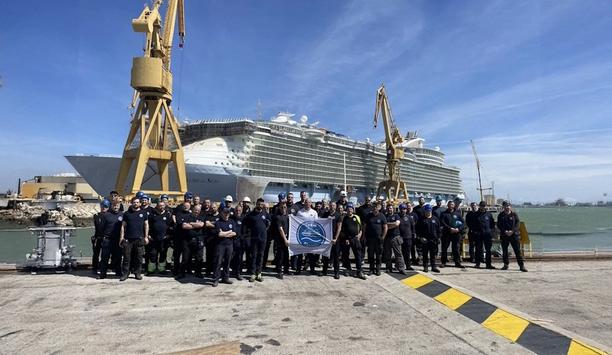
Team Electric rose to some special challenges in its successful completion of electrical installation and refit work during Royal Caribbean’s recent high profile drydocking and ‘amplification’ of Allure of the Seas. Despite heavy weather, tight deadlines, and complex coordination across multiple contractors and workstreams, Team Electric showcased its hallmark adaptability and technical expertise to deliver the full scope of work on schedule. Three turnkey suppliers With a total workforce of 60 skilled electricians on site, Team Electric was engaged separately by three turnkey suppliers — Almaco, Makinen, and LMG — to execute electrical works across hotel areas, galleys, and public spaces on board the cruise ship. The project marked a return to familiar territory for Team Electric, which was also involved in the original construction of Allure of the Seas in Turku Shipyard in 2009. Project highlights Team Electric delivered full electrical works for the new Mason Jar restaurant and bar Achievements included the installation of 121 kilometres of electrical cabling and 4,500 metres of cable trays, across a project involving key technical areas as well as substantial hotel work. Among tasks that extended to 600 individual material line items, Team Electric fitted nearly 2,000 lights. The company’s hotel-side scope covered 61 new cabins on decks 11, 12, and 14 that were built within a prefabricated aluminium block and craned onto the ship. These new spaces included corridors, AC rooms, and associated technical infrastructure. In addition, Team Electric delivered full electrical works for the new Mason Jar restaurant and bar, as well as several refurbished galley spaces and three public areas including a Crown Lounge and a teens’ gaming zone. On the technical side, Team Electric upgraded a substantial portion of the ship’s navigation and communication systems, including the full cabling of the bridge with 9 kilometres of new wiring. A turnkey delivery of Fugro’s OceanStar system included not just cabling but also installation, commissioning, and user training, led by certified Team Electric engineers. Rising to the challenge “The weather was brutal. 30 days of torrential rain in a 40-day dry dock,” said Daniel Brown, Project Manager at Team Electric. “It had a knock-on effect on every trade, but we managed to push through and keep the program on track.” Meticulous planning and on-the-ground flexibility, Team Electric met all critical deadlines High winds frequently delayed crane operations and other key activities. Yet, through meticulous planning and on-the-ground flexibility, Team Electric met all critical deadlines. The project’s compressed dry dock period presented a further challenge. As Caj Persson, Technical Project Lead, explained: “They cut the dry dock time compared to the sister vessel Oasis of the Seas by over 10 days. That meant everything had to be done faster, with no compromise on quality.” Reliability pays Team Electric’s proven reputation in cruise ship refits was a key factor in securing the contract. “We’re well known in the industry for delivering complex and multi-faceted electrical refits, especially cabins and public areas,” said Daniel Brown. “We’re not always the cheapest, but clients know we get the job done on time and to the highest standards.” Fourth contractor with no onboard electrical team asked Team Electric to step in and support their work That reliability also paid off during the refit, when a fourth contractor with no onboard electrical team asked Team Electric to step in and support their work, sparking another relationship that is set to continue beyond this project. The working relationship with Royal Caribbean also proved crucial. “We know the fleet, we’ve been with them since these keels were laid,” said Persson. “That familiarity, and our long-standing relationship with partners like Foreship, made the coordination smoother, even under pressure.” Integrated installation Unlike newbuilds, refits present constantly shifting priorities and constraints. As Daniel Brown explained: “In public areas especially, we can’t even install light fittings until the ceiling is in. It takes extreme coordination. Every task affects the next.” From cabin design to bridge cabling, and from substations to galleys, the Allure of the Seas project exemplifies Team Electric’s full-spectrum capabilities. By blending technical know-how with practical execution, the company once again proved why it's the preferred electrical partner for cruise ship refits worldwide.
Bennett Marine, a Division of Yamaha Marine Systems Company, needed a solution that integrated solar energy generation and mechanical upgrades to optimise both sustainability and working environment outcomes. However, adding the cooling capacity needed by a large warehouse, and the employees working there, during the long Floridian summers could significantly increase the utility load on the building. Solution Bennett Marine’s management approached its outsourced service provider, ABM. Having successfully completed two lighting upgrades on site, and acting as the current janitorial service provider, ABM took Bennet Marine’s request to its Infrastructure Solutions team. ABM’s Infrastructure Solutions designed an energy-efficient HVAC system supported by a rooftop solar PV array that offset utility costs with renewable energy, leading to a net 58% reduction in total utility usage for the building. ABM also assisted in securing tax credits and energy incentives for the project, as well as a new roof for the facility with additional building envelope improvements. Finding a better solution for the client ABM provides a consultative approach to help clients achieve sustainability goals, enable capital improvements" “Service experts across our company worked together to solve a need and deliver the sustainability solution Bennett Marine needed,” said Mark Hawkinson, President of ABM Technical Solutions. He adds, “ABM provides a consultative approach to help clients achieve sustainability goals, enable capital improvements, improve indoor air quality, address waste and inefficiency, and create a positive impact for communities.” In addition to the new roof, net energy offset, and improved cooling, ABM was able to assist the project in receiving an estimated $226,000 in tax credits and $224,000 in Energy Incentives through the Federal MACRS (Modified Accelerated Cost Recovery System). Benefits ABM’s Infrastructure Solutions enable businesses to invest in critical infrastructure needs and achieve sustainability, security, and resilience goals. A custom energy program drives costs out of operating budgets and redirects savings to critical needs, helping fund improvements. Highlights of the project for the Deerfield, Florida, warehouse include: Projected energy cost savings in the first year of $12,701 Replacement of ageing roof and speed roll doors to reduce energy loss Solar panel installation is capable of offsetting 66% of the building’s utility use

At Scheveningen Harbour in the coastal city of The Hague in the Netherlands, an AI-based video security system from Bosch Building Technologies is now ensuring that every single ship or boat entering or leaving the harbour is logged. The customised solution developed by Bosch together with its partner BrainCreators automatically registers and classifies shipping traffic. Intelligent security solution Until now, employees at the port control centre had to keep an eye on shipping traffic around the clock from the window of the control centre and manually record the 80 or so vessels that pass through the port every day. The city council of The Hague to quickly find a tailor-made solution for the port of Scheveningen The reason for the investment in the intelligent security solution was the fear that criminals would seek alternative routes via smaller ports such as Scheveningen, now that large Dutch or Belgian ports such as Rotterdam and Antwerp have been more secure against smuggled goods for some time. This was reason enough for the city council of The Hague to quickly find a tailor-made solution for the port of Scheveningen. Challenging task in Scheveningen Special conditions require individual solutions Most boats and ships entering the port of Scheveningen are not required to register and, unlike purely commercial ports such as Rotterdam, the port cannot simply be closed off. In addition to cargo ships, there are also fishing boats and private sailing yachts at anchor, with small dinghies and rowing boats cruising between them. Keeping track of the movement of goods in particular is therefore a challenging task in Scheveningen, where the video security system with intelligent video analysis installed by Bosch provides welcome support. Author's quote The requirements for this project were very specific because the shipping traffic not only had to be filmed" "The requirements for this project were very specific because the shipping traffic not only had to be filmed, but also registered and classified. The solution also had to provide information about the speed of travel," says Niels van Doorn, Senior Manager Solutions & Portfolio at Bosch Building Technologies in the Netherlands. "Standard software can't do that. Together with our partner, we have therefore developed an AI that can identify and classify ships of all kinds–from passenger ships and freighters to sailing yachts and inflatable boats." This data aids in identifying suspicious shipping movements. Flexidome IP starlight 8000i cameras No sooner said than done – and in the shortest possible time Development, planning and implementation only took around 12 months. Two intelligent video cameras at the mouth of the harbour now record the traffic. The specially developed AI classifies the ship types and registers them in a file. Due to the difficult lighting conditions in the port, the Flexidome IP starlight 8000i cameras from Bosch were chosen. They deliver detailed images even in challenging weather and lighting conditions and enable the staff in the control centre to see every detail, even in very bright or dark image sections. Ships that are not seen in real-time by the personnel on duty appear as still images on the screen All boat identifiers are recorded, documented, stored and automatically provided with additional information on date and time, direction of travel and speed around the clock using AI. The streams from the cameras are fed directly into a video management system. Ships that are not seen in real-time by the personnel on duty appear as still images on the screen. By analysing all the data, peak times, ship types, trends and deviations from the norm are determined. New video documentation "The dashboard gives staff an overview of all activities in the port. The software protects the privacy of the people recorded by making their faces unrecognisable. The new video documentation now provides solid evidence and helps to identify suspicious and unusual situations more quickly and effectively," says Ferry Ditewig, Business Development Manager at Bosch Building Technologies in the Netherlands. The video solution is also well equipped for future challenges and can be flexibly expanded as required: for example, additional information from external sources could be integrated, such as meteorological data, tides or the automatic identification system (AIS) for exchanging ship data.

Internacional Marítima is a Brazilian company leader in marine and port support services, with over 35 years in the market and for over five years using WEG paints in its fleet. The vessel - BLG 2, originally destined to launch jack-ups of up to 8000 tonnes and reclassified to support work in ocean navigation, will be receiving a new paint job for restoration and protection in a 9,000 m² area of side, bottom and deck. WEG supplies paint for the vessel - BLG 2 WEG is supplying more than 11,000 litres of paint for painting the ship WEG is supplying more than 11,000 litres of paint for painting the ship. These are high performance paints, which offer resistance and durability. Among the products supplied to Internacional Marítima, WEG have Shop primer from WEGZINC 401 line, the epoxy finishing primer WEGPOXI WET SURFACE 89 PW, paints from WEG TIE COAT line, and the anti-fouling paint W-ECOLOFLEX SPC 200. All of WEG's products are ideal solutions for marine applications. WEG and Internacional Marítima partnership “WEG already has a long partnership with Internacional Marítima and the group’s shipyards were one of the determining factors for choosing WEG paints for this major project,” said Richard Ferraz - Unit Manager INC (Catarinense Naval Industry) of Navegantes, Santa Catarina - Brazil.

Peel Ports is working with a consortium led by the University of Liverpool to bid for the UK’s flagship national Clean Maritime Research Hub. As part of a wider partnership with the University of Liverpool’s School of Management, Peel Ports has committed to participating in workshops, sharing operational port data and insights and allocating staff time to the project. UK SHORE programme The designation is part of the government’s UK SHORE programme, which aims to decarbonise the maritime sector by exploring key challenges and barriers, and encouraging research and development opportunities. The programme is set to provide funding grant schemes for early research projects by UK universities. If successful, the University-led project will receive a total of £7.4m of funds over the course of the next four years. The research hub would make Liverpool the UK centre of excellence for clean maritime research and facilitate further academic and industrial cooperation. Author's quote University-led project will receive a total of £7.4m of funds over the course of the next four years Lewis McIntyre, Managing Director Port Services at Peel Ports said: “Peel Ports has received numerous industry accolades for its efforts in reducing its environmental impact, including this year’s prestigious Clean Maritime Operator award by Maritime UK. This reflects our efforts in decarbonising our port operations as a top priority, and we are delighted to support the University of Liverpool in its efforts to bid for projects of this nature, which align to our own net zero 2040 strategy.” Professor Dongping Song from the University of Liverpool’s Management School said: ”Peel Ports’ support and participation is extremely valuable for the application to establish the hub and for the future research in decarbonising maritime industry and beyond.” Newly created hub The newly created hub will address a number of issues including low and zero-emission fuels for the maritime sector, energy sources, vessel technology and landside infrastructure. The winning bid will be announced before the end of the summer by the awarding and funding bodies: the Engineering and Physical Sciences Research Council and the Department of Transport.
Round table discussion

Given the diverse stakeholders in the maritime industry, it is understandable that collaboration is a challenge. However, the interconnected ecosystem of maritime makes collaboration essential. From ship owners and operators to port authorities, from shippers to shipbuilders, from classification societies to marine service providers and others, there are vast opportunities to work together and cooperate. To gain insight, we asked our Expert Panel Roundtable: How can the maritime industry increase collaboration, and what are the benefits?

Achieving optimal return on investment (ROI) for a maritime company involves a strategic combination of operational efficiency, revenue enhancement, cost control, careful financial management, attention to sustainability and regulatory compliance, and other factors. Given all the variables in play, profitability can be elusive, but our Expert Panel Roundtable has some ideas. We asked: How can maritime companies maximise return on investment (ROI)?



Fleet planning as a strategic asset
Download