Efficiency


ClassNK has issued an Approval in Principle (AiP) for the designs of a cable jointing vessel and a cable burial vessel developed by Mitsui O.S.K. Lines, Ltd. The certification demonstrates its feasibility from regulatory and safety perspectives. In Japan, the expansion of wind power generation utilising offshore areas and surrounding islands with favourable wind conditions and relatively limited site constraints is expected as part of efforts to increase the share of renewable energy. Reinforc...

Indian Register of Shipping has reported a strong year across defence, merchant marine, digital innovation and research during 2025, reinforcing its position as a key technical partner for governments, shipowners and shipyards at a time of accelerating change for the maritime sector. In merchant marine, IRS recorded broader engagement in international projects. It completed its first new construction project for Penguin Shipyard in Singapore, delivered its first Korean owner Korean-built v...

Orbit Communication Systems, a pioneering global provider of mission-critical land, airborne and maritime SATCOM terminals, tracking ground station solutions, and advanced communication systems, announced it has received a new order valued at approximately $2.4 million from a pioneering European defence integrator. The order is for the supply of OceanTRx4 MIL satellite communication systems for military maritime platforms operated by a leading NATO navy. System deliveries are scheduled to comm...

Watson Farley & Williams (“WFW”) advised shipping company - MPC Container Ships ASA (“MPCC”) on two significant transactions aimed at the long-term optimisation and modernisation of its fleet. MPCC contracted China’s Taizhou Sanfu Ship Engineering to build six 3,700 TEU container ships, with the first delivery scheduled for H2 2028. The newbuildings have been chartered on a long-term basis, with extension options, to a pioneering global liner shipping company....

Alfa Laval announces the launch of a new fuel supply solution FCM LNG for LNG-powered vessels. The system marks the expansion of Alfa Laval’s portfolio for alternative fuels, integrating cryogenic technology to deliver a holistic and highly reliable fuel supply solution for shipowners adopting LNG. Addressing the evolving market needs for LNG adoption As the maritime industry navigates its decarbonisation journey, LNG has solidified its role as a transitional fuel. It offers a viable pa...

Ocean Infinity has reached a significant milestone with the delivery of the final vessel in its fourteen-vessel Armada fleet - closing a chapter that began in 2020 with a bold ambition to redefine offshore operations. Over the past five years, Ocean Infinity has built and deployed a fleet of cutting-edge lean crewed vessels unlike anything the industry has seen before. This latest delivery completes the 86-metre class of Armada ships, following the successful introduction of the 78-metre class...
News

Kongsberg Maritime has announced the introduction of two new sizes to its popular UUC PM (Underwater Mountable, Permanent Magnet) azimuth thruster range, expanding its offering for high-efficiency propulsion solutions for demanding offshore and marine operations. The new additions to the UUC PM 405 model include units with 3.8m and 4.1m propeller diameters, delivering 86 and 91 metric tons of thrust, respectively. Evolving offshore energy sectors Kongsberg Maritime is also preparing to extend the UUC PM range further, with future models offering up to 5.5m diameter and power ratings of 6000 kW. This roadmap supports the company’s ambition to support larger vessels and more demanding applications, for the evolving offshore energy sector. "The introduction of these new sizes reflects our focus on meeting customer needs for flexibility and power in offshore operations," said Pasi Villanen, Product Manager, Thrusters, Kongsberg Maritime. "Permanent magnet technology allows us to deliver higher thrust in a smaller footprint, which is critical for vessels operating in challenging environments." Extensive experience delivering turnkey thruster The UUC PM thruster range is engineered for easy underwater mounting and removal, significantly reducing vessel downtime and cutting maintenance costs. Combined with the extensive experience delivering turnkey thruster change-outs for major drilling customers with record-breaking delivery times, this ensures time-efficient lifecycle maintenance for operators. Other demanding dynamic positioning applications With the ability to store spare units in key global locations and entrust Kongsberg Maritime with full maintenance project management, customers gain a truly turnkey lifecycle support solution – minimising planned maintenance interruptions and ensuring dependable performance with rapid return to operation. Together with built-in sensors enabling live condition monitoring, the underwater mounting capability and advanced permanent magnet motor technology deliver exceptional efficiency, reliability, and serviceability, making these thrusters the ideal choice for offshore support vessels, drilling rigs, and other demanding dynamic positioning applications.

Demonstrating a significant advance in South Korea’s strategy for maritime decarbonisation, Busan Port Authority (BPA) has officially launched the first state-owned all-electric ferry, with the end-to-end electric power and propulsion system supplied by ABB.Built by Busan’s Kangnam Corporation, the new passenger ferry is the first realisation by South Korean authorities of their plan to replace 140 state-owned assets with ships running on cleaner energy sources by 20301, in line with environmental legislation. Sustainable ferries will play a significant role in South Korea’s goal to achieve net-zero emissions by 2050, as set out in the country’s Green New Deal announced in 2020. Reducing local emissions and noise “This vessel demonstrates Busan Port Authority’s commitment to cleaner, smarter port operations,” said Woong-Ki Lee, Port Manager, Busan Port Authority. “By introducing an all-electric ferry to serve our North–South Port connection, we are reducing local emissions and noise while providing a replicable model for future harbor craft. ABB’s integrated electric propulsion and energy storage system has given us the efficiency, safety, and reliability we need to deliver a better experience for passengers and a healthier environment for our city.” Power and energy management ABB’s Onboard DC Grid™ power distribution system ensures optimal delivery of battery output to the vessel’s subsystems, with ABB’s PEMS™ power and energy management system controlling overall power distribution, increasing fault tolerance, and providing a high degree of reliability.During operations, the ferry is remotely monitored and supported by experts from ABB’s global network of ABB Ability™ Collaborative Operations Centers. Remote support and connectivity, together with advanced data analytics enabled by the ABB Ability™ Remote Diagnostics System, further enhance the vessel’s operational safety and optimise performance while helping to promptly detect and correct faults on board. Connectivity and charging duration Equipped with two 1,068-kilowatt-hour battery packs for emissions-free operations, the vessel will take approximately one hour and 30 minutes to fully charge the battery using 500 kW of power, which enables about two hours of operation.While the vessel is berthed, it is connected to the shore charging station via a stable optical communication link, allowing automatic control of charging and discharging from aboard. Increasing energy-efficiency “The launch of this new passenger ferry is testament to both Busan Port Authority’s and South Korea’s decarbonisation ambitions and provides a blueprint in pursuit of increasing energy-efficiency and reducing emissions,” said Riccardo Repetto, Global Segment Manager, Short Distance Shipping, ABB’s Marine & Ports division. “The project also demonstrates the power of ABB’s Onboard DC Grid™ as an enabling platform for cleaner maritime operations. We are proud to have played an integral role in delivering South Korea’s first state-owned all-electric ferry.”

Helm Operations announced that it has reached 400 customers and more than 10,000 vessels and assets running on Helm CONNECT worldwide, marking a major milestone for one of the maritime industry’s most widely adopted maintenance and operations platforms. The achievement reflects Helm’s expanding role as the operational foundation for fleets across towing, offshore support, passenger vessels, barges, dredging, and other specialised service segments. As more operators in more verticals adopt Helm CONNECT, the platform is increasingly becoming the connective layer fleets rely on to standardise, streamline, and scale their daily operations. Complex offshore support “This milestone isn’t just about hitting a number — it’s a reflection of the trust operators place in us across very different parts of the industry,” said James Wadsworth, CEO of Helm Operations. “From high-frequency passenger operations to complex offshore support and everything in between, customers are choosing Helm because it delivers reliability, consistency, and clarity across their fleets. We’re proud to see more organisations using Helm CONNECT as the backbone of how they run.” Helm’s continued growth Helm’s continued growth is being driven by operators looking to modernise their maintenance, safety, compliance, and crewing processes — and by Helm’s ability to support these needs across a wide range of operational models. Recent projects, including Washington State Ferries’ fleet-wide crew dispatch modernisation, demonstrate how large and complex organisations are turning to Helm for mission-critical operational systems that need to scale cleanly and perform under pressure. Building the next generation of tools “With more customers depending on Helm CONNECT every day, we’re focused on building the next generation of tools that help fleets operate smarter and more efficiently,” Wadsworth added. “From deeper integrations to predictive insights and intelligent automations, the future of fleet management is connected and user-centered, and we’re excited to be helping our customers get there.” Range of operational environments Helm CONNECT is now used daily in more than 35 countries, powering asset management, safety programs, crewing, dispatch, regulatory compliance, and operational workflows across thousands of vessels and shoreside teams. Helm continues to expand its partner ecosystem and integration capabilities, strengthening its position as the central operating system for maritime fleets across a growing range of operational environments.

ABB has verified a major advancement in vessel Dynamic Positioning (DP) technology, following successful Failure Mode and Effects Analysis (FMEA) proving trials and sea trials on board the new wind turbine installation vessel (WTIV) Norse Wind. By integrating ABB Ability™ Marine Pilot Control – a ship control system that unifies dynamic positioning, manoeuvering, and transit functionalities into one intuitive interface – with Azipod® propulsion units, the vessel showcases distinctive advantages of system-level synergy. ABB’s PEMS™ power and energy management system Meeting all performance expectations, ABB’s new Dynamic Positioning Class 2 (DP2) control system draws on input from DP operators, studies of accident logs and model-based control algorithms. Offering full control at all operational stages, the DP solution enhances vessel safety and operational decision-making. Sea trials onboard the DEME vessel Norse Wind verified the solution’s continuous control capability, integrated with ABB’s PEMS™ power and energy management system allowing for closed bus-tie operations. In addition, ABB’s tactile AX Bridge levers and user interface enable a clear situational overview of both the vessel and DP. The solution’s functionality leverages dynamic vessel and thruster models that update in real time to account for speed-induced changes in hydrodynamics. Innovation and advanced technologies "As an industry pioneer in innovation and advanced technologies, we sought a dynamic positioning solution that would raise the benchmark beyond the long-standing standard,” said Jeroen Vanden Branden, Head of Fleet at DEME. “ABB’s new DP2 control system delivers an advanced, intuitive, and user-friendly experience, providing operators with all essential information in a clean, modern interface. This system empowers our crews with precision, reliability, and real-time insights – delivering the performance and safety standards that modern DP operations demand." ABB Ability™ Marine Pilot Control The DEME sister ship Norse Energi will also feature the new ABB DP2 solution on its entry into service in early 2026. “In developing the DP2 functionality for ABB Ability™ Marine Pilot Control, combining it with Azipod® propulsion, and subsequently verifying its performance at sea, our team has shown great vision, craft and dedication,” said Rune Braastad, Business Line Manager, Marine Systems, ABB’s Marine & Ports division. “DEME has been an excellent pioneering partner, fully buying into our vision for a safer and more user-friendly DP control solution. I am proud of the collaboration and excited to see a safer operating environment for crews and vessels alike.”

In a move set to accelerate the future of marine electrification, EVE Energy, and Green Whale Technology (GWT) have signed a strategic partnership agreement to provide high-performance marine Battery Energy Storage Solutions (BESS) and service to customers worldwide. This collaboration combines EVE Energy’s advanced lithium marine battery system technology, and GWT’s marine engineering, lifecycle service and commissioning expertise. Marine energy storage Note that EVE Energy and GWT have already delivered the first BV-classed marine battery container ever built in Asia within record time. Now, both parties step up their collaboration with a shared vision: to make marine energy storage more affordable, more reliable, and safer - and to get closer to the customer. The strategic agreement is structured as a back-to-back partnership, ensuring comprehensive support from EVE Energy across all aspects of the collaboration. EVE’s active balancing technology Second, the high C-rate maritime battery market was long dominated by NMC cell-based systems In practice, both the new BESS and the joint way of working feature several eye-catching characteristics: First, thanks to EVE’s active balancing technology, these systems deliver a lifetime of up to 15 years, surpassing any LFP systems in the market today, and significantly reducing total cost of ownership. Second, the high C-rate maritime battery market was long dominated by NMC cell-based systems. EVE, however, is currently the only supplier in the world offering 3C continuous LFP marine batteries, offering a longer lifetime than NMC-based system in many application scenarios. Third, the alliance’s massive production capability, advanced Lithium Iron Phosphate (LFP) chemistry technology, maritime experience, cost advantages, data safety, and global service capacity shows this solution’s potential to be a game-changer in the market. Trust and seamless collaboration Godfrey Wang, CEO of Green Whale Technology B.V., states: “GWT is very proud of this partnership, especially because we are a young company." "This really strengthens our ability to provide lifecycle solutions to global customers. I would like to thank the entire EVE team for their trust and seamless collaboration, and we look forward to growing together.” Europe-based cloud services and spare parts Spare parts storage in Norway and the Netherlands further strengthens timely after-sales support To support customers globally, and with higher standards, Green Whale Technology is establishing an NL-based cloud service platform, guaranteeing local data compliance, digital security, and mitigating geopolitical risks. Spare parts storage in Norway and the Netherlands further strengthen timely after-sales support, while joint R&D initiatives promise continued innovation. Production capacity and cost As one of the world’s largest battery manufacturers (cells and systems), EVE Energy leverages its huge ESS system factory capacity of over 10 MWh per day to ensure scalability and timely delivery. In addition, the 3C marine battery system is priced below USD 300 per kWh, which is unique in the current market. In conclusion, EVE Energy’s Head of Marine & Port, Yong Cong Xiong says: “By collaborating on all the key elements in BESS development, manufacturing, delivery and service, we aim to ensure that customers receive the best available battery technology, backed by global support throughout the product lifecycle of our systems." "We are very proud that we can now extend the system’s lifetime to 15 years with an experienced local service provider, GWT, and look forward to seeing them deployed in the maritime markets.”

A strategic agreement has been signed between AkzoNobel’s International® marine coatings, and Winning Shipping in China which will help accelerate the maritime industry’s transition to lower carbon operations.The two companies have been partners since 2016 and the expanded collaboration will involve AkzoNobel supplying a significant volume of International® coatings for a number of drydocking projects in 2026. Focused on six vessels, it will enhance the fleet’s operational efficiency and environmental performance. Agreement details At the core of the latest agreement is Intersleek® 1100SR by International®– the world’s first biocide-free fouling control coating to feature patented “slime release” technology. It delivers outstanding fouling control and significantly reduces hull resistance, helping fleets to save fuel and cut greenhouse gas emissions.“The outstanding performance of International® has been fully validated in our existing fleet, delivering significant fuel savings and enhancing our market competitiveness,” says Yu Shan, General Manager of Qingdao Winning International Ship Management Co., Ltd.“This is why we’ve chosen to extend and deepen our partnership. Through this drydocking cooperation, we look forward to more vessels benefiting from these advanced more sustainable technologies, jointly contributing to a greener future for the industry.” Optimising energy efficiency Following the International Maritime Organization’s introduction of emission reduction regulations, shipping companies are addressing their carbon footprint and actively adopting measures to optimise energy efficiency. China is also speeding up the implementation of its “Dual Carbon” strategy in the maritime sector, promoting the widespread adoption of more sustainable technologies. Supporting the development “We’re honored to continue and deepen our strategic cooperation,” adds Rob Leslie, Commercial Director of AkzoNobel Marine and Protective Coatings in Greater China. “Winning Shipping’s unwavering pursuit of more efficient operations aligns perfectly with our philosophy of helping customers through sustainable innovation. We look forward to providing solid support for the long-term operational efficiency and sustainable development goals of its fleet.” Antifouling coating In addition to Intersleek 1100SR, International® will also supply the project with its Intercept® 8500 LPP antifouling coating, which combines linear polishing with an optimised biocide package. This is the highest performing antifouling product within the International® range, specifically designed for deep sea vessels. The agreement was signed during the recent Marintec China 2025 event last week, one of the foremost maritime industry exhibitions.

Expert commentary

The concept of the digital twin and its potential benefits have become embedded in the maritime industry. But how far it has penetrated the collective mindset of the industry is less certain. Creating a digital twin for an expensive and complex newbuilding project is becoming more commonplace and is being driven by owners, particularly for energy shipping, defence or other specialist vessels. 3D model-based design Powered by 3D model-based design and a Product Lifecycle Management-led approach to shipyard workflows, a digital model will inform and sustain the vessel’s entire lifecycle. Less widely appreciated is that the same holds true for existing vessels – including smaller and less complex commercial ships. Buyers who prefer second-hand tonnage with the potential for retrofits can also benefit from a digital model. The ability to capture enough data to create the digital twin is achievable using today’s shipbuilding-specific tools and that does not mean they have to be a ‘perfect’ representation of the as-built ship. Powered by 3D model-based design and a Product Lifecycle Management-led approach to the shipyard. Newbuildings Some vessel types – particularly in naval shipbuilding – are obvious candidates given their long lifecycles in single ownership, but for commercial shipping the demand for a digital twin requires an understanding of whether the owner foresees a long-term ownership/operating position. Part of the reluctance stems from the perceived complexity of the task and also from the need to make the business case Education and value creation are essential so that the shipowner knows what to ask for, understands what it will do for them and how they can extract value for however long they own and operate the asset. Part of the reluctance stems from the perceived complexity of the task and also from the need to make the business case. Ultimately, it will happen if owners specify it in the contract and shipbuilders are paid to develop an accurate ‘as-built/as-delivered’ digital twin. Owners don’t make investments without demonstrable ROI and shipyards only deliver what the contract requires. 2D production drawings How to get the two parties aligned is a critical component of success. Having the shipowner onboard early is key to getting the digital twin embedded in the construction process. Without specific provision for a digital twin, most shipyards will stop developing the ship model at some point and additional information only shows up on the 2D production drawings, resulting in a less usable model for the owner. Defining the deliverables and intended purpose can make the case more forcefully. For shipyards, the fact that a digital twin that can inform the production process, streamline the handover and support sustainment over the vessel’s lifecycle should be a competitive differentiator. Additional information only shows up on the 2D production drawings. Existing vessels Many vessel owners and shiprepair yards alike have yet to fully recognize the long-term business value of digital twins for existing tonnage. Until this awareness grows, the integration of digital twins into the in-service phases will continue to lag other complex manufacturing industries. Looking further down the curve, a lifecycle digital twin can create its own type of value. For many yards, maintenance, repair and especially energy efficiency upgrades are a big part of their future. Availability of an accurate, reliable, digital twin supports this strategic direction. The common factor is for both owner and yard to understand that a digital twin can be ‘good enough’ to serve the defined purposes, without being a multi-headed technology project that struggles to justify its investment case. Digital twin for second-hand and in-service vessels The digital twin can then be used to optimize in-service operations onboard ship and ashore An accurate digital twin for second-hand and in-service vessels is essential for effective management, supporting ongoing maintenance and other operational needs while reducing downtime and costs. There are many ways to aggregate existing information and combine it with model data from different sources such as 3D laser scans, 360-degree imaging and re-modelling in 3D to create the starting point for a ’good enough’ digital twin. The digital twin can then be used to optimize in-service operations onboard ship and ashore, plan and execute maintenance, support upgrade programs and inform safe decommissioning. Less pain, more gain The business case for a lifecycle twin is very simple: it can support and inform planned and predictive maintenance and planning for dry dock. Availability of the twin can shorten refit and repair cycle times because the faster the vessel’s manager can get the ship in and out of the yard, the sooner it is back in service and earning. The benefits can also be shared with the shipyard if they can use the digital twin to analyse the layout against the prepared scope. By having a reliable, current version of the ship, the yard can go beyond simple estimation and provide a more reliable cost projection and assessment of where challenges might lie. Benefit of a digital twin Using the actual 3D design model to create the digital twin improves training accuracy and configuration A further benefit of a digital twin is use for crew familiarisation before the build is completed and training both pre-launch and throughout the life of the vessel. While some shipowners create a digital model for training, using the actual 3D design model to create the digital twin improves training accuracy and configuration and reduces risks and hazards from training on a model that may be an inaccurate representation of the as-built and as-operated vessel. We also need to acknowledge the challenges: principally how to take the pain out of managing the digital twin and recognising that moving from paper to digital is not always an easy transition. The parties need to agree whose responsibility is it to keep an accurate record of model updates such that the in-service digital twin is reliable and trustworthy. Growing demand for vessels Shipowners commonly complain that they often struggle to update and verify paper vessel drawings. The prospect of using a digital system should remove most of that hassle, and yet understanding who has responsibility remains a frequent objection. Where this conversation goes from here depends on the willingness of vendors to explain, shipyards to engage and owners to fully realise the benefits. Procuring agencies can also act by reducing acquisition and policy barriers to promote genuine innovation. The growing complexity of shipping markets and the growing demand for vessels that can be adapted and retrofitted over their lifecycles make a compelling case for the digital twin rather than the analogue orphan.

Roughly three percent of the world’s greenhouse gases come from ships, a figure that puts the sector on par with the emissions of entire industrialised nations. Trade volumes keep growing, and if nothing changes, that percentage will climb. The International Maritime Organization has already set a 2050 net-zero target. For operators, shipyards, and ports, the question is not whether change is coming but how fast they can adapt without undermining the economics of global shipping. How the marine industry can reduce carbon emissions? The problem is broad: carbon output is tied to engines, hulls, fuels, port operations, and even day-to-day crew behaviour. Solutions are arriving from many directions at once. Some are technical, others behavioural. All require investment and a willingness to rethink what has been a conservative industry for decades. Danny Peachey, Manager at HTL Group, a pioneering provider of controlled bolting solutions, looks at how the marine industry can reduce carbon emissions through propulsion improvements, alternative fuels, digital optimisation, smarter resource use, and crew training. Propulsion and hull performance Retrofits are attractive for older ships because they buy time before replacement is unavoidable Efficiency gains start where steel meets water. Propeller systems are being re-engineered to reduce drag; air lubrication is now used on several large vessels to create a layer of bubbles under the hull; and specialised coatings keep barnacles and algae from slowing a ship’s passage. Even modest upgrades can trim fuel use by five to ten percent, which translates into both lower operating costs and reduced carbon output. Retrofits are attractive for older ships because they buy time before replacement is unavoidable. For new builds, financiers and regulators increasingly expect these improvements as a baseline, so they are less a competitive edge and more a licence to operate. Alternative fuels Conventional bunker fuel has powered the industry for generations, but its environmental cost is becoming unsustainable. Liquefied natural gas is already in use, offering lower emissions of carbon dioxide and particulates. Beyond that, the sector is experimenting with methanol, ammonia, and hydrogen. Each fuel raises new questions: ammonia is toxic, hydrogen requires complex storage, and methanol demands its own bunkering infrastructure. Yet pilot projects are scaling up. Maersk’s methanol-fuelled container ship entered service in 2023, and European consortia are testing hydrogen and ammonia on short-sea routes. Adoption will be uneven, but these first movers are building the know-how and supply chains that others will need. Digital operations Studies suggest voyage optimisation alone may cut emissions by up to 15 percent A modern vessel generates huge volumes of data, and using that information effectively is one of the quickest ways to cut emissions. Engine monitoring, weather routeing, and speed optimisation all contribute. Adjusting course to avoid headwinds or moderating speed by a fraction can save tonnes of fuel on a single voyage. Fleet management platforms now merge satellite feeds, predictive analytics, and onboard sensors into a live operational picture. Instead of waiting for post-voyage reports, operators can make real-time decisions that reduce waste immediately. Studies suggest voyage optimisation alone may cut emissions by up to 15 percent. Ports are also digitising cargo handling, which reduces turnaround times and the hours vessels spend idling with auxiliary engines running. Energy use and waste handling Propulsion may dominate the emissions conversation, but it is far from the only factor. Lighting, cooling, and heating all add to the carbon footprint of a vessel. Swapping to LED lighting, installing heat-recovery units, and using more efficient HVAC controls are straightforward measures that reduce overall demand. Waste handling is another area where progress is visible. Ships generate oils, plastics, packaging, and food waste, all of which require careful management. Segregation and recycling prevent unnecessary emissions from disposal, and modern treatment systems reduce pollutants from the waste that cannot be avoided. Ports with adequate reception facilities make compliance with MARPOL Annex V more realistic and less costly. Training and behaviour Carbon reporting frameworks are tightening, and major cargo owners increasingly order emissions Technology is only as effective as the people who use it. Crews that understand fuel-efficient navigation, waste segregation, and energy-saving practices deliver better results than those who do not. Many operators now share performance data directly with crews, turning efficiency into a shared goal rather than a distant corporate target. Carbon reporting frameworks are tightening, and major cargo owners increasingly demand emissions data from carriers. A company’s ability to demonstrate progress is already influencing contracts, which makes sustainability performance a competitive issue as much as a regulatory one. Steering the industry forward The marine sector is not going to eliminate its carbon footprint in a single leap. What matters now is steady progress: smarter propulsion, trials of cleaner fuels, better use of data, tighter energy management, and crews trained to treat efficiency as part of their role. Each step may look modest in isolation, but together they mark the difference between falling behind and staying viable in an industry that is under close scrutiny. The IMO’s 2050 deadline may still feel distant, yet decisions being made today will determine who thrives when it arrives. Companies that invest early in carbon reduction will not only cut costs, but also prove to regulators and customers that they can keep global trade moving without ignoring its environmental cost.

The offshore energy sector has always been cyclical, but today’s volatility feels different. Inflation, rising capital costs, and shifting forecasts are reshaping both offshore wind and oil and gas, prompting a rethink of how vessel owners, designers, and operators prepare for the decade ahead. While costs have soared, investment has not collapsed. Instead, a new kind of resilience is emerging, built on design flexibility, hybridisation, and system integration. For projects commissioned only a few years ago, offshore wind costs have risen by almost 80% against original estimates. Meanwhile, forecasts for global installed offshore wind capacity in 2035 have been revised down by around 12% in just two years. The sharpest corrections are in newer entrant regions such as the United States, with established markets also revising expectations in line with changing conditions. Offshore energy These shifts have disrupted assumptions around utilisation, day rates, and financing. Yet despite the squeeze, capital expenditure across offshore energy remains robust. Oil and gas operators continue to invest in Brazil, the Middle East, and West Africa, while renewable developers are recalibrating rather than retreating as investment decisions are being confirmed. For vessel owners, this divergence creates opportunity. Future projects will demand ships that can bridge markets, switching between wind and oil and gas or between subsea construction and commissioning. In this environment, resilience is not a slogan, it is a design principle. Capital expenditure across offshore energy remains robust. CSOVs and subsea construction vessels Recent years have seen a surge in CSOV newbuilds, initially intended for wind operations Today’s offshore fleet spans a wide range of vessel types, from CSOVs and subsea construction vessels to AHTSs, PSVs, and WTIVs. Each faces distinct pressures, but all share a single challenge: staying relevant across cycles that are shorter and more unpredictable. Recent years have seen a surge in CSOV newbuilds, initially intended for wind operations. As wind growth slows, many of these vessels are finding employment in oil and gas, where their walk-to-work and accommodation capabilities remain valuable. This crossover underlines a growing recognition that the most valuable asset is not the most specialised, but the most adaptable. Enabling practical resilience The regulatory tide is rising alongside the commercial one. The International Maritime Organization’s net-zero ambition for 2050 and the European Union’s extension of ETS and FuelEU Maritime rules now encompass most offshore vessels above 5,000 GT. Compliance, once a back-office consideration, is now a boardroom priority. Designing for regulatory flexibility is therefore critical. Fuel choice alone is not enough. True resilience combines alternative fuels – methanol, ethanol, or biofuels – with hybrid power and energy management technologies that can evolve over time. FuelEU Maritime rules encompass most offshore vessels above 5,000 GT. Role to play in turning resilience Owners who view compliance as an option rather than a burden are gaining a competitive edge Owners who view compliance as an opportunity rather than a burden are gaining a competitive edge. Charterers increasingly prefer vessels that not only meet today’s standards but are ready for tomorrow’s. The same expectation is now shaping financing decisions, as lenders and investors are less willing to back projects that may struggle to comply with future emissions or fuel regulations. In a market where financing is tight and scrutiny is high, proven sustainability credentials can be the difference between winning a long-term charter or sitting idle alongside. As these market and regulatory pressures intensify, equipment suppliers have a critical role to play in turning resilience from concept into practice. Wärtsilä’s approach centres on modularity, fuel flexibility, and data-led efficiency. Areas that directly address the challenges facing offshore operators. Advanced power management systems Engines such as the Wärtsilä 20 and 25 series are already being delivered with alternative fuel ready notations, offering shipowners a straightforward route to alternative fuels without compromising performance or reliability. The hybrid propulsion and energy storage systems have been developed to work across both oil and gas and wind support vessels, providing a bridge between the two markets and improving redundancy at the same time. Continuous data collection and predictive maintenance are now fundamental tools for improving reliability and optimising performance across offshore fleets. Equally important is digital integration. Wärtsilä’s lifecycle services, based on continuous data collection and predictive maintenance, extend overhaul intervals and reduce emissions. When paired with advanced power management systems such as DC grids, variable-speed operation, and hybrid control technologies, these approaches can deliver measurable gains in both energy efficiency and uptime. Engines like Wärtsilä 20 and 25 series are delivered with alternative fuel-ready notations. This approach does not remove the uncertainty inherent in offshore markets, but it reduces its impact. By offering designs and systems that anticipate regulatory and operational change, Wärtsilä aims to give owners greater confidence in the long-term viability of their assets. The principle is simple: build flexibility in from the start, rather than trying to retrofit it later. Integration: the next frontier Perhaps the most significant development in offshore vessel design is the move towards system-level integration. Engines, thrusters, batteries, and digital tools can no longer be specified in isolation. A systems approach delivers a vessel that performs to the specifications set out in the design phase, by reducing obsolescence risk and making retrofitting easier as new technologies mature. Modular architectures enhance this advantage. By designing vessels with flexible engine rooms, scalable electrical systems, and open digital interfaces, owners can future-proof assets against fuel transitions and regulatory shifts. The offshore energy market is unlikely to find stability soon. Demand will continue to fluctuate between regions and sectors, and the pressure to decarbonise will intensify. Yet the pathway to resilience is clear. Vessels that combine efficiency, flexibility, and integration will be best placed to weather volatility and capture opportunity across both wind and oil and gas. The winners will be those who treat change not as disruption, but as design input.
Harbour insights

Various paths to support decarbonisation include alternative carbon-free and carbon-neutral fuels, electrification and enhancing vessel efficiency. A system level approach enhances the value of these technologies; tackling each element separately can lead to a sub-optimised solution today and an inflexible solution to meet the uncertainties and increasingly stringent requirements in the future. Wärtsilä Marine set up its Integrated Systems & Solutions (IS&S) unit to address these challenges. The team brings together expertise in naval architecture, energy management and electrification, power system design and simulation, and multi-product integration to design, engineer and deliver competitive and future-proof propulsion concepts. Data-driven design principles The 50-strong IS&S team at Wärtsilä engages with customers from concept development to commissioning Since its establishment in 2020, the 50-strong IS&S team at Wärtsilä engages with customers from concept development to commissioning. They apply data-driven design principles by analysing operational data against customer objectives to define system specifications that balance performance, operational expenditures (OPEX), capital expenditures (CAPEX), and future flexibility. Secondly, they employ modular integration by configuring pre-engineered building blocks, such as engines, batteries, propulsion, and power-management software to the needs of each vessel, thus reducing yard workload and ensuring interoperability. Encompass carbon-neutral fuels “In today’s rapidly changing maritime environment, flexibility, system intelligence and digitalisation are essential,” says Grant Gassner, Director, Integrated Systems and Solutions at Wärtsilä Marine. He adds, “We at Wärtsilä are committed to delivering comprehensive, upgrade-ready powertrain platforms that encompass carbon-neutral fuels, advanced electrification and new efficiency technologies and are committed to supporting the customer throughout the entire lifecycle towards net zero.” Ensuring agility to adapt to regulations The maritime industry currently struggles with a lack of availability and high cost of sustainable fuels As regulatory requirements become increasingly clear through the framework established by European Union (EU) and International Maritime Organization (IMO), analysing potential compliance strategies and roadmaps ensures a power system that is agile and able to adapt to evolving fuels, technologies, regulations, and vessel operational trends, says Gassner. The objective is to ensure a flexible path forward by enabling an optimised total cost of ownership (TCO) as well as reducing the risk of stranded assets. The maritime industry currently struggles with a lack of availability and high cost of sustainable fuels. Engine technology is available to use these fuels, which is good news; however, a somewhat unclear regulatory environment so far has made it challenging to secure large scale investments to develop sustainable fuel projects. Net-zero regulations for shipping It is therefore encouraging and positive that the April 2025 Marine Environment Protection Committee (MEPC 83) session approved a framework for net-zero regulations for shipping, which is expected to be formally adopted in the October 2025 IMO extra-ordinary MEPC. A clearly defined regulatory environment that includes a relatively high and increasing cost of carbon emissions is a fundamental prerequisite to accelerate investments and progress. Tailoring solutions globally to owners and operators Wärtsilä’s decarbonisation approach is designed to tailor flexible solutions to the unique needs of owners Wärtsilä’s decarbonisation approach is designed to tailor flexible solutions to the unique needs of owners and operators globally, ensuring that they are equipped with the right technologies, at the right time. “As a company, we do not just sell a product or technology, we offer a partnership,” says Grant Gassner, adding “We want to partner with our customers to help them transition at the right pace, at the right time.” The most topical talking point at Nor-Shipping in June was around the framework IMO approved in MEPC 83 regarding net-zero regulations for global shipping. Although there remain some uncertainties, the consensus around the proposal is that it is a highly significant and important development. Incentivise marine decarbonisation “It finally provides some regulatory clarity and attaches a significant lifecycle cost to carbon emissions, which is a fundamental prerequisite to incentivise marine decarbonisation and also stimulate investment in fuels infrastructure and new technologies,” says Grant Gassner. He adds, “The IMO should be commended for achieving this breakthrough approval during MEPC 83. The legislation framework provides a renewed sense of optimism within the maritime community that we will observe real progress in the coming years in a segment that is highly challenging to abate.” Lifecycle power solution and service partner Wärtsilä’s role has expanded from equipment supplier to a complete lifecycle power solution partner Wärtsilä was established over 190 years ago in 1834 as a sawmill and transitioned into iron works in the decades leading up to 1940. Over the decades, their marine offering has expanded from the first engine manufactured in 1942 into a complete powertrain systems and digital service offering, collaborating closely with shipyards and owners worldwide. Today, as the industry shifts towards decarbonisation, Wärtsilä’s role has expanded from equipment supplier to a complete lifecycle power solution and service partner, bringing together engines, electrification, propulsion, software, and lifecycle services. Addressing a significant new lifecycle cost Traditional power system design philosophy has historically focused on optimising the TCO based on a relatively certain and fixed regulatory environment, fuel, and technology selection over the lifecycle of a vessel. However, in 2025, the evolving regulatory environment around decarbonisation incorporates a significant new lifecycle cost attached to carbon emissions, requiring a totally new approach. Ship owners and operators must now consider the evolving needs of a vessel to continuously reduce carbon intensity over the typical 25–30-year vessel lifecycle. They also must consider the uncertainty of how to mitigate potentially significant costs. Generational new challenge “This generational new challenge requires a propulsion system that is not only competitive today, but which also has the capability to continuously adapt,” says Grant Gassner. He adds, “This will ensure a competitive TCO over the lifecycle of a vessel against a backdrop of a highly uncertain future regarding the available fuels, technologies, and evolving regulations.” Advantages of single-supplier accountability Future lifecycle upgrades can include sustainable fuel retrofits in the future, hybrid systems Wärtsilä’s single-supplier accountability model means that, as the OEM, they own both equipment and interfaces. This approach simplifies project execution and risk management for customers. Their solutions also benefit from lifecycle support and the capability to adapt their products continuously. Future lifecycle upgrades can include sustainable fuel retrofits in the future, hybrid systems and shore connections, energy-saving devices, or enhanced digitalisation. Wärtsilä focuses on fuel flexibility, electrification and/or energy efficiency improvements and considers them holistically within a hybridised system rather than in individual silos, since they all significantly influence the overall power system and its design. Wärtsilä’s engine portfolio Wärtsilä’s engine portfolio was developed decades ago to operate on a range of marine liquid fuels and LNG, both in fossil and bio-fuel form. They have also commercially released engines capable of running on emerging low- or zero-carbon fuels such as green methanol, ethanol, ammonia and hydrogen. “It is, therefore, safe to conclude that engine technology will not delay the uptake of sustainable fuels,” says Grant Gassner. Sustainable fuels will be more expensive There is no broad consensus in the marine industry on which sustainable fuel will prevail Currently, there is no broad consensus in the marine industry on which sustainable fuel will prevail in the journey toward decarbonisation; most likely, several fuels will contribute. In any case, there is general agreement that all sustainable fuels will be significantly more expensive than traditional fossil maritime fuels and that availability will remain uncertain for the foreseeable future. The high cost and scarcity of sustainable fuels will therefore drive an unprecedented focus on improving vessel energy efficiency. After all, the cheapest fuel is the one you do not burn. Propulsion power systems Efficiency gains will come from a range of new technologies, such as wind-assisted propulsion, hull air lubrication, enhanced hull forms and propulsion concepts, smart digital navigation systems and further reductions in vessel speed, commonly known as slow steaming. These advances will also affect propulsion power systems, so a holistic approach to ship design and power-system integration has never been more important in light of increasingly hybridised propulsion concepts. The fundamental role of electrification Although much of the discussion in the marine industry rightly centres on sustainable fuels Although much of the discussion in the marine industry rightly centres on sustainable fuels, electrification will also play a fundamental role in the transition to net zero. All vessels operating over short distances, regardless of size, will increasingly adopt battery-electric propulsion, combining sizeable battery banks with plug-in shore connections as their primary energy source, says Gassner. This battery-electric solution offers far superior “grid-to-wake” efficiency compared with producing e-fuels from renewable electricity, bunkering those fuels, and then reconverting them back into mechanical or electrical energy via a thermal converter such as an engine. Battery technology and shore-power infrastructure Today, many Roll-On/Roll-Off Passenger (ROPAX) ferries covering distances of up to 100 nautical miles are already shifting from traditional mechanical drives to hybrid-electric drivetrains: Medium-speed 4-stroke generating sets feed electricity into a hybrid system with large, scalable energy-storage capacity and a fully electrified propulsion line. As battery technology and shore-power infrastructure advance, these vessels will rely ever more on green shore electricity and ever less on gensets running on bunkered fuels. Such applications will soon exceed 100 MWh of installed battery capacity, which is enough to meet much of the power demand of today’s regional ferries and short-sea vessels. Wärtsilä has already partnered with Australian shipbuilder Incat and Argentinian operator Buquebus as system integrator for the world’s largest zero-emission fully electric catamaran. Set for delivery in 2025, the vessel will feature approximately 40 MWh of energy storage, measure 130 metres in length and carry 2100 passengers plus 225 vehicles. Argentinian operator Buquebus as system integrator. Role of electrification There is growing interest in deep-sea segments, such as LNG carriers and containerships The role of electrification in deep-sea shipping has often been overlooked, given the currently valid consensus that such vessels demand too much energy to run on batteries alone today or in the near future. As a result, it has been assumed that deep-sea propulsion solutions will remain largely unchanged and that available green fuels will materialise when needed. However, there is growing interest in deep-sea segments, such as LNG carriers and containerships to adopt hybrid-electric propulsion. Hybrid-electric is compact and fuel-agnostic Hybrid-electric propulsion is fuel and technology agnostic: A modular hybrid-electric drive can easily accommodate all new fuels and powering technologies. Another advantage is compactness and cargo gain as enhanced design flexibility can increase cargo capacity by around 6-7% in modern LNG carriers, reducing carbon emissions on a grams per ton per mil basis. New fuels can be introduced incrementally (one small genset at a time), while the electrical system buffers dynamic load changes and can adapt to potential changes in engine performance properties when applying new fuels, such as power output and dynamic loading. Deep-sea shipping segments Furthermore, modular systems maintain high load factors and thus high efficiency even at low power nodes Furthermore, modular systems maintain high load factors and thus high efficiency even at low power nodes, pairing well with energy-saving measures and slow steaming. Greater redundancy, built-in safety and readiness for autonomous operation and zero-emission fuels and low underwater radiated noise contribute to further safety and futureproofing. Electric propulsion has been reliably used in cruise and offshore segments for decades, with thousands of installations worldwide. In view of these factors, deep-sea shipping segments may gradually transition towards ever more electrified and hybridised drivetrains, initially via hybrid mechanical PTO/PTI concepts and ultimately to full hybrid-electric systems with propellers driven by electric motors rather than mechanical low-speed engines. Flexibility needed for uncertain future “Data-driven design” is an important factor when it comes to developing maritime solutions. “By drawing on real-world operating profiles, fuel consumption records and voyage data, we tailor each integrated system to actual customer needs,” says Grant Gassner. Furthermore, system simulation models need to consider new factors such as emission penalties, costs of sustainable fuels, and developments in regulatory requirements over time. These factors make propulsion system models increasingly complex in order to evaluate total lifecycle cost analysis which includes a new variable: the cost of carbon, which was not previously considered in the past. Power system simulation, energy management, AI, and electrification combined with deep knowledge in naval architecture and marine engineering are critical competences for the future. There is also a need to follow closely new electrification technologies such as fuel cells, solar, nuclear heat to power, ESS, etc., as new technologies may also play a role in hybridised next generation propulsion concepts. Modular electrified systems In an uncertain regulatory, technology and fuel-supply landscape, flexibility is vital in order to “future-proof” In an uncertain regulatory, technology and fuel-supply landscape, flexibility is essential in order to “future-proof” the approach. Engines running on LNG today can be made ready for ammonia tomorrow, and modular electrified systems can be upgraded with more batteries, new powering technologies and can also adapt to lower power demand as a result of efficiency saving technologies. “We design our solutions so they can be upgraded over time, and our lifecycle service agreements cover asset management, software updates and retrofits,” says Grant Gassner, adding “This approach keeps vessels compliant, efficient and resilient throughout their service life.” From newbuilds to vessels in service For newbuilds, IS&S explores dual-fuel engines, battery banks and renewable generators as part of the ship’s design from the very start. Wärtsilä provides detailed functional specifications and pre-engineered modules to simplify installation. Wärtsilä provides detailed functional specifications and pre-engineered modules to simplify installation The software underpinning any hybrid propulsion system is of course also crucial, which is why the energy management capabilities of Wärtsilä are important for ensuring the efficiency, reliability and flexibility of the solution adopted. For vessels already in service, Wärtsilä’s retrofit solutions enable customers to install batteries or extra fuel-flexible engines into available spaces, reconfigure switchboards and update control software. Over the entire vessel lifecycle Although retrofits can be more complex because of space limitations and structural constraints, their modular approach and single-supplier project management keep the work on schedule and within budget. The capability to support owners over the entire vessel lifecycle will be of utmost importance going forward and therefore, a holistic lifecycle view is fundamental when developing today’s propulsion concepts.

Electrification plays an important role in addressing the environmental challenges facing the maritime sector, and electric propulsion is the key component in this transition. Energy-efficient propulsion, which encompasses both efficient drivetrain and less weight, will contribute to meeting environmental challenges, while providing unwavering reliability for the operators. Cleaner propulsion solutions Ease of integration and maintenance helps streamline system design and installation, crucial factors in speeding up the adoption of cleaner propulsion solutions across the maritime sector. ABB promotes the adoption of advanced motor technologies in the rail, marine, and eMobility sectors through the Traction & Mobile e-Power Motors business unit. The team designs and delivers both components and complete propulsion systems for railway as well as off-highway machines and marine markets. IMO’s 2050 net-zero goals ABB helps the IMO’s 2050 net-zero goals by advancing marine electrification via innovations “The energy-efficient solutions we've developed are enabling compact, reliable electric propulsion in marine applications exemplified by our new AMXE Marine Motor, engineered specifically to meet the harsh demands and specific requirements of the marine market and environment,” says Henrik T. Nilsson, Global Sales Manager for Traction & Mobile e-Power Motors. ABB supports the IMO’s 2050 net-zero goals by advancing marine electrification through innovations like the AMXE Marine Motor and advanced motor control technologies. Conventional propulsion systems This compact, high-power-density AMXE Marine Motor is designed for small to mid-sized electric and hybrid vessels and open deck applications, offering high efficiency, low weight and excellent performance in a durable frame designed to sustain marine environments. By replacing conventional propulsion systems, the AMXE enables cleaner, more sustainable vessel operations. ABB’s global expertise, service network, and complementary technologies further enhance marine efficiency and decarbonisation, says Nilsson. These solutions help shipbuilders and operators meet sustainability targets and transition toward low emission. ABB’s expertise in the marine industry AMXE Marine Motor, which ABB gave at Nor-Shipping in June, uses technologies set for off-highway equipment “ABB is pioneering the way in developing cutting-edge solutions to help the marine transport industry achieve net-zero goals,” says Nilsson. “By consistently innovating and working closely with industry partners, ABB is delivering the technologies and expertise needed to steer the industry towards a cleaner and more sustainable future.” The AMXE Marine Motor, which ABB presented at Nor-Shipping in June, uses technologies developed for off-highway equipment, such as mining trucks or electric buses, combined with a durable design that encompasses ABB’s expertise in the marine industry. ABB’s motor portfolio This resulted in a motor with the highest power density in ABB’s motor portfolio, delivering more power with less weight and space. It is housed in a frame that is compliant with industry standards, including corrosion protection to withstand tough environments. Pairing the motor with ABB inverters like the HES880 Mobile Inverter creates efficient, responsive propulsion systems designed to meet the demands of the next generation of electric and hybrid vessels. ABB’s HES880 Mobile Designed for harsh climates, ABB’s HES880 Mobile rugged, liquid-cooled inverter offers high efficiency The new AMXE Marine Motor offers the highest power density in ABB’s motor portfolio. Its lightweight, compact design makes it more energy-efficient than traditional combustion systems. When paired with ABB drives, it helps to lower energy consumption, boost performance, and reduce operational costs. Designed for harsh environments, ABB’s HES880 Mobile rugged, liquid-cooled inverter offers high efficiency, IP67 protection and a corrosion-resistant enclosure. Its multifunctional use, maintenance-free build, and compact design make it suitable for electrifying heavy-duty applications like vessels. ABB’s experience in marine applications Drawing on ABB’s experience in mining, rail, and marine applications, the AMXE Marine Motor is built to deliver long-lasting, high-performance operation in tough maritime environments. It's fully enclosed water-cooled design reduces noise while enhancing comfort and reliability. Engineered with a robust well-proven insulation system, and a design that supports the installation needs of the marine industry, it ensures a long lifetime and ease of installation in most marine applications as well as machine rooms with limited space. AMXE Marine Motor Key stakeholders in transitioning to electrical marine applications include shipbuilders, vessel operators The AMXE Marine Motor has undertaken extensive validation testing, including IP, shock and vibration, corrosion resistant and validated the insulation system to comply with IVIC Class C. Key stakeholders in transitioning to electrical marine applications include shipbuilders, vessel operators, technology providers like ABB, and regulatory bodies such as the International Maritime Organization (IMO) together with the harbours that need to provide the primary charging infrastructure. Electric propulsion systems Shipbuilders integrate electric propulsion systems into vessel designs, while operators adopt and manage these technologies to improve efficiency and reduce emissions. Regulators drive industry adoption by setting the decarbonisation targets, like the IMO’s 2050 net-zero goal, driving industry adoption. Possibly the biggest challenge for companies looking to decarbonise is uncertainty around the availability and cost of alternative future energy modes. This is probably less of an issue with electrification than other alternative fuels. Availability of electricity Transitioning to electric drivetrains can help lower operating costs, increase efficiency and performance Transitioning to electric drivetrains can help lower operating costs, increase efficiency and performance, and reduce environmental impact. In general, the availability of electricity is more stable, even if work remains in the charging infrastructure for the marine market. The technologies for electric drivetrain on ships are already available and proven effective. Through continue collaboration with the stakeholders in the marine industry, a more sustainable future is possible. Decarbonisation objectives “It was great to be able to meet our customers, engage at Nor-Shipping in meaningful conversations and showcase ABB’s solutions for the marine industry,” says Nilsson. “The event theme ‘Future-Proof’ focused on sustainable solutions and innovations for the future of the maritime sector." Nilsson added: "The theme aligned with the launch of ABB’s AMXE Marine Motor. We are thrilled to provide future-proof solutions that help customers meet their decarbonisation objectives. Being relatively new in the marine industry myself, I was impressed at Nor-Shipping by the openness to new technologies and the deep understanding in the industry of how these new technologies can address current and future challenges.”
Ballast Water Management Systems (BWMS) prevent the spread of invasive aquatic species, which pose significant ecological, economic, and health threats. The systems treat and purify a ship's ballast water before it is discharged into a new environment. Regulations dictate how ballast water is managed and discharged. The IMO Ballast Water Management Convention was adopted in 2004 and ratified on 8 September 2017. In addition, the U.S. Coast Guard (USCG) has also regulated discharges in the USA through local regulations in conjunction with the EPA. Risk of undesirable bio-invasions All ships of 400 gross tons (300 gt for USCG) or more are required to manage their ballast water All ships of 400 gross tons (300 gt for USCG) or more are required to manage their ballast water. A range of technologies have been Type Approved to purify a ship's ballast water, and treatment methods are dominated by those making use of active substances or UV radiation. Ballast Water Treatment Systems (BWTS) remove or render harmless nonindigenous aquatic species and pathogens before the ballast water is discharged into a new location. Therefore, BWTS provide ships the means to comply to the regulations and reduce the risk of undesirable bio-invasions that harm ecosystems, and cause economic and coastal infrastructure damage, according to Dr. Stelios Kyriacou, Chief Technology Officer (CTO) of ERMA FIRST, a manufacturer of ballast water treatment and other sustainable marine equipment systems. BWTS remove or render harmless nonindigenous aquatic species and pathogens. Leadership in the core product category “We have already achieved leadership in our core product category, the Ballast Water Treatment Systems, and our vision remains for our new chapter, the decarbonisation solutions,” says Kimon Mademlis, Group Marketing and Communications Director, ERMA FIRST. “This is the brand promise to our customers that we will always strive for excellence, innovation and stellar offerings.” Flexible and adaptable ballast water management Use of active substance treatments offers a flexible and adaptable ballast water management system ERMA FIRST has developed a full flow filter electro-chlorination system, ERMA FIRST FIT BWTS, and has further expanded its product offering with the acquisition of complementary chemical injection technologies, oneTANK and Ecochlor, for ballast water management. The use of active substance treatments offers a flexible and adaptable ballast water management system to marine operators, says Kyriacou. Electro-chlorination and chemical injection treatments are single pass on ballasting only, unlike UV where a secondary treatment is required at discharge. Ballast water treatment systems Active substance treatments are not impacted by water clarity (UV transmittance) and adapt to water quality challenges better than UV systems while in general have a lower operating expense and energy footprint. ERMA FIRST ensures operational simplicity and lowers costs with their user-friendly ballast water treatment systems. Designed for easy installation and basic crew training, the systems feature automated operation that reduces manual work and ensures compliance with international regulations. Their flexible design fits all vessel types, minimising downtime and retrofit expenses. ERMA FIRST ensures operational simplicity and lowers costs with its user-friendly BWTS. ERMA FIRST global service ERMA FIRST offers global service and remote support, improving system efficiency With low energy consumption and simple maintenance needs, the systems help shipowners reduce daily operational costs while ensuring reliable long-term performance. In addition, ERMA FIRST offers global service and remote support, improving system efficiency and making vessel operations smoother, more reliable, and cost-effective across the fleet. Combining products and services to support customers ERMA FIRST provides a range of services to support customers from the initial sales to long-term operation. The company offers expert advice, system design, and, when requested, assistance during installation to ensure the best fit for each vessel’s needs. They also provide crew training for safe and straightforward operation. Maintenance services, both scheduled and on demand, keep systems running efficiently. With remote monitoring, 24/7 technical support, and service engineers worldwide, ERMA FIRST responds quickly to any issue. “We supply spare parts upon request or as needed, and we maintain stock in major hubs globally,” says Mademlis. “ERMA FIRST ensures reliable, simple, and cost-effective support at every stage.” ERMA FIRST provides a range of services to support customers from the initial sales. New sustainable and reliable products Customers drive the business, while R&D provides new sustainable and reliable products ERMA FIRST’s vision is to be a pioneer in the industry excellence in all they do. Customers drive the business, while R&D provides new sustainable and reliable products and after-sales service delivers customer support. Here is the brand’s purpose statement: “Saving the oceans to safeguarding the planet.” ERMA FIRST is committed to a greener future, a sustainable world, and a bright tomorrow for the generations to come. Expanding range of decarbonisation solutions ERMA FIRST’s track record in ballast water treatment systems, as well as with other marine equipment such as oily water separators and sewage treatment plants, has critically and crucially delivered towards protecting the oceans. The BWTS ensures optimal protection of the seas, and the company offers an expanding range of decarbonisation solutions. “In the maritime sector, technological advancement is driving a major transformation across operations, sustainability, and competitiveness,” says Kyriacou. “We are responding to growing environmental concerns and regulatory pressures, particularly from the International Maritime Organization (IMO), for greenhouse gas (GHG) reduction, decarbonisation and net-zero.” Environmental policy developments ERMA FIRST maintains active R&D programs and invests in energy efficiency measures ERMA FIRST monitors environmental policy developments and adapts and leverages their resources to the develop practical and cost-effective solutions for global shipping. “Our core strategic objectives include sustainability and environmental respectability with a strong desire to maximise our customers’ benefit and support their strategies to achieve carbon neutrality,” says Mademlis. To this end, ERMA FIRST maintains active R&D programs and invests in energy efficiency measures, air lubrication systems (AL) and wind-assisted propulsion systems (WAPS), ship-to-shore power interface, advanced data analytics, and artificial intelligence (AI) to optimise ship operations, performance, and emissions in real-time. ERMA FIRST maintains active R&D programs and invests in energy efficiency measures. Use of diesel electric generators and boilers Decarbonisation measures target ship propulsion with fuel and energy efficiency improvements Decarbonisation measures mainly target ship propulsion with fuel and energy efficiency improvements. Ships, however, also spend time in port where they engage in passenger and cargo operations, while the energy requirements are significantly lower than when in transit. The use of diesel electric generators and boilers in port is responsible for the continued emission of GHG and particulate matter (PM) in the atmosphere and is a major cause of noise pollution. The health and wellbeing of residents in the vicinity of ports is impacted by ship operations. Reducing carbon footprint, lowering costs The use of Alternative Maritime Power systems, like BLUE CONNECT from ERMA FIRST, enables ships to stop running their generators in port and utilise shore power for their needs, thus saving fuel, reducing the environmental and carbon footprint of cargo operations. “The adoption of energy-efficiency measures targets reduction of GHG emissions, optimisation of fuel use, and correcting the energy performance of suboptimal ship designs,” says Kyriacou. ERMA FIRST’s energy-saving devices (ESDs) maximise the propulsive effectiveness of the propeller. ERMA FIRST’s ESDs maximise the propulsive effectiveness of the propeller. Combinations of ESDs FLEXCAP eliminates the hub vortex, while converting some of the rotational energy to thrust FLEXCAP, a propeller cap, eliminates the hub vortex, while converting some of the rotational energy to thrust. FLEXFINS are attached to the hull to correct the flow around the stern preventing boundary layer separation thus reducing drag and losses. FLEXRING is a duct fitted upstream of the propeller that homogenises the axial wake component, while the duct contributes to the thrust by virtue of the lift generated by the accelerating flow over the surfaces. Combinations of ESDs can deliver significant performance gains, lower fuel consumption, reduce GHG emissions and improve a ship’s carbon intensity indicator (CII), says Kyriacou. Embracing carbon capture and storage Carbon capture and storage systems have an important role to play during the transition away from fossil fuels to achieve net-zero. Fossil fuels will be the energy source for ships’ propulsion in the near term because the shift to alternative fuels cannot be implemented instantly due to availability and capacity constraints. ERMA FIRST recognises the need to provide a bridge solution between continued fossil fuel use and the necessity to reduce GHG emissions radically. ERMA FIRST recognises the need to provide a bridge solution. Development of a regulatory framework The ERMA FIRST CARBON FIT post-combustion on-board carbon capture and storage (OCCS) system provides a technically practical solution to achieve GHG emissions reduction, paving the pathway to carbon neutrality. At IMO MEPC.83, a work plan on the development of a regulatory framework for the use of OCCS was agreed. With a scheduled completion by 2028, it is projected that broad technology implementation will follow. ERMA FIRST CARBON FIT post-combustion on-board carbon capture and storage. Maritime and environmental awards As a technology provider with a global reach, ERMA FIRST sets high standards of quality on both equipment and services. ERMA FIRST has won multiple maritime and environmental awards over the years, including: Technical Achievement Award 2013, Lloyd's List Greek Shipping Awards Technology Excellence 2013, Made in Greece Technology Award 2016, GREEN4SEA Bronze Award 2022, HR Awards Technical Achievement Award 2023, Lloyd's List Greek Shipping Awards Sustainability Award 2023, GREEN4SEA Bronze Award 2023, HR Awards Greek Business Champion 2023, Protagonistes Business External Focus 2023, Protagonistes Great Place to Work 2023 R&D expertise of ERMA FIRST A milestone for the company and a proud achievement is the fact that ERMA FIRST belongs to a very small group of companies having won the Technical Achievement Award by Lloyd's List more than once. This reflects the solid R&D expertise of ERMA FIRST and the long-standing and ongoing efforts towards technological excellence and impactful innovations.
Case studies

The team at Intellian explores how the balance between powerful comms, high-quality service, and the smallest possible antennas is vital to delivering essential, aesthetically pleasing communications for superyachts. The André Hoek-designed superyacht Marie epitomises the best-of-both-worlds principle, which underpins modern superyachts. As elegant as she is imposing, her sleek and sculpted lines betray a purposefulness that speaks volumes regarding her capabilities. Hand-in-hand with those dynamic looks, the high-calibre materials that have gone into her construction and lavish interior fittings subtly but firmly emphasise the standard of comfort guests can anticipate, both on charter and the regatta circuit. Satellite communications service providers From the perspective of satellite communications service providers, therein lies the rub. Owners, charterers, and guests on superyachts have now, as a matter of course, come to expect internet access at sea on a par with the service levels they enjoy on land. The guest experience is seriously diminished if the high-speed, high-quality bandwidth required for entertainment, communication, and social media applications is lacking. By the same token, commerce never sleeps; so dependable and stable connectivity, which will support the exchange of time-sensitive business dialogues and enable the real-time oversight required for informed decision-making, is essential for owners, crew, and guests alike. Commercial vessels All of this is, of course, perfectly achievable, as demonstrated by commercial vessels which are routinely equipped with large antennas. Where racing superyachts are concerned, however, the risk of antennas compromising speed or stability and marring the vessel’s aesthetic appearance are primary considerations. “On these high-performance racing yachts with their carbon-fibre spars and Kevlar sails, owners don’t really want anything which could potentially interrupt the vessel’s lines or impair efficiency,” says Ben Hextall, founder of maritime communications specialists OceanWeb. “If you could invent an antenna that was eggcup-sized, that’s what they’d all go for. They’ve spent an enormous amount on their yachts, and they’re racing, so putting any antennas on at all is seen as a compromise. However, they need internet, so that compromise has to be made somewhere.” Single-antenna solution Mounting communications antennas on the mast minimises deck clutter It was precisely this issue that faced OceanWeb when it came to specifying an antenna system for Marie during the course of a major refit. Mounting communications antennas on the mast minimises deck clutter and extends their effective horizon, but the potential trade-off is a reduction in aerodynamic performance owing to the antennas’ weight, windage and position in the sails’ airflow. Nevertheless, a solution needed to be found. Marie’s captain, Chad Murray, had mentioned his dissatisfaction with the superyacht’s existing VSAT installation to Hextall, observing that the service was particularly poor in the Pacific and that a solution was needed to ensure optimum performance in fringe reception areas. One-metre antennas Mounting two one-metre antennas on the mizzen mast would be ideal Hextall initially suggested that mounting two one-metre antennas on the mizzen mast would be ideal, and mocked up some photographs accordingly which were sent to Murray for discussion with Marie’s owner. However, when the latter expressed concerns about a dual-antenna setup in light of Marie’s status as a performance yacht, all parties agreed to proceed with a single-antenna solution. Hextall opted for an Intellian v100NX antenna with a 25W BUC. “When asked why,” he recalls, “I explained that the high-power BUC would help overcome signal attenuation by the sails and blockage by the mast, improve performance in adverse weather conditions and help acquire a satellite more quickly.” Mounting an antenna “We chose Intellian because we trust them, like their products and have had great service from them in the past,” continues Hextall. “In a previous project – fitting out Black Pearl – the boat had three rotating masts, which obviously creates a tricky scenario in terms of mounting an antenna.” “We arrived at a solution for that within three weeks. Intellian’s programmers in Korea actually wrote a bespoke piece of firmware for us, and we got the system working.” Essential for business Captains’ reliance upon connectivity for carrying out fundamental daily operations over and above catering for the online needs of their guests cannot be underestimated. “Captains can spend almost the entire day exchanging emails to check that the marina and the guests are ready, as well as sorting out hotels, provisioning and so on. In fact, the core of the bandwidth is used for essential tasks and transactions – these yachts are multi-million-pound business concerns, so dependable connectivity is vital,” comments Hextall. Sufficient communications bandwidth VSAT is the only way to guarantee sufficient communications bandwidth at sea Hextall explains that VSAT is the only way to guarantee sufficient communications bandwidth at sea, but notes that some areas in the Pacific are still without coverage, particularly towards the tip of South America and en route to the Galapagos Islands. This situation regularly becomes a deciding factor in clients’ passage planning. “When we show our customers the satellite footprints, they will quite often change their routes, just to maintain high-speed VSAT connectivity.” Always-on connectivity Hextall adds many customers are also opting to use VSAT rather than shore-based services Hextall adds that many customers are also opting to use VSAT rather than shore-based services when vessels are docked, willing to pay the higher costs in return for always-on connectivity. “All the cellular providers will offer a connection, sometimes up to 20Mbps, but none will guarantee quality of service,” he points out. "So we configure the usage according to priority. We might use VSAT for a vital software update, but stream a movie over 4G.” Looking ahead In conclusion, Hextall points to his choice of the multi-orbit, multi-band Intellian v100NX antenna as a logical strategy with the imminent advent of NGSO networks. “We’re watching networks such as OneWeb and others with interest,” he says. “We hope that LEO networks will allow us to deliver twice the bandwidth to customers requiring large amounts of data for approximately the same cost, and the v100NX permits us to do that without changing hardware.” Investing now in antenna systems that are LEO-ready allows customers to contemplate a time, just around the corner, when the hitherto unthinkable concept of genuinely global, high-quality, and cost-effective VSAT coverage becomes a reality.

Höegh Autoliners has revolutionised maritime transport with its Aurora Class vessels, marking significant progress toward sustainable deep-sea shipping. These Pure Car and Truck Carriers (PCTCs) are designed to be the largest and most environmentally friendly in their class. Notably, the final four ships in this 12-vessel series are set to operate on sustainable ammonia, a zero-carbon fuel, upon their delivery in 2027. Aurora Class vessels Aurora Class vessels are initially running on LNG with the flexibility to transition to ammonia and methanol The Aurora Class vessels are initially running on liquefied natural gas (LNG) with the flexibility to transition to ammonia and methanol as these fuels become more accessible. This adaptability is emphasised by the ships’ receipt of DNV’s ammonia- and methanol-ready notations, a first in the PCTC segment. The final four vessels will feature MAN Energy Solutions’ two-stroke engines capable of being fuelled by ammonia, positioning them as pioneers in zero-GHG emission maritime transport. TGE Marine’s expertise A key enabler of this technological leap is TGE Marine, whose advanced tank designs and fuel gas handling solutions are at the core of the vessels’ ammonia propulsion capabilities. TGE Marine’s expertise in designing and engineering maritime gas systems has made them a global pioneer in gas containment and fuel supply technologies. Their tanks are specifically developed to safely store ammonia in maritime conditions, while their fuel gas systems are among the most advanced in the industry ensuring reliable fuel management, safe operations, and seamless engine integration. These solutions exceed the stringent safety and performance standards required for ammonia as a marine fuel. New ammonia fuel supply system TGE Marine has already supplied tanks and fuel gas systems to the first eight Aurora class vessels TGE Marine has already supplied tanks and fuel gas systems to the first eight Aurora class vessels, and within the final four vessels, the fuel supply system is intended to handle ammonia fuel which allow for the vessels to be an engineering front runner in the industry. The new ammonia fuel supply system comes among others with a reliquefaction system, a gas combustion unit (GCU) and an ammonia release and mitigation systems (ARMS). Aspects of TGE Marine’s contribution The following expands on the specific aspects of TGE Marine’s contribution to the vessels: Fuel Supply System: The fuel supply system is streamlined to support the main engine operation in an optimum manner allowing a reliable and stable operation with ammonia as fuel. The design of the system is addressing the demand to increase ammonia integrity and to allow safe operation incl. maintenance. Key design features are the utilisation of sealless pumps, high integrity equipment and automation resp. remote operation. Boil-off Gas (BOG) Treatment: The heat ingress into the ammonia storage tank will lead to evapouration of ammonia. To keep the tank pressure within allowable limit the vapour, the BOG, is routed from the type-c tank’s vapour space to the BOG Treatment System. The BOG Treatment system consists of two fully independent methods to manage the tank pressure, i.e., the Reliquefaction System and the Gas Combustion Unit (GCU). Reliquefaction System: Onboard reliquefaction systems are engineered to recondense the ammonia vapour that results from heat ingress into the storage tanks and system operation. Gas Combustion Unit: As with all systems, TGE Marine also ensure that in an unlikely event that the reliquefaction system would fail, a secondary ‘back up’ system would kick in. The method chosen for this set up a gas combustion unit (GCU). This method burns the boil off gas, and this allows the tank temperature and tank pressure to remain within the limits. The gas combustion unit can support also the treatment of nitrogen ammonia mixtures and non-standard operations, such as gas-freeing of systems for maintenance preventing the release of ammonia to the atmosphere. Safety Systems: Key for operating a vessel with ammonia as fuel is the safe operation taking the toxicity of ammonia into consideration. TGE Marine has implemented safety systems and measures into the design of the system. Risk assessments accompany the design and execution of the project at every stage. Ammonia recovery: A key element of the safe operation is the handling of potential operational and emergency releases originating from the fuel supply system and engine purge operations. For this purpose, an ammonia recovery system is applied to reduce the ammonia quantities being routed to the ammonia release mitigation system. Ammonia Release Mitigation System: The ammonia release mitigation system developed by TGE Marine, is reducing the ammonia quantity released to the atmosphere and ensures that ammonia concentrations are below health and safety limits. Primary benefits of configuration To underline the benefits of the system, these following can be listed as primary benefits of using such configuration: Fuel Efficiency: By applying an efficient ammonia fuel supply system and ammonia engine Environmental Compliance: Minimising emissions of ammonia gas into the atmosphere reduces the vessel’s environmental footprint and helps comply with stringent emissions regulations Safety and Stability: The system ensures stable operation, reducing the risk to personnel and enhancing onboard safety Operational Flexibility: This technology supports extended voyages without fuel losses and allows better management of varying fuel demands during different operational profiles New standard for sustainability in maritime transport Beyond propulsion, the Aurora Class vessels incorporate several eco-friendly features, some include 1,500 square metres of solar panels and the capability to connect to electric shore power, enabling emissions-free port operations. With these advancements, Höegh Autoliners, together with key partners like TGE Marine, is not only reducing its carbon footprint but also setting a new standard for sustainability in maritime transport, steering the industry toward a greener future.
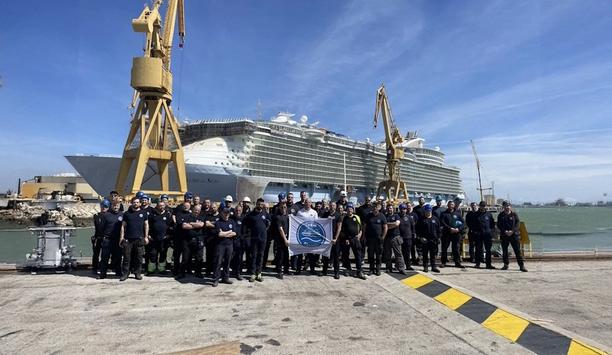
Team Electric rose to some special challenges in its successful completion of electrical installation and refit work during Royal Caribbean’s recent high profile drydocking and ‘amplification’ of Allure of the Seas. Despite heavy weather, tight deadlines, and complex coordination across multiple contractors and workstreams, Team Electric showcased its hallmark adaptability and technical expertise to deliver the full scope of work on schedule. Three turnkey suppliers With a total workforce of 60 skilled electricians on site, Team Electric was engaged separately by three turnkey suppliers — Almaco, Makinen, and LMG — to execute electrical works across hotel areas, galleys, and public spaces on board the cruise ship. The project marked a return to familiar territory for Team Electric, which was also involved in the original construction of Allure of the Seas in Turku Shipyard in 2009. Project highlights Team Electric delivered full electrical works for the new Mason Jar restaurant and bar Achievements included the installation of 121 kilometres of electrical cabling and 4,500 metres of cable trays, across a project involving key technical areas as well as substantial hotel work. Among tasks that extended to 600 individual material line items, Team Electric fitted nearly 2,000 lights. The company’s hotel-side scope covered 61 new cabins on decks 11, 12, and 14 that were built within a prefabricated aluminium block and craned onto the ship. These new spaces included corridors, AC rooms, and associated technical infrastructure. In addition, Team Electric delivered full electrical works for the new Mason Jar restaurant and bar, as well as several refurbished galley spaces and three public areas including a Crown Lounge and a teens’ gaming zone. On the technical side, Team Electric upgraded a substantial portion of the ship’s navigation and communication systems, including the full cabling of the bridge with 9 kilometres of new wiring. A turnkey delivery of Fugro’s OceanStar system included not just cabling but also installation, commissioning, and user training, led by certified Team Electric engineers. Rising to the challenge “The weather was brutal. 30 days of torrential rain in a 40-day dry dock,” said Daniel Brown, Project Manager at Team Electric. “It had a knock-on effect on every trade, but we managed to push through and keep the program on track.” Meticulous planning and on-the-ground flexibility, Team Electric met all critical deadlines High winds frequently delayed crane operations and other key activities. Yet, through meticulous planning and on-the-ground flexibility, Team Electric met all critical deadlines. The project’s compressed dry dock period presented a further challenge. As Caj Persson, Technical Project Lead, explained: “They cut the dry dock time compared to the sister vessel Oasis of the Seas by over 10 days. That meant everything had to be done faster, with no compromise on quality.” Reliability pays Team Electric’s proven reputation in cruise ship refits was a key factor in securing the contract. “We’re well known in the industry for delivering complex and multi-faceted electrical refits, especially cabins and public areas,” said Daniel Brown. “We’re not always the cheapest, but clients know we get the job done on time and to the highest standards.” Fourth contractor with no onboard electrical team asked Team Electric to step in and support their work That reliability also paid off during the refit, when a fourth contractor with no onboard electrical team asked Team Electric to step in and support their work, sparking another relationship that is set to continue beyond this project. The working relationship with Royal Caribbean also proved crucial. “We know the fleet, we’ve been with them since these keels were laid,” said Persson. “That familiarity, and our long-standing relationship with partners like Foreship, made the coordination smoother, even under pressure.” Integrated installation Unlike newbuilds, refits present constantly shifting priorities and constraints. As Daniel Brown explained: “In public areas especially, we can’t even install light fittings until the ceiling is in. It takes extreme coordination. Every task affects the next.” From cabin design to bridge cabling, and from substations to galleys, the Allure of the Seas project exemplifies Team Electric’s full-spectrum capabilities. By blending technical know-how with practical execution, the company once again proved why it's the preferred electrical partner for cruise ship refits worldwide.

San Francisco-based maritime technology company - Sofar Ocean announces a partnership with the U.S. Naval Meteorology and Oceanography Command’s (CNMOC) Fleet Weather centres in Norfolk (FWC-N) and San Diego (FWC-SD). Wayfinder platform FWC-N and FWC-SD, the Navy’s two primary weather forecasting centres, are piloting Sofar’s Wayfinder platform to support the routing of naval vessels at sea. The FWCs are utilising Wayfinder to identify safe and efficient route options powered by real-time ocean weather data for Military Sealift Command (MSC) ships. Situational awareness Tim Janssen, Co-Dounder and CEO of Sofar, said, "Wayfinder will empower the Navy to enhance situational awareness at sea and leverage data-driven optimisation to continuously identify safe and efficient routing strategies." He adds, "Powered by our real-time ocean weather sensor network, Wayfinder will help the Navy scale its routing operations to support a heterogeneous fleet operating in conditions made more extreme by the effects of climate change." CRADA The platform displays real-time observational data from Sofar’s global network of Spotter buoys The Navy is evaluating Wayfinder under CNMOC and Sofar’s five-year Cooperative Research and Development Agreement (CRADA) signed in July 2023. Wayfinder reduces manual tasks for forecasters and routers by automatically generating a forecast along a vessel’s route. The platform displays real-time observational data from Sofar’s global network of Spotter buoys to reduce weather uncertainty for route optimisation, and predict unwanted vessel motions during a voyage. Real-time wave and weather observations The availability of accurate real-time wave and weather observations helps Captains and shoreside personnel validate forecast models and examine multiple route options more efficiently, streamlining a historically complex and arduous process. Lea Locke-Wynn, Undersea Warfare Technical Lead for CNMOC’s Future Capabilities Department, said, "A key focus area for the Naval Oceanography enterprise is fostering a culture of innovation through collaboration with our commercial partners." Vessel-specific guidance Lea Locke-Wynn adds, "Our ongoing CRADA with Sofar Ocean is a perfect example of how our partnerships can leverage the leading edge in industry to further Department of Defence operations." As the number of naval vessels at sea, including experimental and autonomous ships, continues to increase, forecasters and routers will have less time to spend manually producing vessel-specific guidance. Automated forecast-on-route guidance More efficient routing empowers FWC personnel to focus on challenging, mission-critical tasks Wayfinder helps fill this operational gap, enabling FWC-N and FWC-SD to more efficiently support a large fleet in real-time with automated forecast-on-route guidance. More efficient routing empowers FWC personnel to focus on challenging, mission-critical tasks that require their unique expertise. Streamlined decisions Captain Erin Ceschini, Commanding Officer, FWC-SD, stated, "By using Wayfinder, we’re able to better visualise our ships’ routes, and make safer and more streamlined decisions on route, speed, and heading." Captain Erin Ceschini adds, "Wayfinder has the potential to be a critical component of our day-to-day operations and a key driver of safe routing as we contend with an increasingly unpredictable weather landscape."
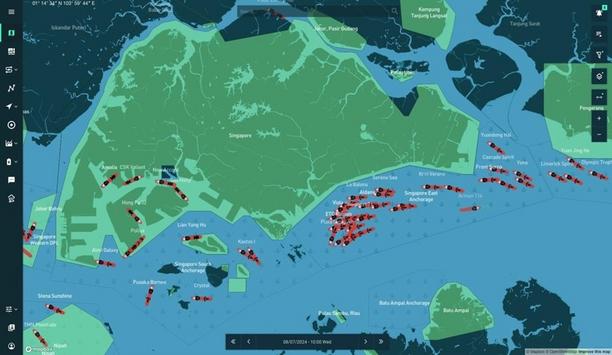
The accuracy of AIS data used to track ship movements is vital for the analysis of vessel performance in areas such as fuel consumption. OrbitMI has therefore collaborated with Maritime Data on a joint project to enhance the screening of AIS data providers so it can deliver the best quality data for clients. Orbit vessel performance platform “We are continuously striving to optimise data inputs for users of our newly upgraded Orbit vessel performance platform to improve business decision-making." "With this goal in mind, we engaged Maritime Data as a trustworthy partner to contribute its specialist expertise in data procurement for the industry,” says OrbitMI’s Chief Marketing Officer David Levy. Assuring the quality of data inputs Maritime Data supports companies in the maritime ecosystem from concept to contract Maritime Data is a UK-based start-up founded in 2022 by Co-Founders Rory Proud and James Littlejohn with a mission to address the difficulties in sourcing, evaluating, and buying maritime data by acting as a specialised intermediary between buyer and supplier. As a data broker, Maritime Data supports companies in the maritime ecosystem from concept to contract. This enables clients to quickly understand all available solutions relevant to their requirements, evaluate comparable options, and contract with their suppliers of choice. All to minimise the effort required and give time back to the people building solutions needed to tackle the industry's biggest challenges. Buying data is made easier. Accurate customer service Backed by more than 15 years of experience in the sector, Maritime Data has built up an extensive partner network of over 50 maritime intelligence suppliers and 200-plus product offerings in areas such as vessel tracking, emissions calculation, seaborne cargo flows, risk and compliance, port activity, trade statistics, weather, and vessel ownership. “The quality of data being inputted into any model, process, or technology will have a meaningful impact on output,” explains Maritime Data’s Co-Founder James Littlejohn. "It is therefore essential for maritime technology companies to meaningfully evaluate all of their data inputs to ensure their solution provides the most accurate service for their customers." Tackling sourcing challenges Real-time data generated by the AIS is considered the X-axis for any evaluation of vessel operations The joint project has focused on tackling the challenges of acquiring the right AIS data arising from discrepancies in datasets offered by various vendors that make assessment and evaluation difficult for data buyers. Real-time data generated by the Automatic Identification System (AIS) is considered the X-axis for any evaluation of vessel operations and is a fundamental data layer for performance monitoring as it shows position, course, and speed, which can be combined with weather data to optimise operations, according to James Littlejohn. However, AIS is extremely data-heavy with hundreds of millions of data points being generated by thousands of vessels across the globe every day, which requires commensurately massive computational resources to ingest and analyse this data. New vendor evaluation protocol Under the joint project, Maritime Data conducted a comparative assessment of four leading AIS data providers using a new, specially developed evaluation protocol to ascertain the quality of their respective offerings based on carefully designed criteria. Maritime Data was able to take samples of a week of AIS data from each of the four providers and measure each dataset against various benchmarks provided by OrbitMI to help determine the coverage, accuracy and frequency of the respective feeds. A segment of these samples was then taken and split out over 80 different geolocations that were visualised as polygons on a map to show geographical coverage. Heavyweight analytics Independent validation of the supplier selection process enabled this to be conducted more quickly James Littlejohn points out that conducting this process of comparison and evaluation with such vast amounts of data would entail a lot of time and resources for a maritime technology firm such as OrbitMI, causing opportunity cost, while it took Maritime Data about a month to complete the analysis and this time is likely to be shortened in future as the process becomes more efficient. He says that independent validation of the supplier selection process enabled this to be conducted more quickly and without bias in favour of any one data vendor. “The outcome of the process was exactly as we expected and piloting this tool with OrbitMI has given us a springboard for further development and application of the selection protocol. This enabled OrbitMI to proceed with a decision on AIS sourcing secure in the knowledge that the data would fulfill the needs of its customers,” James Littlejohn says. Selecting the ideal AIS data provider At the end of the process, OrbitMI selected Lloyd's List Intelligence as its AIS data provider. “Lloyd's List Intelligence has been a long-time and valued partner of ours,” says Ali Riaz, OrbitMI's CEO. “The quality and versatility of their data offerings, assurances of data accuracy, customer service, and commitment to collaboration compared to the other offerings were unbeatable.” This decision aligns with Lloyd's List Intelligence's strategic vision for the industry. A collaborative, connected approach Tom Richmond, Head of Software & Technology Sales at Lloyd's List Intelligence, elaborates, “Working with innovators like OrbitMI is part of our strategic plan to help the shipping industry move beyond siloed thinking and kick-start a more collaborative, connected approach to integrating seaborne trade in the global supply chain." "We’re happy to support innovation with high-quality products at a price point that stimulates collaboration in the sector.” AIS data quality assurance OrbitMI’s David Levy concludes, “This project demonstrates we are prioritising data quality for our clients by harnessing the power of partnership with a major player." "The AIS data quality assurance process piloted by OrbitMI with Maritime Data will benefit users of the new Orbit platform by ensuring optimised and reliable data inputs covering the global fleet.”

Strengthening trade relations and promoting collaboration between Valenciaport and China. This is the objective with which the Port Authority of València has traveled to China to participate in the 8th edition of the Maritime Silk Road Port International Cooperation Forum 2024, held from June 26 to 28, 2024 in Ningbo (China). The value proposition of the Valencian enclosure as a green, intelligent and innovative HUB of the Mediterranean has been the common thread of the presentation of the PAV in this forum. Advantages of Valenciaport as a strategic port Mar Chao has also described the strategic importance of Valenciaport for the Chinese market During the event, Mar Chao, President of the PAV, had the opportunity to present the competitive advantages of Valenciaport as a strategic port in the center of the Mediterranean (through which 40% of Spanish import/export is channeled) at the service of the business fabric of its area of influence and a link in the logistics chain. Mar Chao has also described the strategic importance of Valenciaport for the Chinese market as a key point of direct connection with Europe that promotes a green growth, market-oriented, with maximum efficiency in services and a complete logistic and multimodal integration. Commercial capacity of Valenciaport During her conference, the President also highlighted the commercial capacity of Valenciaport, with an area of influence of more than 2,000 kilometres that maintains a direct relationship with the main international ports. Cristina Rodríguez, Head of Containers of Valenciaport, accompanies Chao in the forum. Both have held business meetings with Asian companies and institutions, including the new president of the Port of Ningbo, Tao Chengbo. In the framework of this meeting, the representatives of Valenciaport and the Port of Ningbo have signed a memorandum of understanding (MOU) with the aim of strengthening their commercial collaboration. Silk Road Port and Maritime Cooperation Forum The Silk Road Port and Maritime Cooperation Forum of Ningbo (China) in which Valenciaport participates is a platform for open exchange and mutual learning in port development and maritime transport, within the framework of the Belt and Road Initiative. From a respect for the uniqueness of each participating port, the Forum is seen as a tool to foster collaboration in various fields to build bridges between supply and demand in business, investment, technology, talent, information, ports and cultural exchange.
Round table discussion

Artificial Intelligence (AI) is having a profound and multifaceted impact throughout the business world, driving a transformation across all sectors by significantly increasing efficiency, enabling data-driven decision-making, and fostering innovation. Maritime is one of the many industries that are already benefiting from deploying AI. In the future, the potential is even bigger. In maritime as in many other markets, the key to success is balancing the use of AI with human labour. The current trend is to augment human work through automation of routine tasks and the creation of new business models. We asked our Expert Panel Roundtable: How can the maritime industry benefit from applying artificial intelligence (AI)? Please provide some examples.

Given the diverse stakeholders in the maritime industry, it is understandable that collaboration is a challenge. However, the interconnected ecosystem of maritime makes collaboration essential. From ship owners and operators to port authorities, from shippers to shipbuilders, from classification societies to marine service providers and others, there are vast opportunities to work together and cooperate. To gain insight, we asked our Expert Panel Roundtable: How can the maritime industry increase collaboration, and what are the benefits?

Achieving optimal return on investment (ROI) for a maritime company involves a strategic combination of operational efficiency, revenue enhancement, cost control, careful financial management, attention to sustainability and regulatory compliance, and other factors. Given all the variables in play, profitability can be elusive, but our Expert Panel Roundtable has some ideas. We asked: How can maritime companies maximise return on investment (ROI)?
Products



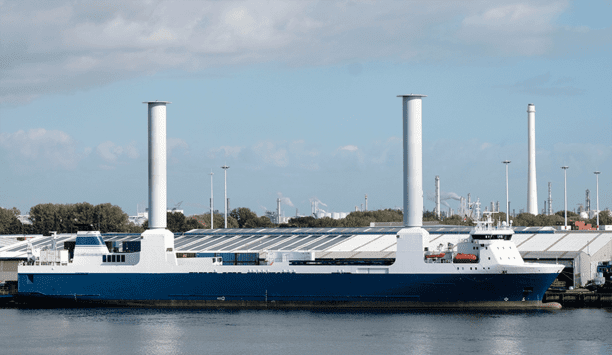
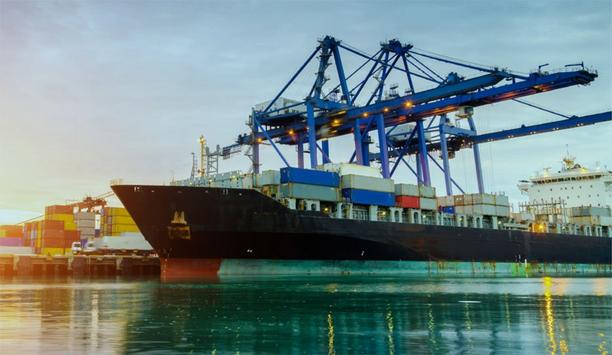
Videos


Fleet planning as a strategic asset
Download