Crews

Helm Operations announced that it has reached 400 customers and more than 10,000 vessels and assets running on Helm CONNECT worldwide, marking a major milestone for one of the maritime industry’s most widely adopted maintenance and operations platforms. The achievement reflects Helm’s expanding role as the operational foundation for fleets across towing, offshore support, passenger vessels, barges, dredging, and other specialised service segments. As more operators in more verticals...

ABB has verified a major advancement in vessel Dynamic Positioning (DP) technology, following successful Failure Mode and Effects Analysis (FMEA) proving trials and sea trials on board the new wind turbine installation vessel (WTIV) Norse Wind. By integrating ABB Ability™ Marine Pilot Control – a ship control system that unifies dynamic positioning, manoeuvering, and transit functionalities into one intuitive interface – with Azipod® propulsion units, the vessel showcases...

Mintra, a pioneer in digital learning and workforce management solutions for the maritime and energy sectors, is pleased to announce that it has completed the acquisition of SQLearn, a pioneering Greek provider of online maritime training solutions. This strategic acquisition marks the next phase in Mintra’s commitment to support the maritime industry’s digital transformation, with a special focus on Greece and beyond. Advanced training delivery tools With decades of internat...

SMT Shipping, a pioneering global bulk cargo operator, has implemented Spinergie's Smart Fleet Management (SFM) system to reduce crew workload and improve onboard data accuracy. Approximately 30 SMT Shipping vessels use Spinergie reporting across the company’s global operations. The system frees crew members from repetitive, time-consuming reporting tasks while ensuring SMT Shipping remains fully compliant with evolving regulatory requirements. Digital reporting tools Spinergie has desi...

Cyan Sentinel has strengthened its long-term commitment to developing future maritime officers, with cadets praising the company’s support, culture and hands-on experience across its fleet. The company has now supported and sponsored 43 cadets through its cadetship programme, with seven completing their training this year. A further 10 new cadets – six deck and four engineering – joined the programme in August and September. Willingness of crews and officers Recent cadets hi...

Inmarsat Maritime, a ViaSat company, has unveiled the next phase in the evolution of its NexusWave bonded connectivity service, following the successful launch of the ViaSat-3 Flight 2 satellite and in anticipation of the launch of the ViaSat-3 Flight 3 satellite. As the two ViaSat-3 satellites are scheduled to enter service in 2026, NexusWave customers will benefit from a dramatic increase in available bandwidth via a new generation of maritime terminal, with additional capacity expected from...
News

Strategic Marine, a pioneering builder of high-performance aluminium vessels and Prima Marine, a pioneering Thai marine transport company as a key strategic partner, proudly announce the successful delivery of two 42-metre Generation 4 Fast Crew Boats (FCBs) to NMDC LTS, a prominent provider of marine and offshore services in the Middle East. This first-ever delivery to NMDC LTS marks an important milestone for Strategic Marine, showcasing its ability to secure new partnerships with pioneering operators in the region. Purpose-built for offshore operations in the Middle East, the vessels highlight Strategic Marine’s commitment to delivering innovative and reliable vessel solutions tailored to client and regional requirements. Flexible offshore operations Designed in close collaboration with Southerly Designs, the vessels feature Strategic Marine’s proven hull form to maximise fuel efficiency, reduce carbon emissions, and enhance seakeeping performance. Each vessel is equipped with a state-of-the-art Gyro Stabiliser system, ensuring superior roll reduction and stability for safer and more comfortable crew transfers in challenging sea states. The 42-metre FCBs can accommodate up to 80 personnel in ergonomic seating and are fitted with reinforced cargo decks to support flexible offshore operations. With future-proofing at the core of their design, the vessels are also prepared for hybrid upgrades and integration of walk-to-work or motion-compensated gangway systems to meet evolving offshore requirements. Inaugural delivery to NMDC LTS Mr. Chan Eng Yew, Chief Executive Officer of Strategic Marine, commented: “We are delighted to deliver our first two Gen 4 Fast Crew Boats to NMDC LTS, further extending Strategic Marine’s presence in the Middle East. These vessels underscore our commitment to delivering innovative, efficient, and reliable solutions that address the offshore sector’s evolving needs.” This inaugural delivery to NMDC LTS underscores Strategic Marine’s role as a trusted partner in supporting offshore energy operations across the Middle East, delivering vessels that meet the highest standards of safety, efficiency, and sustainability.

Inchcape Shipping Services, a global pioneer in port agency and maritime services, is proud to announce the opening of its new office in Geoje, Korea. This expansion increases Inchcape’s footprint in South Korea to three offices - Seoul, Busan, and now Geoje, covering 23 ports nationwide. Geoje is a strategic hub for global shipbuilding and offshore projects, playing a critical role in the construction of LNG carriers, container vessels, naval ships, and offshore platforms. The city is central to international shipping and energy sectors, making it a focal point for complex maritime operations. Offshore energy projects Inchcape has supported several major projects in Geoje, including FPSO sail-away operations for offshore energy projects heading to Brazil, comprehensive Drillship Support Projects providing end-to-end logistics and coordination for multiple drillships at major shipyards in Geoje, and government services that managed full access control and logistics within Hanwha Ocean’s restricted zone while delivering 24/7 crew scheduling and on-site coordination for naval vessels. The team has also facilitated wind jack-up vessel operations, ensuring smooth exit and deployment for offshore wind projects. “Opening in Geoje allows us to be closer to our customers and the heart of Korea’s shipbuilding industry,” said Sichang Lee, Korea Country Manager. “This expansion strengthens our ability to support complex offshore projects and provide tailored solutions for liner, tanker, and naval operators.” Comprehensive suite of services The new office will primarily focus on Government & Defence and Marine & Offshore markets in Busan and Geoje, while continuing to serve traditional segments from Seoul, including Containers, Tankers, Bulks, Liners, Cruise, and Crew Logistics. The new Inchcape office will offer a comprehensive suite of services, including: Port & Protective Agency Services Crew Logistics Offshore Project Logistics Warehousing & Bonded Storage Customs Clearance for Equipment & Materials Vessel Husbandry Survey & Inspection Bunkering & Fuel Operations P&I Matters Port Captaincy Sanitary Certifications & Medical Services Visa Documentation & Immigration Services Site-office Arrangement & Maintenance Administrative Support Corporate Event Coordination With this expansion, Inchcape continues to deliver on its promise of global reach with local expertise, ensuring operational excellence and seamless support for customers navigating the complexities of maritime trade and offshore projects.

Inmarsat Maritime, a Viasat company, has signed an agreement to deliver NexusWave for longstanding customer Coastal Transportation as the family-owned shipping company seeks a reliable and cyber-secure connectivity solution for its fleet of refrigerated and general cargo ships. Operating a regular schedule between its home terminal of Seattle, Washington, and ports throughout Western Alaska, Coastal Transportation depends on stable connectivity to safeguard mission-critical and crew communications. Robust cyber-resilience With cargoes often involving complex inventory, the company is acutely aware of rising cyber threats and the need for resilient digital infrastructure. NexusWave’s secure-by-design architecture and segregated networks provide Coastal Transportation with robust cyber-resilience. The fully managed, bonded connectivity service is also designed to deliver global coverage and network availability exceeding 99.9%, helping ensure the vessels and their crew are consistently connected to high-speed internet from Seattle to Dutch Harbour and beyond. Levels of security and reliability Stephanie Grisham, Technical Program Manager, Coastal Transportation, said: "Upgrading to Inmarsat NexusWave was a natural next step for our cargo fleet." She adds, "NexusWave is the only connectivity solution on the market that delivers the levels of security and reliability we need to support safe and efficient operations from port to port. We also value the convenience it offers as a single solution from one provider that seamlessly combines the capabilities of multiple services." Fast-growing cohort of operators Logan Murray, Sales Account Manager, Inmarsat Maritime, commented: “We are delighted to extend our longstanding relationship with Coastal Transportation – the latest in a fast-growing cohort of operators that appreciate the unique value of fully managed, bonded connectivity as an enabler of safe, efficient, and secure fleet operations.”

Earliest mid-2026, the Coastguard will be strengthened with ENFORCER, a Damen FCS 5009 vessel. This vessel will be deployed in the years ahead to ensure the continuity of general coastguard duties in the North Sea. ENFORCER will provide additional support until the new generation of Coastguard ships goes into operation. Modern addition to current fleet The duties of the Coastguard have expanded in recent years. The Rijksrederij (the Government Fleet Agency, part of Rijkswaterstaat) has therefore issued instructions for the charter of ENFORCER. With this modern vessel, the Coastguard will maintain its capability to perform their general activities in the North Sea. Multraship ownership ENFORCER will be owned by Multraship, which will therefore also be responsible for the vessel’s nautical crew and maintenance. The vessel will be under the operational command of the Dutch Coastguard. “We are very proud that the Coastguard and Rijkswaterstaat/Rijksrederij have selected us for this work as well,” says Leendert Muller, Managing Director of Multraship, the internationally operating family business from Zeeland (NL). “It ties in well with our present partners and we are happy to make our contribution to safety in the North Sea.” Two high-speed tenders for inspections Thanks in part to the axe bow developed by Damen and Delft University of Technology, the vessel has a top speed of 27 knots (some 50 kilometres an hour). In addition, ENFORCER has two high-speed tenders for inspections and enforcement at sea. The ship also has a towing system and a fire extinguishing installation. Strengthening a successful partnership Multraship already supplies the Rijksrederij with three Emergency Response and Towing Vessels (ERTVs). These vessels are used for emergency towage operations and general coastguard duties. The addition of ENFORCER builds on this successful alliance between government and maritime partners.

Technology group - Wärtsilä and Sinocrew Maritime Services, a globally renowned provider of integrated crew management and marine training services to the international shipping industry, have inaugurated an advanced maritime simulation suite in Beihai, China. The new simulation suite will provide advanced, simulation-based training to equip seafarers with the skills needed for the safe adoption of new decarbonisation technologies and will support the transformation of the maritime industry towards sustainability and innovation. Wärtsilä marine simulators The order for the new simulation suite was booked by Wärtsilä in Q3 2025 The two parties have also signed a framework Memorandum of Understanding (MOU) to establish the first Maritime Advancement in Simulation, Technology and R&D Services (MASTERS) programme site in China. The order for the new simulation suite was booked by Wärtsilä in Q3 2025. The Beihai International Seafarer Training Center (BISTC) represents a key international facility with a special focus on the ASEAN (Association of Southeast Asian Nations) region. It features state-of-the-art Wärtsilä marine simulators and specialised training solutions with a focus on cruise ship operations and is a pioneering model for future maritime education and international cooperation. pioneering model for future maritime education and international cooperation. Future alternative marine fuels “Together with Wärtsilä’s expertise and support, we are creating a world-class, international centre of excellence, not merely training seafarers, but preparing them for the future of cruise sector shipping. This involves familiarisation with the coming wave of decarbonisation technologies, including those related to future alternative marine fuels. Ultimately, our aim is to build an innovative, sustainable maritime talent ecosystem,” says Captain WANG Jixuan, Founder/Chairman, Sinocrew Maritime Services. Long-term service and maintenance contracts Beyond providing tailored training courses, technical assistance, and facilitating knowledge sharing, Wärtsilä will further support Sinocrew through comprehensive, long-term service and maintenance contracts. This approach ensures that the centre’s technology remains state-of-the-art, reducing the need for unexpected and costly upgrades. Adoption of new technologies “The marine industry’s transition to future sustainable fuels and the adoption of new technologies requires a highly skilled workforce. This training centre will be at the forefront of building that competency in a key global shipping region,” comments Johan Ekvall, Director, Simulation & Training - Wärtsilä Marine. He adds, “Our cooperation with Sinocrew will help enable the safe adoption of the new technologies that decarbonisation requires. Seafarers trained on Wärtsilä's high-fidelity simulators will be more proficient in fuel-efficient voyage planning, engine optimisation, and smooth port operations.” Installation of Wärtsilä simulators Wärtsilä has developed a strong relationship with Sinocrew for more than a decade. The Beihai project marks the fourth simulator-training project for the two companies, following the installation of Wärtsilä simulators in the Wuhan, Rizhao and Qingdao training centres.

MarTrust, part of Marcura, and the crew payments solution supporting more than 150,000 seafarers worldwide, has partnered with the International Seafarers’ Welfare and Assistance Network (ISWAN), the international not-for-profit maritime organisation providing 24/7 helplines and welfare resources for seafarers and their families. The partnership is designed to improve awareness and access to mental health and financial wellbeing support across the maritime sector. Strengthening crew welfare A financial donation from MarTrust will support ISWAN’s welfare and outreach programmes, including the launch of a new Power BI Dashboard. The dashboard will bring together data and insights from ISWAN’s helplines on key wellbeing themes such as financial strain, fatigue, isolation, and contractual concerns. It will help shipowners and managers better understand the pressures their crews face and take proactive measures to support them, while ensuring that ISWAN’s services remain relevant to the evolving needs of seafarers globally. ISWAN’s multilingual helplines Each year, ISWAN’s multilingual helplines are contacted by crew seeking practical and emotional support. Calls range from simple enquiries to complex issues involving family and financial worries, stress, fatigue, and at times thoughts of suicide. Many seafarers spend long periods at sea with limited connectivity and little awareness of where to turn for help. This challenge is particularly evident among younger crew, who are more likely to seek assistance through digital channels. As part of the partnership, ISWAN’s resources will now be made accessible directly through the MarTrust crew app, giving seafarers clear visibility of support options and guidance. A partnership that makes sense “We take around 450 new contacts each month, but that’s just a fraction of the seafarers who could benefit from our support,” said Simon Grainge, CEO of ISWAN. “Through this partnership, we can reach more crew digitally; at a moment when they’re often thinking about their money, their family, and their wellbeing; and connect them to the right help when they need it most.” Long-term collaboration “Financial worries are a major cause of anxiety both on board and at home,” added Stuart Gregory, CEO of MarTrust. “By working with ISWAN, we can connect more crew to trusted support at the moment they need it and remove unnecessary stress from daily life at sea. This partnership allows us to combine our digital platform with ISWAN’s expertise to make a tangible difference to seafarer wellbeing around the world.” Both organisations emphasise that this is the beginning of a long-term collaboration. Beyond integrating welfare content, the partnership will explore ways to scale awareness of crew welfare resources, co-create future digital tools, and increase industry engagement through shared data insights.

Expert commentary

Imagine a vessel in distress, the challenging weather and sea state, the distractions and the anxiety onboard the ship or liferaft. Whether a commercial ship, an offshore supply vessel, or a ferry, any emergency situation is extremely stressful, requiring calm decisions and actions by the captain and crew which could potentially save lives. Reliable electronic safety equipment For decades, with pyrotechnic flares as the accepted standard, a crew member has been expected to fumble for a flare pack, remove the cap, pull the string to ignite the flare while moving hands quickly out of the way, and hold the flare overboard, ensuring it is downwind. The procedure is difficult in a distress situation, with failure to perform these actions correctly possibly resulting in injury or damage to the liferaft keeping survivors afloat. However, today there are alternatives that offer an easier, less dangerous, toxic and outdated solution in an age bristling with reliable electronic safety equipment. Availability and reliability of advanced technology The general pyrotechnic carriage requirements for vessels subject to the SOLAS Convention Commercial vessels are already required to carry EPIRBs, AIS transponders, GMDSS DSC radios, and Search-and-Rescue Transponders (SARTs) – all which will locate the survivors to within less than 110-metre radius. With the availability and reliability of this advanced technology, the persistence of mandatory flare carriage seems illogical. The general pyrotechnic carriage requirements for vessels subject to the SOLAS Convention remain as follows: For ships – 12 rocket parachute flares, at least 2 lifebuoy self-activating smoke signals and 1 line throwing appliance; For lifeboats, liferafts and rescue boats – 4 rocket parachute flares, 6 red hand flares and 2 buoyant smoke signals. Is it not time for regulators to embrace the alternatives and make electronic flares permissible? The problem with pyrotechnics Flares belong to a bygone era, when fire and smoke were the simplest way to attract attention. Nowadays, safety and environmental factors call for a change. First, the safety issue is critical. Pyrotechnic flares burn at over one thousand degrees Celsius, often emitting molten slag and sparks together with smoke and a flame – all of which can come back at the user in high winds. Many mariners can relate stories of burns, fires, and close calls when trying to deploy them on an already unstable platform. In fact, statistics from several maritime safety bodies suggest that misuse and accidental ignition of flares are responsible for dozens of injuries every year. For a ‘safety’ device, that is a perverse irony. Additionally, flares are one shot devices. There is no way to test them to be sure they work. The user just has to hope that when activated, potentially a few years after purchase, they work as expected. Coastguards and police forces Coastguards and police forces across Europe and the UK have been dazed by the need for safe flare disposal Toxicity must also be considered. Most red handheld and rocket flares rely on strontium nitrate and similar chemicals that are both toxic and environmentally persistent. These chemicals present a health hazard to users and nearby people. The smoke can be full of fine particulate matter that can be inhaled into the lungs, while also irritating eyes, nose and throat. Disposal is a serious problem. Once expired – usually after three years – they cannot be tossed in the bin or recycled. Instead, they become hazardous waste. Coastguards and police forces across Europe and the UK have been overwhelmed by the demand for safe flare disposal, with many mariners resorting to hoarding old flares in sheds or, worse, illegally dumping them. Every expired flare represents a risk to the environment and anyone who potentially finds dumped flares. Rules and regulations apply to time-expired flares In terms of reliability, the fact is that pyrotechnic flares can fail. They can get damp, be damaged in storage, or simply not ignite when needed, or, worse still, in rare cases, explode when ignited. Flares contain explosives and are therefore classified as Class 1 dangerous goods Even when they function correctly, their window of effectiveness is fleeting, with a red handheld burning for about a minute. A rocket flare launches skyward, blazes for about 40 seconds, and then is gone. If no ship or aircraft happens to be looking in that narrow window, the opportunity is lost. Finally, there is transportation and storage. Flares contain explosives and are therefore classified as Class 1 dangerous goods which means shipping and transportation is difficult and expensive. The same rules and regulations apply to time-expired flares. Flare canisters clutter lockers and demand careful storage away from damp conditions and potential heat sources. The modern toolkit of safety These problems demonstrate the huge contrast with the other equipment already required aboard commercial vessels – some of which is also usually carried on many recreational vessels. Emergency Position Indicating Radio Beacons (EPIRBs) use satellite constellations like Cospas-Sarsat, GPS and Galileo to transmit a vessel’s position to rescue coordination centres anywhere on the globe. Automatic Identification System (AIS) transponders broadcast a message and vessel position to every nearby ship equipped with AIS – effectively turning the entire commercial fleet and many recreational vessels into potential rescuers. GMDSS DSC radios provide voice communication to coastguards and other vessels together with their location, while Survival Craft VHF radios, acting as GMDSS portable radios, although with no locating capability, are designed to be taken from the ship into the liferaft and then used to either call for help on VHF Channel 16 or talk to rescuers. GMDSS DSC radios provide voice contact to coastguards and other vessels. Brief flicker of a pyrotechnic flare’s flame SARTs (Search and Rescue Transponders) create either a radar or AIS target, allowing searchers to home in precisely on a vessel or liferaft. SARTs create either a radar or AIS target, allowing searchers to home in just on a vessel or liferaft This is a formidable array of technologies, far superior to the brief flicker of a pyrotechnic flare’s flame. They are continuous, reliable, and integrated into a global rescue infrastructure. If one signal is missed, another remains active. They run for hours, sometimes days – not seconds. It seems ironic that regulators have not considered modern alternatives to pyrotechnic flares as a means of providing an alert or a locating signal to nearby vessels. Enter the electronic flare Electronic Visual Distress Signalling Devices (eVDSDs), sometimes called electronic flares, are the logical successor. Compact, waterproof and rugged, these units emit bright strobing LED patterns visible for miles. They can operate continuously for hours, sometimes over an entire night, and many incorporate infrared strobes detectable by night-vision equipment often carried or worn by search and rescue personnel. Unlike pyrotechnics, they can be tested safely, reused, and either be recharged or fitted with new batteries. They do not expire with a three-year shelf life. They do not produce toxic waste. They do not risk setting a liferaft ablaze or potentially injuring the user or other crew. The U.S. Coast Guard has already approved certain eVDSDs as alternatives to handheld flares for recreational vessels. In Europe, the conversation is warming, though regulatory inertia remains. U.S. Coast Guard has approved certain eVDSDs as options to handheld flares Pyrotechnic flares vs electronic flares The evidence is clear – electronic flares work, and they work better. For a casualty vessel, this means a simple, safe, push-button device which can provide a steady beacon that pulses for hours until help arrives, instead of one or two frantic flashes in the night. In all areas – user safety, environmental issues, disposal, transportation and storage – the electronic flare is an improvement over the pyrotechnic flare every time. Essential feature, as there was no other way of signalling a distress apart from a large ship’s radio station Setting operating lifetime aside (tens of seconds for a pyrotechnic flare compared to several hours for an eVDSD), the only other real difference between the two is that a pyrotechnic flare is always going to be brighter than an electronic flare. A hundred years ago, this was an essential feature as there was no other way of signalling a distress apart from a large ship’s radio station. However, with all the other modern alerting and locating systems on ships today, this no longer matters. Electronic flares provide a light that can be seen from several miles away, which is more than sufficient when combined with other systems. Why commercial vessels should lead Some argue that small leisure craft are best suited for electronic flares, while commercial ships should retain pyrotechnics as ‘belt-and-braces’, but it is the other way around. Commercial vessels are the most heavily regulated and already equipped with multiple redundant communication systems. Their flare requirement is no longer for distress alerting – EPIRBs and the GMDSS see to that – but rather it provides a local visual locating signal once searchers are nearby. An electronic flare performs this function better than pyrotechnic flares. Furthermore, commercial operators handle large volumes of flares, multiplying the risk. A ferry or offshore supply vessel may carry dozens of flares in liferafts and bridge lockers, each of which must be monitored for expiry and disposed. This large ongoing burden of hazardous waste is a significant problem compared to a fleet of eFlares, which can be tested annually, recharged, and remains serviceable for years. The economics are persuasive. Though an electronic flare may cost more upfront than a set of pyrotechnic flares, the continual cycle of buying, storing, and disposing of pyrotechnics is eliminated. Over a few years, the balance tips in favour of electronics – not to mention the savings in risk and liability. A culture of tradition vs a culture of safety Why, then, do pyrotechnics persist? The answer lies in tradition and regulatory lag. Maritime rules are written slowly, often in response to major incidents. The maritime world has never hesitated to replace outdated technologies with new innovations Flares have been listed in safety equipment schedules for so long that many authorities see them as sacrosanct. Mariners, too, sometimes cling to the familiar, imagining that a rocket bursting overhead is more dramatic and thus more effective. But drama does not save lives – it is precision, reliability, and safety that make a difference. The maritime world has never hesitated to replace outdated technologies with new innovations – sextants gave way to GPS, spark-gap radios yielded to satellite communications, and wooden lifeboats were replaced with modern inflatable liferafts. Each transition was resisted by traditionalists, and each is now universally accepted. Pyrotechnic flares are the next domino. Regulatory pathways and momentum Encouragingly, the movement is already underway. RTCM (Radio Technical Commission for Maritime Services) has developed a performance standard for eVDSDs. The U.S. Coast Guard’s acceptance of these devices for recreational boats sets an international precedent. Manufacturers in Europe and Asia are pushing for parity, developing multi-colour strobes and AIS-integrated eFlares. For the International Maritime Organization (IMO) and the Maritime and Coastguard Agency (MCA), the task is simple: approve electronic flares as an equivalent carriage option and then consider phasing out pyrotechnics over a defined period. U.S. Coast Guard’s acceptance of these devices for recreational boats. Carriage of modern alternatives to pyrotechnic devices Commercial shipping, with its greater compliance infrastructure, should lead the way. By authorising eFlares on commercial vessels, regulators send a clear message and create the volume of adoption needed to drive prices down for all. Accordingly, it is time to establish an International Standard for eVDSDs that could be adopted by IMO and other maritime agencies, and to expedite changes to international conventions and national regulations that would allow the carriage of modern alternatives to pyrotechnic devices, including eVDSDs, instead of pyrotechnics. A matter of time and of lives To continue mandating pyrotechnic flares in this context is no longer reasonable Maritime safety regulations are not theoretical. They are written in blood, each clause echoing a past disaster. With flares, the disaster is subtler – not a single great catastrophe, but a slow accumulation of injuries, environmental harm and wasted money. The seafaring world should not wait for a tragedy – a crew member maimed by a misfired rocket, or a fire started by a handheld flare in a liferaft – to act. The better technology already exists. The arguments against pyrotechnics are overwhelming. Commercial vessels embody the professional side of the maritime world. They are held to higher standards because their operations carry greater responsibility: for passengers, for crew, and for the marine environment. To continue mandating pyrotechnic flares in this context is no longer reasonable. Insisting on asbestos insulation Electronic flares are safer, cleaner, longer-lasting, and already proven in service. With EPIRBs, AIS, GMDSS DSC radios, Survival Craft VHF radios and SARTs already onboard, pyrotechnics no longer provide real benefit. To cling to flares today is akin to insisting on asbestos insulation because “it worked well enough for our grandparents”. We know better now and have a responsibility to do better. The sea will always be dangerous – but our tools for survival do not need to be.

When the Ballast Water Management (BWM) Convention came into force in 2004, it was in response to a crisis we couldn’t afford to ignore—one where invasive aquatic species, carried silently in ships’ ballast tanks, were devastating marine ecosystems. Now, two decades later, compliance with this environmental safeguard is no longer optional—and yet, as recent industry findings reveal, record-keeping failures account for 58% of compliance issues. That’s not a technology problem. That’s a documentation problem —one rooted deeply in data management practices and crew training, where small oversights lead to documentation issues, that may cascade into costly compliance failures. And that’s precisely where digital systems excel, guiding crews clearly to avoid mistakes in the first place. New ballast regulations At the IMO’s 82nd Marine Environment Protection Committee (MEPC 82), new ballast water record-keeping regulations were approved, coming into effect from 1 February 2025. These updates mark a significant tightening of documentation standards—and they could catch unprepared shipowners off guard if not acted on promptly. Why ballast water record-keeping is back in the spotlight These new updates aim to change that—and they’re stricter, smarter, and more detailed than before While MEPC 82 made headlines for advancing decarbonisation policies and ECAs in the Arctic and Norwegian Sea, it also honed in on ballast water—a topic that has quietly regained importance. The committee approved critical updates to how ballast water operations and ballast water management system (BWMS) maintenance are recorded. The goal: Enhance transparency, reduce ambiguity, and reinforce environmental protection by making records more structured, traceable, and actionable. This renewed focus is both a warning and an opportunity. In recent years, too many Port State Control detentions and inspection delays have stemmed not from hardware failures, but from poorly maintained or unclear ballast water records. These new updates aim to change that—and they’re stricter, smarter, and more detailed than before. What’s changing: Bypass scenarios and maintenance logging The revised guidelines introduce two new scenarios for vessels dealing with challenging water quality (CWQ) in ports: Scenario 3: A reactive bypass of the BWMS due to unforeseen poor water quality. Scenario 4: A pre-emptive bypass based on anticipated CWQ conditions. These additions are essential for vessels operating globally, particularly those above 400GT. They ensure that alternative operations—like ballast water exchange plus treatment (BWE + BWT)—are clearly documented. Without accurate records, even legitimate actions can fall short of compliance. Ballast Water Management Plan and OEM manuals MEPC 82 also mandates that BWMS care procedures must now be recorded directly in BWRB MEPC 82 also mandates that BWMS maintenance procedures must now be recorded directly in the Ballast Water Record Book (BWRB), in line with the ship’s Ballast Water Management Plan and Original Equipment Manufacturer (OEM) manuals. Responsible crew members must sign off on these records, ensuring traceability and crew accountability. This step isn’t just regulatory housekeeping—it aligns ballast water maintenance with how other onboard systems are already tracked, from engines to emissions. It’s a logical, overdue move toward consistency across compliance. Paper or digital: The format dilemma While the BWRB can still be maintained on paper or electronically, the burden of new structured data fields and stricter reporting timelines will be felt most by those still tied to manual systems. Each additional layer of documentation increases the chance of human error—and with nearly 6 in 10 compliance failures already stemming from admin issues, that’s a risk many operators can’t afford. This is where digital solutions can offer real relief. At NAPA, we’ve already implemented the latest IMO guidelines into our electronic logbook, so crews can comply with MEPC.369(80) requirements out of the box. With ready-made entry templates and smart input validation, data entry is quick, accurate, and audit-ready. NAPA implemented the latest IMO guidelines into an electronic logbook. Better still, once updated, operators can apply for the BWM Convention Electronic Record Book Declaration from their flag—ensuring that compliance is recognised internationally under MEPC.372(80). Less admin, more assurance Electronic logbooks don’t just streamline compliance—they enable better decision-making. When connected to onboard systems, they automatically pull operational data into the BWRB, reducing manual work and error margins. This frees up the crew to focus on operations and safety, rather than paperwork. From a management perspective, real-time visibility into ballast operations and maintenance records helps shore teams stay ahead of inspections and identify potential compliance gaps early. One logbook, many regulations While ballast water is the focus today, it’s not the only regulation demanding attention While ballast water is the focus today, it’s not the only regulation demanding attention. At NAPA, we’ve designed our logbook to support a wide range of evolving compliance frameworks—including MARPOL, EU-ETS, EU-MRV, CII, and the Garbage Record Book. This unified approach removes silos, reduces duplicated effort, and gives operators a more holistic view of vessel performance and compliance. A smarter way forward With decarbonisation and environmental regulations shifting at breakneck pace, even the most experienced crews and fleet managers can struggle to stay up to date. That’s where technology has a crucial role to play—not to replace expertise, but to support it. At NAPA, we work closely with shipowners and operators to configure regulatory record book templates according to their fleet workflows and each vessel’s specific operational profile. This ensures accuracy, ease of use, and most importantly, continuous compliance—even as the rules keep changing. Because in today’s compliance landscape, staying ahead isn’t just about meeting the minimum. It’s about building systems that help you adapt, respond, and thrive. And that starts with getting the record-keeping and data management right.

President Donald Trump has already made plenty of headlines since taking up his second term in the White House, including with the announcement of numerous new tariffs on imports. The 47th United States President issued three executive orders on February 1st 2025, just days after his inauguration, which directed the US to impose an additional 25 percent ad valorem rate of duty on imports from Canada and Mexico, as well as ten percent on imports from China. How Trump’s 2nd term as US President Cleveland Containers has analysed the early reactions to these announcements Excluding Canadian energy resources exports – which instead will be hit with a ten percent tariff – the tariffs have been applied to all imports which are either entered for consumption or withdrawn from warehouse for consumption on or after 12:01 am Eastern Standard Time on February 4th 2025. President Trump also told reporters on February 8th 2025 that a 25 percent tariff on all American steel and aluminium imports was coming into effect across the US during February. Leading 40ft shipping container supplier Cleveland Containers has analysed the early reactions to these announcements and how President Trump’s second term as US President could affect the world’s shipping industry, especially when looking back at his first term. Reaction to President Trump’s tariff announcements Mexico, Canada and China were all quick to react to President Trump’s announcement of tariffs on imports. Mexican President Claudia Sheinbaum said her country would vow for resilience against the measures, while a senior government official in Canada said that their country would challenge the decision by taking legal action through the necessary international bodies. China has also said it would be challenging the tariffs at the World Trade Organisation. According to the country’s finance ministry, as reported on by Geopolitical Intelligence Services, Beijing were moving to place levies of 15 percent on American coal and liquefied natural gas, as well as levies of ten percent on crude oil, certain vehicles and farm equipment. Beginning of making America rich again When it comes to the announcement of the tariff on all American steel and aluminium imports, President Trump told reporters in the Oval Office: "This is a big deal, the beginning of making America rich again. Our nation requires steel and aluminium to be made in America, not in foreign lands.” Francois-Phillippe Champagne, the Minister of Innovation in Canada, stated that the tariffs were "totally unjustified" though, before adding in a post on X: "Canadian steel and aluminium support key industries in the US, from defence, shipbuilding and auto. We will continue to stand up for Canada, our workers, and our industries." How might President Trump’s 2nd term affect shipping sector? Bruce Chan, an analyst in the Transportation and Future Mobility sectors at wealth management and investment banking Just ahead of President Trump taking office for the second time, J. Bruce Chan, an analyst in the Transportation and Future Mobility sectors at wealth management and investment banking firm Stifel, believed that the shipping industry was prepared for the new tariffs. However, he also stated to the Morning Star: "President Trump's Administration promises to usher in a new trade and tariff regime. As such, it's difficult to assess the ultimate impact to the freight transportation industry. Prima facie, we believe tariffs are a drag on freight demand, effectively resulting in higher costs for shippers that are generally passed on to end consumers over time." Attention to the American sanction announcements Mr. Chan went on to note that those involved in shipping containers across continents should be paying particular attention to the American sanction announcements. He commented: "Because almost all trans-Pacific trade moves over the ocean, we believe ocean container shipping will see the largest direct impact. But for shippers and retailers, there is no cheaper way to move goods than over the ocean, so there are few modal alternatives if production remains in Asia. We see the most risk for maritime shipping, with containers and dry bulk being more acute, with more insulation for oil and gas tankers." Shipping news and intelligence service Various sources have looked back on President Trump’s first term to get an idea of what could be expected As President Trump has just become his second term as US president and the American sanctions have only just been announced, it will take time to see what the true impact will be. However, various sources have looked back on President Trump’s first term to get an idea of what could be expected. For example, shipping news and intelligence service Lloyd’s List pointed out that tariffs introduced when President Trump was last in the White House had a noticeable effect on both spot container freight rates and import timing. Cargoes were pulled forward in the second half of 2018 by importers as they looked to beat tariff deadlines, which resulted in higher spot rates temporarily before affecting rates in 2019 because of inventory overhang. Could repeat results be seen across 2025 and 2026? Long-life inputs and goods from the tariff countries Jason Miller, a freight economist and professor of supply chain management at Michigan State University, certainly seemed to think so. Speaking to Lloyd’s List before President Trump’s 2024 presidential victory when the tariffs were only part of campaign proposals at that point, he said: “We will see front-loading like we have never seen before in 2025. There would be a massive pull-forward of demand as everybody rushes to bring in long-life inputs and goods from tariff countries, especially China.” Shipping demand and routes Shipping demand and routes could be affected due to trade uncertainty too Meanwhile, international shipping and forwarding agents Supreme Freight Services reported that increased tariffs may cause disruption to shipping volumes and global supply chains, if trade policies introduced by President Trump during his first term are anything to go by. Shipping demand and routes could be affected due to trade uncertainty too, though the publication also acknowledged that increased investment in ports and inland waterways across the US could improve efficiency for domestic and international trade alike. New American sanctions Cleveland Containers has looked to reassure its customers that any disruption caused by the new American sanctions will be minimised at the firm. Hayley Hedley, the company’s Commercial Director, stated: “Recent history certainly suggests that the new tariffs being introduced by President Trump will have various knock-on effects across the shipping industry." “Fortunately, Cleveland Containers has a continuous supply of shipping containers entering the UK. We work with several agents to ship from various locations, as well as having good stock on the ground, so are confident in our ability to provide for our customers.”
Harbour insights
Ballast Water Management Systems (BWMS) prevent the spread of invasive aquatic species, which pose significant ecological, economic, and health threats. The systems treat and purify a ship's ballast water before it is discharged into a new environment. Regulations dictate how ballast water is managed and discharged. The IMO Ballast Water Management Convention was adopted in 2004 and ratified on 8 September 2017. In addition, the U.S. Coast Guard (USCG) has also regulated discharges in the USA through local regulations in conjunction with the EPA. Risk of undesirable bio-invasions All ships of 400 gross tons (300 gt for USCG) or more are required to manage their ballast water All ships of 400 gross tons (300 gt for USCG) or more are required to manage their ballast water. A range of technologies have been Type Approved to purify a ship's ballast water, and treatment methods are dominated by those making use of active substances or UV radiation. Ballast Water Treatment Systems (BWTS) remove or render harmless nonindigenous aquatic species and pathogens before the ballast water is discharged into a new location. Therefore, BWTS provide ships the means to comply to the regulations and reduce the risk of undesirable bio-invasions that harm ecosystems, and cause economic and coastal infrastructure damage, according to Dr. Stelios Kyriacou, Chief Technology Officer (CTO) of ERMA FIRST, a manufacturer of ballast water treatment and other sustainable marine equipment systems. BWTS remove or render harmless nonindigenous aquatic species and pathogens. Leadership in the core product category “We have already achieved leadership in our core product category, the Ballast Water Treatment Systems, and our vision remains for our new chapter, the decarbonisation solutions,” says Kimon Mademlis, Group Marketing and Communications Director, ERMA FIRST. “This is the brand promise to our customers that we will always strive for excellence, innovation and stellar offerings.” Flexible and adaptable ballast water management Use of active substance treatments offers a flexible and adaptable ballast water management system ERMA FIRST has developed a full flow filter electro-chlorination system, ERMA FIRST FIT BWTS, and has further expanded its product offering with the acquisition of complementary chemical injection technologies, oneTANK and Ecochlor, for ballast water management. The use of active substance treatments offers a flexible and adaptable ballast water management system to marine operators, says Kyriacou. Electro-chlorination and chemical injection treatments are single pass on ballasting only, unlike UV where a secondary treatment is required at discharge. Ballast water treatment systems Active substance treatments are not impacted by water clarity (UV transmittance) and adapt to water quality challenges better than UV systems while in general have a lower operating expense and energy footprint. ERMA FIRST ensures operational simplicity and lowers costs with their user-friendly ballast water treatment systems. Designed for easy installation and basic crew training, the systems feature automated operation that reduces manual work and ensures compliance with international regulations. Their flexible design fits all vessel types, minimising downtime and retrofit expenses. ERMA FIRST ensures operational simplicity and lowers costs with its user-friendly BWTS. ERMA FIRST global service ERMA FIRST offers global service and remote support, improving system efficiency With low energy consumption and simple maintenance needs, the systems help shipowners reduce daily operational costs while ensuring reliable long-term performance. In addition, ERMA FIRST offers global service and remote support, improving system efficiency and making vessel operations smoother, more reliable, and cost-effective across the fleet. Combining products and services to support customers ERMA FIRST provides a range of services to support customers from the initial sales to long-term operation. The company offers expert advice, system design, and, when requested, assistance during installation to ensure the best fit for each vessel’s needs. They also provide crew training for safe and straightforward operation. Maintenance services, both scheduled and on demand, keep systems running efficiently. With remote monitoring, 24/7 technical support, and service engineers worldwide, ERMA FIRST responds quickly to any issue. “We supply spare parts upon request or as needed, and we maintain stock in major hubs globally,” says Mademlis. “ERMA FIRST ensures reliable, simple, and cost-effective support at every stage.” ERMA FIRST provides a range of services to support customers from the initial sales. New sustainable and reliable products Customers drive the business, while R&D provides new sustainable and reliable products ERMA FIRST’s vision is to be a pioneer in the industry excellence in all they do. Customers drive the business, while R&D provides new sustainable and reliable products and after-sales service delivers customer support. Here is the brand’s purpose statement: “Saving the oceans to safeguarding the planet.” ERMA FIRST is committed to a greener future, a sustainable world, and a bright tomorrow for the generations to come. Expanding range of decarbonisation solutions ERMA FIRST’s track record in ballast water treatment systems, as well as with other marine equipment such as oily water separators and sewage treatment plants, has critically and crucially delivered towards protecting the oceans. The BWTS ensures optimal protection of the seas, and the company offers an expanding range of decarbonisation solutions. “In the maritime sector, technological advancement is driving a major transformation across operations, sustainability, and competitiveness,” says Kyriacou. “We are responding to growing environmental concerns and regulatory pressures, particularly from the International Maritime Organization (IMO), for greenhouse gas (GHG) reduction, decarbonisation and net-zero.” Environmental policy developments ERMA FIRST maintains active R&D programs and invests in energy efficiency measures ERMA FIRST monitors environmental policy developments and adapts and leverages their resources to the develop practical and cost-effective solutions for global shipping. “Our core strategic objectives include sustainability and environmental respectability with a strong desire to maximise our customers’ benefit and support their strategies to achieve carbon neutrality,” says Mademlis. To this end, ERMA FIRST maintains active R&D programs and invests in energy efficiency measures, air lubrication systems (AL) and wind-assisted propulsion systems (WAPS), ship-to-shore power interface, advanced data analytics, and artificial intelligence (AI) to optimise ship operations, performance, and emissions in real-time. ERMA FIRST maintains active R&D programs and invests in energy efficiency measures. Use of diesel electric generators and boilers Decarbonisation measures target ship propulsion with fuel and energy efficiency improvements Decarbonisation measures mainly target ship propulsion with fuel and energy efficiency improvements. Ships, however, also spend time in port where they engage in passenger and cargo operations, while the energy requirements are significantly lower than when in transit. The use of diesel electric generators and boilers in port is responsible for the continued emission of GHG and particulate matter (PM) in the atmosphere and is a major cause of noise pollution. The health and wellbeing of residents in the vicinity of ports is impacted by ship operations. Reducing carbon footprint, lowering costs The use of Alternative Maritime Power systems, like BLUE CONNECT from ERMA FIRST, enables ships to stop running their generators in port and utilise shore power for their needs, thus saving fuel, reducing the environmental and carbon footprint of cargo operations. “The adoption of energy-efficiency measures targets reduction of GHG emissions, optimisation of fuel use, and correcting the energy performance of suboptimal ship designs,” says Kyriacou. ERMA FIRST’s energy-saving devices (ESDs) maximise the propulsive effectiveness of the propeller. ERMA FIRST’s ESDs maximise the propulsive effectiveness of the propeller. Combinations of ESDs FLEXCAP eliminates the hub vortex, while converting some of the rotational energy to thrust FLEXCAP, a propeller cap, eliminates the hub vortex, while converting some of the rotational energy to thrust. FLEXFINS are attached to the hull to correct the flow around the stern preventing boundary layer separation thus reducing drag and losses. FLEXRING is a duct fitted upstream of the propeller that homogenises the axial wake component, while the duct contributes to the thrust by virtue of the lift generated by the accelerating flow over the surfaces. Combinations of ESDs can deliver significant performance gains, lower fuel consumption, reduce GHG emissions and improve a ship’s carbon intensity indicator (CII), says Kyriacou. Embracing carbon capture and storage Carbon capture and storage systems have an important role to play during the transition away from fossil fuels to achieve net-zero. Fossil fuels will be the energy source for ships’ propulsion in the near term because the shift to alternative fuels cannot be implemented instantly due to availability and capacity constraints. ERMA FIRST recognises the need to provide a bridge solution between continued fossil fuel use and the necessity to reduce GHG emissions radically. ERMA FIRST recognises the need to provide a bridge solution. Development of a regulatory framework The ERMA FIRST CARBON FIT post-combustion on-board carbon capture and storage (OCCS) system provides a technically practical solution to achieve GHG emissions reduction, paving the pathway to carbon neutrality. At IMO MEPC.83, a work plan on the development of a regulatory framework for the use of OCCS was agreed. With a scheduled completion by 2028, it is projected that broad technology implementation will follow. ERMA FIRST CARBON FIT post-combustion on-board carbon capture and storage. Maritime and environmental awards As a technology provider with a global reach, ERMA FIRST sets high standards of quality on both equipment and services. ERMA FIRST has won multiple maritime and environmental awards over the years, including: Technical Achievement Award 2013, Lloyd's List Greek Shipping Awards Technology Excellence 2013, Made in Greece Technology Award 2016, GREEN4SEA Bronze Award 2022, HR Awards Technical Achievement Award 2023, Lloyd's List Greek Shipping Awards Sustainability Award 2023, GREEN4SEA Bronze Award 2023, HR Awards Greek Business Champion 2023, Protagonistes Business External Focus 2023, Protagonistes Great Place to Work 2023 R&D expertise of ERMA FIRST A milestone for the company and a proud achievement is the fact that ERMA FIRST belongs to a very small group of companies having won the Technical Achievement Award by Lloyd's List more than once. This reflects the solid R&D expertise of ERMA FIRST and the long-standing and ongoing efforts towards technological excellence and impactful innovations.
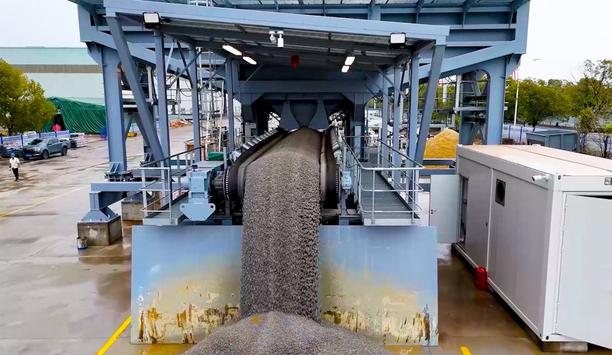
Traditionally, bulk cargo unloading has faced challenges around operational efficiency, safety risks, environmental impacts, and high operational costs. Rough discharges, equipment wear, vibration damage, and limited weather operating windows have all constrained vessel utilisation and performance. Moreover, older unloading systems are energy-intensive and labour-dependent, increasing both costs and environmental footprint. Cargo unloading systems Many bulk cargo unloading systems depend on steep slope angles, which limit the types of materials that can be carried efficiently. MacGregor’s GravityVibe directly addresses this factor by allowing efficient discharge with significantly lower slope angles, thus broadening the range of cargo that can be handled. Many bulk cargo unloading systems depend on steep slope angles. Ship structures and unloading equipment “GravityVibe reduces reliance on gravity alone by augmenting the flow with controlled vibration,” says Mikael Hägglund, Senior Manager, Cranes at MacGregor. “This approach improves operational efficiency, enhances safety through more predictable material flow, and reduces wear on ship structures and unloading equipment.” Challenges of space utilisation and cargo versatility MacGregor is a provider of cargo and load handling solutions to maximise efficiency Additionally, the GravityVibe system will, in most cases, require only one hold conveyor and no cross conveyor in the hold, making the operations both cost-effective and sustainable, says Hägglund. MacGregor, based in Helsinki, Finland, is a provider of cargo and load handling solutions to maximise efficiency of maritime operations. As an augmented gravity self-unloading system, GravityVibe enhances cargo flow using vibration, enabling bulk materials to be discharged efficiently at lower slope angles (15–20 degrees). It reduces material blockages and optimises discharge without requiring steep holds, addressing the challenges of space utilisation and cargo versatility. Mechanical strain on vessel structures The system lessens mechanical strain on vessel structures, and supports safer, smoother, and more efficient operations across different cargo types. “Using lower slope angles allows ships to maximise cargo hold volume and transport a wider variety of bulk materials, including those that would not flow well with conventional systems,” says Hägglund. “It improves operational flexibility.” Integrity of the vessel Vessels benefit from a more compact and efficient hold design, optimising stability and construction Structurally, vessels benefit from a more compact and efficient hold design, optimising stability and potentially lowering construction and maintenance costs, adds Hägglund. “Managing vibration and sound levels is critical for maintaining the structural integrity of the vessel and ensuring crew safety and comfort,” he says. “Excessive vibration can lead to accelerated wear on ship components and fatigue damage over time.” GravityVibe’s design GravityVibe’s design ensures that both vibration and sound levels stay well below class-defined thresholds, preserving vessel longevity and reducing long-term maintenance and repair costs. Bulk cargoes have widely varying properties such as particle size, cohesiveness, moisture content, and chemical reactivity, all of which impact flow behaviour. Sticky, wet, or coarse materials require different unloading strategies to avoid blockages, segregation, or structural strain. Bulk cargoes have widely varying properties like particle size and cohesiveness. Broader spectrum of cargo types Key elements to achieve automation include fine-tuning self-optimisation algorithms GravityVibe’s vibration-driven approach adapts to these material differences, maintaining consistent discharge rates and ensuring operational reliability across a broader spectrum of cargo types without manual intervention or excessive mechanical modification, says Hägglund. More automated systems are on the horizon. Fully automated discharge is rapidly approaching reality, thanks to intelligent unloading systems like GravityVibe. Key remaining elements to achieve automation include fine-tuning self-optimisation algorithms, integrating predictive maintenance solutions, and standardising automation interfaces between vessels and ports. GravityVibe features MacGregor is actively working to refine onboard software, improve material recognition capabilities, and enhance real-time adjustment features. Wider industry adoption and regulatory frameworks are also crucial for achieving fully autonomous and seamless bulk unloading. GravityVibe features a built-in self-optimisation system that uses sensors to monitor material flow characteristics during discharge. Based on live data, it automatically adjusts vibration frequency and intensity to match the properties of each specific cargo, ensuring optimal unloading performance without manual recalibration. MacGregor is working to refine onboard software and improve material recognition. GravityVibe’s performance GravityVibe’s performance has been verified through a combination of laboratory studies MacGregor is fine-tuning this system by gathering real-world data from full-scale test rigs, analysing operational performance across various cargo types, and incorporating feedback loops to continually improve discharge efficiency and system responsiveness. Real-world validation is essential to prove that unloading systems perform reliably under operational conditions. GravityVibe’s performance has been verified through a combination of laboratory studies and full-scale rig testing. In-house tests and studies For example, validation by bulk solids researcher TUNRA showed efficient unloading across diverse materials such as wood chips, manufacturing sand, and gravel. In-house tests and studies with external specialists like KTH have confirmed low vibration levels, consistent discharge flow, and high operational reliability, providing strong evidence for commercial deployment. TUNRA showed efficient unloading across diverse materials such as sand. GravityVibe’s system design GravityVibe’s system design is based on long-lasting parts and improved cargo flow High maintenance requirements traditionally have led to significant downtime and increased operational costs. GravityVibe’s system design is based on long-lasting components and improved cargo flow that reduce risks for failures and needed service, thereby lowering maintenance costs/needs. “With real-time monitoring and smart diagnostics, potential issues can be detected and addressed before they escalate, minimising service interruptions,” says Hägglund. “This proactive approach enhances equipment availability and ensures better operational continuity for vessel operators.” MacGregor GravityVibe system When unloading standard bulk carriers, there is a need to clean the holds with manpower and external machines as the port cranes or the vessel cranes will not be able to empty the holds. The weather could also be a factor for delay in cases where the cargo is sensitive to water. For the MacGregor GravityVibe system, all material will be removed from the hold without any extra efforts. GravityVibe demonstrates that with intelligent use of vibration and lower slope angles can achieve the same — or even better — results. This approach not only enables broader cargo flexibility but also reduces structural stress, energy consumption, and environmental footprint.

Ammonia is gaining traction as a future fuel in the maritime industry, primarily due to its potential to significantly reduce greenhouse gas emissions. A key driver for ammonia's interest is that it can be carbon-free when combusted, which aligns with the maritime industry's increasing pressure to meet emissions regulations. However, most ammonia production currently relies on fossil fuels. Transitioning to "green ammonia" production is crucial for sustainability. If "green ammonia" is produced using renewable energy sources, it offers a pathway to near-zero emissions shipping. Safety measures and regulations Ammonia’s volumetric energy density – higher than hydrogen – makes it more practical for onboard storage. However, ammonia is toxic, which requires stringent safety measures and regulations for handling and storage. The combustion of ammonia can produce nitrous oxide (N2O), a potent greenhouse gas. Therefore, mitigation technologies are needed. Building the necessary infrastructure for ammonia bunkering and supply will be a significant undertaking. Developing guidelines for safe use Ammonia is poised to play a significant role in the maritime industry's transition to a future The International Maritime Organization (IMO) is developing guidelines for the safe use of ammonia as a marine fuel. Increasing numbers of companies are investing in the development of ammonia-fueled vessels and technologies. European Union (EU) legislation, such as the EU Emissions Trading System (ETS) and the FuelEU initiative to support decarbonisation, are pushing the maritime industry towards the use of alternative fuels, which is increasing the potential of ammonia. While challenges remain, ammonia is poised to play a significant role in the maritime industry's transition to a more sustainable future. Ongoing research and development Ongoing research and development are focused on improving safety, reducing emissions, and scaling up production. In essence, ammonia offers a promising pathway for the maritime industry to reduce its carbon footprint, but its widespread adoption depends on overcoming technical and logistical challenges. Working toward the future of ammonia Progress is already happening as the maritime industry works toward a future that includes the use of ammonia as a fuel. For example, one project underway aims to be a pioneer in establishing a comprehensive and competitive supply chain to provide clean ammonia ship-to-ship bunkering in the U.S. West Coast. Progress is already occurring as the maritime industry works toward a future A feasibility study is being conducted at the Port of Oakland, Benicia, and nearby major ports on the U.S. West Coast. A Memorandum of Understanding (MOU) between American Bureau of Shipping, CALAMCO, Fleet Management Limited, Sumitomo Corp. and TOTE Services LLC is jointly conducting the feasibility study. "We are proud to share our industry-pioneering expertise in ammonia as a marine fuel to support this study on the U.S. West Coast,” said Panos Koutsourakis, Vice President of Global Sustainability at the American Bureau of Shipping. “Our expertise in developing safety guidelines will support the consortium to address the ammonia-specific set of safety and technology challenges.” More global ammonia developments In another development, three LPG/ammonia carrier ships have been ordered at the South Korean shipyard HD Hyundai Heavy Industries (HD HHI). Danish investment fund European Maritime Finance (EMF) and international shipping company Atlas Maritime have confirmed the order. HD HHI’s parent company, HD Korea Shipbuilding & Offshore Engineering (HD KSOE), revealed the order for $372 million in March 2024. The three 88,000 cubic-metre LPG dual-fuel carriers, capable of carrying and running on ammonia, are scheduled for delivery in December 2027. The vessels will be named EMF Viking I, II, and III. Also, Lloyd’s Register (LR) and Guangzhou Shipyard International have signed a joint development project to design the world’s largest very large ammonia carrier (VLAC). The design of the 100,000-cubic-metre vessel has been assessed in line with LR’s Structural Design Assessment and prescriptive analysis. The gas carrier will have an independent IMO Type B tank for safe carriage of the chemical. Zero-emissions operations The cargo ship, which will be 7,800 dwt, is designed to transport timber from Norway to Europe “As major economies look to co-fire ammonia in their coal power stations to reduce the CO2 footprint of their national energy mix, shipping will play a key role in distributing clean hydrogen-based commodities such as ammonia, thereby supporting nations to meet their Paris Agreement commitments," says LR's Chief Executive Nick Brown. Furthermore, a partnership of companies from Norway has ordered a pioneering short-sea cargo ship that will advance the industry’s ability to provide zero-emissions operations. The cargo ship, which will be 7,800 dwt, is designed to transport timber from Norway to Europe and will be the first to operate on ammonia and electricity. Amogy’s ammonia-to-electrical power system A start-up company focusing on ammonia-to-power technology, Amogy, demonstrated the first tugboat powered by its cracking technology just short of the fourth anniversary of the company’s launch. The trip of a 67-year-old tug along a tributary of New York State’s Hudson River is part of the company’s works to develop and commercialise its technology to decarbonise the most difficult industries. Amogy’s ammonia-to-electrical power system splits, or “cracks,” liquid ammonia into its base elements of hydrogen and nitrogen. The hydrogen is then funnelled into a fuel cell, generating the power for the vessel. Research points to the risks of ammonia The chemical, made of hydrogen and nitrogen, can also be burned as a zero-carbon fuel Today and in the future, ammonia, a main component of many fertilisers, can play a key role in a carbon-free fuel system as a convenient way to transport and store clean hydrogen. The chemical, made of hydrogen and nitrogen, can also be burned as a zero-carbon fuel. However, new research led by Princeton University scientists illustrates that even though it may not be a source of carbon pollution, ammonia's widespread use in the energy sector could pose a grave risk to the nitrogen cycle and climate without proper engineering precautions. Use of ammonia U.S. National Science Foundation (NSF)-supported research found that a mismanaged ammonia economy could ramp up emissions of nitrous oxide, a long-lived greenhouse gas around 300 times more potent than carbon dioxide and a major contributor to the thinning of the stratospheric ozone layer. The use of ammonia could lead to substantial emissions of nitrogen oxides, a class of pollutants that contribute to the formation of smog and acid rain. And it could directly leak fugitive ammonia emissions into the environment, forming air pollutants, impacting water quality and stressing ecosystems by disturbing the global nitrogen cycle. Negative impacts of an ammonia economy The researchers found that the potential negative impacts of an ammonia economy "We have great hope that ingenuity and engineering can help reduce our use of carbon-based energy sources," said Richard Yuretich, a program director in NSF's Division of Earth Sciences. "But caution is advised because of unintended environmental spillover effects that may result from new technology." The researchers found that the potential negative impacts of an ammonia economy may be minimised with proactive engineering practices, but the possibility of risks should not be taken lightly. Addressing an inconvenient reality As interest in hydrogen as a zero-carbon fuel has grown, so too has an inconvenient reality: It is notoriously difficult to store and transport over long distances, requiring storage at either temperatures below -253 degrees Celsius or at pressures as high as 700 times atmospheric pressure. Ammonia, on the other hand, is much easier to liquify, transport and store, and capable of being moved around similarly to tanks of propane. Nonetheless, the cycle of nitrogen is delicately balanced in Earth's critical zone, and extensive research must be undertaken to investigate the repercussions of ammonia combustion and to develop new methods to minimise the risks. Challenges of ammonia as a maritime fuel Here's a breakdown of the key challenges of using ammonia for maritime fuel: Toxicity and Safety: For human health, ammonia is highly toxic, posing a serious risk to human health through inhalation or skin contact. This necessitates stringent safety protocols, advanced leak detection systems, and thorough crew training. Relating to the environment, leaks can also harm aquatic ecosystems, requiring robust containment and mitigation measures. Combustion Challenges: Ammonia's combustion characteristics are less favourable than traditional fuels, requiring modifications to engine design and potentially the use of pilot fuels. Emissions: Combustion can produce nitrogen oxides (NOx) and nitrous oxide (N2O), both of which are harmful pollutants. Mitigating these emissions is crucial. "Ammonia slip" is also a concern, in which unburnt ammonia is released. Infrastructure and Supply Chain: Establishing a global network of ammonia bunkering infrastructure is a massive undertaking, requiring significant investment and coordination. Scaling up "green ammonia" production, using renewable energy, is essential for its sustainability. This requires a robust and reliable supply chain. Storage: Ammonia has specific storage requirements, and onboard storage systems must be designed for safety and efficiency. International Standards Needed: Consistent and comprehensive international regulations and standards are needed for the safe handling, transportation, and use of ammonia as a marine fuel. While the IMO is developing Guidelines, complete and ratified rules are still needed. Economic challenges: "Green ammonia" is currently more expensive than traditional fuels, although costs are expected to decrease as production scales up. Significant investments are needed in research, development, and infrastructure to make ammonia a viable maritime fuel. Also, dedicated ammonia-fueled engines are still under heavy development, and do not have widespread availability. The path to commercialisation Overcoming the variety of technical and other obstacles will require collaboration among governments, industry stakeholders, and research institutions. The timeline for ammonia deployment in maritime applications is actively unfolding, with key milestones happening now and soon. 2025 marks the first trials of two-stroke, ammonia dual-fuel engines on oceangoing ships. Engine manufacturers like MAN Energy Solutions and WinGD are progressing with their engine development, with initial deliveries soon. These pilot projects are crucial for gathering real-world data and building confidence in ammonia as a marine fuel. Development of comprehensive regulations As the maritime industry faces, ammonia is hoped to play a growing role in the fuel mix Gradual commercialisation will follow in the late-2020s as the technology matures and the infrastructure develops. The focus will be on refining engine technology, improving safety protocols, and establishing bunkering facilities in key ports. Wider adoption will likely follow in the 2030s, depending on factors such as the cost of green ammonia, the development of comprehensive regulations, and the expansion of the global supply chain. As the maritime industry faces increasing pressure to decarbonise, ammonia is expected to play a growing role in the fuel mix. Future of maritime It's likely that a combination of ammonia and other alternative fuels and technologies will be used in the future of maritime. Alternatives include methanol, liquid natural gas (LNG), hydrogen, biofuels, electric propulsion, and even nuclear power. Ammonia is a strong contender, bit it faces stiff competition from other promising technologies. The maritime industry's transition to a sustainable future will likely involve a diverse mix of fuel solutions.
Case studies

Strengthening trade relations and promoting collaboration between Valenciaport and China. This is the objective with which the Port Authority of València has traveled to China to participate in the 8th edition of the Maritime Silk Road Port International Cooperation Forum 2024, held from June 26 to 28, 2024 in Ningbo (China). The value proposition of the Valencian enclosure as a green, intelligent and innovative HUB of the Mediterranean has been the common thread of the presentation of the PAV in this forum. Advantages of Valenciaport as a strategic port Mar Chao has also described the strategic importance of Valenciaport for the Chinese market During the event, Mar Chao, President of the PAV, had the opportunity to present the competitive advantages of Valenciaport as a strategic port in the center of the Mediterranean (through which 40% of Spanish import/export is channeled) at the service of the business fabric of its area of influence and a link in the logistics chain. Mar Chao has also described the strategic importance of Valenciaport for the Chinese market as a key point of direct connection with Europe that promotes a green growth, market-oriented, with maximum efficiency in services and a complete logistic and multimodal integration. Commercial capacity of Valenciaport During her conference, the President also highlighted the commercial capacity of Valenciaport, with an area of influence of more than 2,000 kilometres that maintains a direct relationship with the main international ports. Cristina Rodríguez, Head of Containers of Valenciaport, accompanies Chao in the forum. Both have held business meetings with Asian companies and institutions, including the new president of the Port of Ningbo, Tao Chengbo. In the framework of this meeting, the representatives of Valenciaport and the Port of Ningbo have signed a memorandum of understanding (MOU) with the aim of strengthening their commercial collaboration. Silk Road Port and Maritime Cooperation Forum The Silk Road Port and Maritime Cooperation Forum of Ningbo (China) in which Valenciaport participates is a platform for open exchange and mutual learning in port development and maritime transport, within the framework of the Belt and Road Initiative. From a respect for the uniqueness of each participating port, the Forum is seen as a tool to foster collaboration in various fields to build bridges between supply and demand in business, investment, technology, talent, information, ports and cultural exchange.
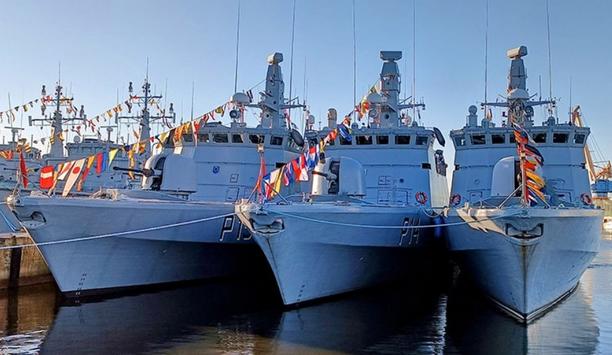
GEM elettronica is proud to announce the conclusion of a strategic project to strengthen Lithuania’s defense capabilities, during which cutting-edge surveillance radars with airspace monitoring function were installed on four patrol ships of the Lithuanian Navy. The contract was executed successfully and within the agreed-upon timelines, thanks to the collaboration between the Italian defence companies Leonardo and GEM elettronica. Advanced radar system The heart of the system is the Columbus MK2 3D multi-mission radar developed and produced in house by GEM Elettronica, specially designed for coastal surveillance and naval applications, made with the latest technologies, which guarantee high detection performances for search and tracking of small and fast targets at both air and sea surface space, high reliability and availability with low maintenance and life cycle costs. It is a compact and lightweight advanced radar system for short- and medium-range detection performing all the functions of surveillance, self-defence, IFF capabilities and weapon designation. The new radar systems were installed on the Lithuanian Flyvefisken (Standard Flex 300) class offshore patrol vessels (OPVs) Žemaitis (P11), Dzūkas (P12), Aukštaitis (P14) and Sėlis (P15). Working effectively together The main role of the new equipment is to ensure the safety of ships when navigating in narrow passages The main role of the new equipment is to ensure the safety of ships when navigating in narrow passages (e.g., straits, port channels) and in the open sea, as well as in search and rescue missions. The systems will allow objects to be detected up to 100 kilometers away. The Commander of the Lithuanian Naval Forces Sea, Captain Giedrius Premeneckas underlined: “The successful implementation of this project represents a significant step in strengthening the capabilities of the Navy’s patrol vessels and significantly increasing our ability to carry out assigned tasks and work effectively together with NATO allies.” The President of GEM elettronica Ing. Antonio Bontempi answered “We are delighted to have successfully contributed to the realization of this strategic project. We are also proud of what achieved by our R&D and Production teams who worked together with passion and tenacity to ensure the project was achieved within the expected timescales.”

From its foundation in 1959, Mitsubishi Ore Transport (MOT) has been committed to upholding the highest standards in maritime safety and security, and to delivering premium-quality marine transport services using advanced ship management technologies. Inmarsat’s Fleet Xpress As part of NYK, the future-oriented organisation operates a fleet of 17 vessels and seeks to harness the vast potential of an increasingly connected maritime ecosystem to realise its digitalisation and decarbonisation objectives. It was in line with these goals, and to accelerate the adoption of digital services on board its vessels, that MOT adopted Inmarsat’s Fleet Xpress across its fleet. Simple, convenient, and fast communication MOT needs to deliver high-quality services to its customers while advancing its digital transformation strategy Combining the high speeds of Inmarsat’s Global Xpress Ka-band network with unlimited backup from its FleetBroadband L-band service, Fleet Xpress provides the continuous connectivity MOT needs to deliver high-quality services to its customers while advancing its digital transformation strategy. Captain Gregario C. Ogatis, Master of the MOT-managed bulk carrier Santa Isabel, described Inmarsat’s connectivity solution as “very simple, convenient and fast”, adding that it allows onboard personnel to “communicate easily with shore”. Quick information exchange Building on Ogatis’s remarks, Tesuro Ideguci, Chief Engineer, MOT, commented, “Inmarsat’s Fleet Xpress has allowed us to communicate with external parties and receive information very quickly, which is extremely beneficial." "Thanks to Fleet Xpress, I believe the way we work on land and sea will change significantly in the future, and we will see improvements in all aspects of information exchange.” Synthetic virtual networks Fleet Xpress delivers bandwidth in segregated pipelines, with each essential service allocated its route As well as supporting fast and seamless business communications, Fleet Xpress helps crew members make the most of their free time by allowing them to keep in touch with family and friends and enjoy online entertainment on their own devices without interfering with mission-critical connectivity. Using synthetic virtual networks, Fleet Xpress delivers bandwidth in segregated pipelines, with each essential service allocated its own dedicated route to the user. The bandwidth used outside of these essential services also receives its own pipeline, ensuring connectivity for both business and leisure, and achieves the highest standards in speed, reliability, and security. Enhanced efficiency, reduced fuel consumption Santa Isabel also benefits from Inmarsat’s Fleet Data, a maritime Internet-of-Things (IoT) platform that provides full data ownership and access from a single customisable dashboard. Fleet Data transforms the way ship owners and managers collect, transfer, analyse, store, and share vessel data for quick performance-based and historical benchmarking across the fleet. These insights support enhanced decision-making for more efficient and sustainable operations. Fleet Data is available on the Fleet Edge platform – a versatile, fully integrated modular solution giving Santa Isabel a path to operational efficiency, decarbonisation, and enhanced crew welfare over the Fleet Xpress network. Improving operational efficiency IoT platform has reduced fuel consumption and helped to ensure operations run according to schedule Shunsuke Miyazaki, General Manager, of Mitsubishi Corporation (MC) Shipping, which owns Santa Isabel among other MOT-chartered or managed ships, commented, “In the trend towards global decarbonisation, the key is how to operate vessels more efficiently to reduce fuel consumption. We use Fleet Data to send information from the ship in real-time, and we leverage these insights to improve operational efficiency.” For the two MC-owned vessels already deploying Fleet Data, Miyazaki added, the IoT platform has reduced fuel consumption and helped to ensure operations run according to schedule. Connectivity with certainty As the maritime industry becomes increasingly digitalised, more and more shipping companies are embracing new technologies and upgrading their satellite communications services to enable digitalisation, decarbonisation, and crew connectivity. This is why so many shipping companies rely on the Fleet Xpress suite of services, all delivered through our world-pioneering satellite network. Digital service adoption Inmarsat’s services are built to deliver control over the entire connectivity ecosystem" “We are delighted to support Mitsubishi Ore Transport solutions in driving the adoption of digital services on board,” said Gert-Jan Panken, Vice President of Sales, Inmarsat. “Inmarsat’s services are built to deliver control over the entire connectivity ecosystem." Build-in competitive advantages "With Fleet Xpress, shipping companies like MOT gain access to a host of opportunities to optimise and drive efficiency, the ability to attract and retain the most talented crew, and the capacity to future-proof operations and build-in competitive advantages." "By providing a clear view of what satellite communications mean to your business today and tomorrow, Inmarsat offers connectivity with certainty.”

Rodman Polyships S.A.U., a Rodman Group shipyard specialised in the building of all types of GRP (Glass Fibre Reinforced Polyester) boats, has delivered a new professional boat to the Maritime Service of the Spanish Civil Guard. She is the new Rodman 66, a monohull, cabin type construction, with an aluminium hull and deck and a superstructure in glass fibre reinforced polyester (GRP) using hybrid multi-axial materials of aramid and E-glass and other synthetic and mineral fibres. New Rodman 66 all-weather patrol boat The new Rodman 66 is an all-weather patrol boat, specially designed to carry out patrol missions The new Rodman 66 is an all-weather patrol boat, specially designed to carry out patrol missions, anti-illegal immigration tasks, and protection of the marine environment, surveillance and anti-drug trafficking activities, as well as other specific duties of the Spanish Civil Guard. Main features of the new Rodman 66 patrol boat: With an overall length of 22 metres and a top speed of almost 44 knots, she has been created by the shipyard’s design, technical and engineering teams, perfectly combining high performance, reliability, building quality and seaworthiness. The propulsion consists of two MAN engines of 1,400 HP each and two Hamilton Waterjets. The boat can accommodate a maximum of 5 crew members, with two cabins. The accommodation is complete with galley, dining room, living area and complete toilet. Providing a range of more than 800 nautical miles, the new Rodman 66 offers great versatility in surveillance and intervention operations. Completing the equipment of the Rodman 66 patrol boat, we highlight a 4.5 m. TarpónPro tender and a deck crane for boat services. New model developed to meet specific needs This new model has been developed to meet the specific needs of the owner, in addition to the various technical and construction quality requirements of Rodman’s standard, optimising the safety and comfort of the crew and people on board. The construction of this new patrol boat model consolidates Rodman’s position as one of the world leaders in the construction of professional crafts. Boats and vessels built by Rodman recognised globally All the professional and leisure boats and vessels built by the shipyard are widely recognised and highly valued by the most demanding owners, as well as by organisations and governmental administrations all over the world.

Cochin Shipyard Limited (CSL), the premier shipbuilding and ship repair company in India, has delivered the 10th Electric Hybrid 100 Pax Water Metro Ferry BY 125 to Kochi Water Metro. The occasion was marked by the Delivery Protocol Signing ceremony held at CSL, in the presence of Directors of KMRL and CSL, along with senior officials from KMRL, CSL, DNV, and IRS. Shri. Harikrishnan S, Chief General Manager - CSL, and Shri. Shaji P Jananardhanan, Chief General Manager - KMRL, signed the protocol document on behalf of their respective organisations. Both organisations worked closely towards the successful completion of this project, which contributes significantly to the sustainable development and modernisation of water transportation in Kochi, India. Electric Hybrid 100 Pax Water Metro Ferry BY 125 The Electric Hybrid 100 Pax Water Metro Ferry BY 125 is a state-of-the-art vessel The Electric Hybrid 100 Pax Water Metro Ferry BY 125 is a state-of-the-art vessel designed to provide efficient, eco-friendly, and convenient transportation options for the residents and visitors of Kochi. With a focus on sustainability and environmental responsibility, this ferry is equipped with electric hybrid technology, ensuring reduced emissions and minimised environmental impact. CSL and KMRL partner to advance India’s maritime capabilities By achieving the milestone of delivering the 10th Water Metro Ferry, CSL and KMRL have demonstrated their commitment to advancing the Nation's maritime capabilities, while prioritising eco-conscious transportation solutions. The collaboration between the two esteemed organisations is a testament to the potential for excellence within the Indian shipbuilding industry. CSL and KMRL officials conveyed their gratitude to all stakeholders, including DNV and IRS, for their support and partnership on the project.

Universal and equitable access to drinking water and adequate sanitation and hygiene services, as well as the improvement of water quality at a global level, are part of the Sustainable Development Goals of the 2030 Agenda for Sustainable Development, but they have also become part of a daily problem in many parts of the planet. Ingeteam, with its Indar submersible pumps and motors designed and manufactured in Beasain, Spain, contributes to solve part of this problem; and among the numerous applications for which the submersible pumps and motors are intended are desalination plants. Indar submersible pumps and motors installed In this context, the six pumps and their corresponding submersible motors have been installed in the desalination plants of Alicante I and San Pedro del Pinatar I, both belonging to the Commonwealth of the Taibilla Canals, and their main task will be to take the water to be desalinated from the sea and discharge it as drinking water to the primary water network of the region, which in the summer period has more than 3 million inhabitants. The desalination plants and their operation The Alicante I desalination plant is located in Aguamarga, in the municipality of Alicante, Spain The Alicante I desalination plant is located in Aguamarga, in the municipality of Alicante, Spain. It has a maximum production of 57,500 m³ of water per day and the treated water is fed into the New Alicante Canal (enlarged in 2006). In this installation, 2 Indar pumps manufactured by Ingeteam have been implemented with their respective motors. These water collection units will work in coastal vertical wells which usually have a high variability of water level. Seawater desalination plant using Ingeteam technology The second seawater desalination plant using Ingeteam technology is called San Pedro de Pinatar 1. It is designed to produce and supply the Commonwealth with a daily volume of up to 65,000 m³ of drinking water. The plant is located in the El Mojón area, near the Salinas and Arenales de San Pedro del Pinatar, in the Region of Murcia, Spain. The new units supplied will replace the 4 identical units supplied by the company in 2003. Stainless steel units supplied The 6 units for these desalination plants have been supplied to Ingeteam’s distributor, Juan Azcue, S.A., and are made of stainless steel, which is highly resistant to corrosion in aggressive environments, such as salinity, humidity, and acid or alkaline media. Both plants take the water from the vicinity and then proceed to its treatment. Thus, the process includes a seawater pretreatment that guarantees its optimal conditions (physical and chemical); desalination as such, which is carried out by means of membrane racks; and finally, a seawater post-treatment that guarantees compliance with the criteria established for water for human consumption by the regulations in force.


Fleet planning as a strategic asset
Download