Wallem Group - Experts & Thought Leaders









Latest Wallem Group news & announcements

Wallem Group, a major global maritime partner, is celebrating the centenary of moving its headquarters to Hong Kong. The celebrations will be marked by a special event on 12 November 2025 in the presence of Guest of Honour Hong Kong Finance Secretary, commemorating 100 years since the relocation – 22 years after Norwegian shipbroker and agent Haakon Wallem formed Wallem & Co. in 1903. By 1925, Haakon had earned the nickname ‘Typhoon Wallem’, reflecting his energy and business acumen and his deployment of both to support Chinese shipowners. Wallem’s home In the 100 years since, shipping has been buffeted by wars, piracy, economic crises, terrorism, environmental and safety emergencies, and adapted to new regulatory agendas, digital revolutions, and a global pandemic. Hong Kong has remained Wallem’s home throughout, during a century of radically changing trade patterns, containerisation and globalisation. Home, too, to the world’s fourth largest ship register and a top ten global container port, Hong Kong recently benefited from a new favourable maritime tax regime. Enduring commitment to Hong “Wallem’s enduring commitment to Hong Kong reflects the critical role it plays as a hub for international shipping and the global centre of gravity for ship management itself,” says John Rowley, CEO, Wallem Group. He adds, “It also offers a deep pool of talent to drive success across every aspect of our activities as we look ahead with confidence based on a strategy for sustainable growth that places clients and the business opportunities they seek at its heart.” Since 2006, Wallem has been owned by Tom Steckmest, great grandson of Haakon Wallem, and Nigel Hill, the current Chairman. Both emphasise that their goal was and is to develop the best ship management group in terms of quality and service with a growing client base to match. Ship management Nigel Hill comments: “Wallem sees ship management as a very personalised service, offered so that each vessel meets the highest standards of quality, safety and sustainability whilst ensuring cost-effectiveness.” He adds, “Achieving this requires an equal partnership with the shipowner to make the best use of Wallem’s management and technical expertise. Hong Kong is Wallem’s home, and we believe that Wallem’s independence remains the key to our ship management’s future success.” Core ship management service Wallem’s other divisions – Agency, Marine services, Crewing, IT and Commercial - support the core ship management service, and technology is required to do the same. Key emphases are always maintained on safety and the welfare of seafarers. Further celebrating its maritime heritage, Wallem has published an updated edition of Typhoon Wallem, the history first released in 2003 to commemorate 100 years since the company’s foundation. Anthony Hardy’s original text has been combined with new chapters from maritime historian, Stephanie Zarach, detailing the challenges and changes that have occurred since.

Wallem Group, a major global maritime partner, has launched a suite of support and consultancy services to protect IT systems onboard its clients’ vessels from disruption. Its new Vessel IT Security and Management Services (VITS) offer comprehensive support to enable smooth, secure and efficient IT at sea in an increasingly digitalised and regulated maritime world. VITS have been developed with a ship's entire digital ecosystem in mind – from its business networks to the Internet of Things (IoT) systems on which operations and humans rely. It includes six management and security services to help keep vessel IT systems up and running, and minimise cyber threats. Wallem VITS Wallem VITS offer continuous Servicedesk Support to customers from experts in vessel IT Wallem VITS offer continuous Servicedesk Support to customers from experts in vessel IT. When necessary, enquiries are escalated to specialist in-depth service teams. A Remote Vessel Infra Support service swiftly resolves IT issues from shore. In more complex cases, Wallem offers Onboard Vessel IT Support, deploying engineers to the ship to offer hands-on assistance with IT infrastructure, system upgrades, health checks and troubleshooting. “The VITS suite is Wallem’s comprehensive response to shipping’s advancing digitalisation, and the critical role IT reliability plays in maritime operations,” said Steve Whitby, Group IT & Technology Director, Wallem Group. Growing reliance on IT Steve Whitby adds, “Ship owners increasingly seek efficiencies from remote IT support, remote management, and remote monitoring of vessel operations. Securing these benefits requires deep IT knowledge and long-standing maritime experience. VITS delivers these core specialised services.” He continues, “Shipping’s growing reliance on IT explained why the other three service modules in VITS focus on cyber security. Modern vessel operations demand connected IT infrastructure, but this can expose outdated onboard systems and virus signatures, hardware performance issues, and deficiencies in data back-up and IT support.” Steve Whitby further states, “Owners must secure networks, onboard systems, and data against ransomware, phishing, and unauthorised access. VITS offers tailored services to safeguard vessel IT.” Vulnerability Management service VITS includes a Vulnerability Management service, through which the Wallem team scans shipboard computers annually to identify vulnerabilities, then applies patches and security-hardening measures remotely to ensure the vessel's IT remains secure and compliant. Its Advanced Endpoint Protection, meanwhile, is a signatureless security service that uses machine learning and behavioural analysis to defend systems against zero-day attacks and evolving threats. Critical systems are safeguarded by an Enhanced Backup Service, which is activated in the event of a cyber-attack or hardware failure. It features a network-based backup vault with integrated virus protection, remote monitoring, and restoration support. VITS also offers a Security Benchmark Service, reporting on security gaps, compliance shortfalls, and best practices.
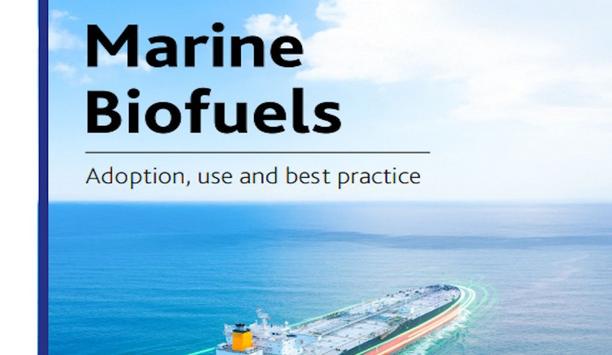
Wallem Group, a major global maritime partner, has published a new whitepaper to ensure ships, ship systems, and crews are fully prepared to load, store, and use biofuels in everyday vessel operations. ‘Marine Biofuels: Adoption, use, and best practice’ recognises the contribution that biofuels can make to maritime decarbonisation, while also offering comprehensive guidance on the precautions owners and crew need to consider before and during use. Biofuels to reduce greenhouse gas Biofuels have established a market position among owners seeking to reduce greenhouse gas emissions Biofuels have established a market position among owners seeking to reduce greenhouse gas emissions at a time when alternatives, such as Renewable Fuel of Biological Origin (RFNBO), zero-carbon hydrogen, ammonia, or e-methanol remain unavailable. Permissible biofuel well-to-wake emissions intensity has been defined by the International Maritime Organization (IMO) as at least 65% of Marine Gas Oil (MGO). However, with a lower calorific value than fossil fuels, biofuels also present adoption challenges that require close attention from procurement, technical and vessel operating personnel, notes Abhijit Ghosh, Head of Maritime Technology and Innovation, Ship Management, Wallem Group. Scope of the whitepaper The whitepaper examines the regulatory landscape surrounding marine biofuels, but also the specifics of IMO compliance, and the transparency needed to use fuels that vary batch to batch. It explains how these blends of Fatty Acid Methyl Ester (FAME) and residual or distillate fuels impact storage tanks, fuel systems, machinery, and crew training, also reflecting on the need for additional insurance cover. Recommendations for owners Based on experience, Wallem has particular recommendations for owners on the assurances they need from equipment suppliers before introducing biofuels. It also explores the consequences for biofuel users of improper blending, acidity, biodegradation and microbial growth, fouling, waxing and clogging. The publication provides best practice recommendations for testing, materials selection, segregation, temperature control, tank cleaning and fuel line flushing. For long-term biofuel use, Wallem recommends that engines are retrofitted with hardened fuel pumps and corrosion-resistant coatings. Importance of crew training The whitepaper also considers crew training gaps and offers recommendations for monitoring, measuring, and checking biofuel use to ensure that personnel, systems, and the ship remain safe. "The combination of a centralised digital system for real-time tracking and analysis of biofuel consumption and a skilled and well-trained crew can be transformative for enabling the future-ready maritime fleet," says Abhijit Ghosh.

Fleet planning as a strategic asset
Download