Seatrium - Experts & Thought Leaders



Latest Seatrium news & announcements
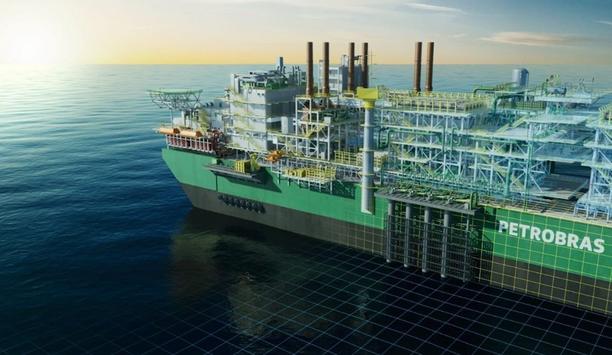
ABB has been awarded a large order by Seatrium, a provider of marine engineering solutions based in Singapore, for the supply of electrical equipment and automation solutions on a new generation of floating production storage and offloading (FPSO) vessels for operator Petrobras. The two vessels – P-84 and P-85 – will be deployed in the Atapu and Sépia fields, approximately 200 kilometres off the coast of Rio de Janeiro in Brazil. ABB Ability™ System 800xA® ABB will design and make the topside and hullside electrical tools, electrical substation automation ABB will design and construct the topside and hullside electrical equipment, electrical substation automation and eHouses for both FPSOs. Petrobras will utilise the ABB Ability™ System 800xA® and IEC 61850 technologies for substation automation, which allow for seamless interoperability between Intelligent Electrical Devices and enhances operational efficiency and system reliability. In a first for Petrobras, the P-84 and P-85 vessels will also feature an all-electric concept, which focuses on efficient power generation and increased energy efficiency, by using electrically driven compressors and motors to produce 165 MW power generation capacity. ABB’s three Is-limiter configuration The project also marks the first offshore application of ABB’s three Is-limiter configuration which, due to the FPSOs’ high-power capacity, is vital to ensuring short circuits are managed effectively. Is-limiters are fast-acting devices that prevent damage to electrical components and reduce mechanical and thermal stress by limiting the short-circuit current before it reaches its peak value. FPSO topside systems ABB’s Sorocaba factory– found 85 km west of São Paulo in Brazil–will simulate the UniGear ZS1 switchboard Constructed by ABB Singapore, the FPSO topside systems will be installed in an ABB eHouse - a prefabricated transportable substation designed to house medium voltage and low voltage switchgear, critical power equipment and automation cabinets. ABB’s Sorocaba factory – located 85 kilometres west of São Paulo in Brazil – will manufacture the UniGear ZS1 switchboard, which is used to distribute electric power safely and reliably in demanding applications. Offshore energy industry “The offshore energy industry requires innovative solutions and technologies, at scale and at pace, to support an effective and secure energy market,” said Per Erik Holsten, President of ABB’s Energy Industries division. “With our ability to meet advanced technical requirements and high safety standards, along with our deep commitment to energy efficiency, we look forward to working with Seatrium on this large-scale and complex project.” Growth sector for offshore energy The Brazilian FPSO market continues to be a growth sector for offshore energy, with potential investment estimated at $21 billion in 2026-2027, set against a global FPSO market projected to reach a value of $46.2 billion by 2033. Construction of the P-84 and P-85 FPSOs has been ongoing since 2024, with delivery of ABB’s eHouses expected by 2027. Each vessel will have a production capacity of 225,000 barrels of oil per day–at a time when total global supply capacity is forecast to rise to nearly 114 million barrels a day by 2030, according to the IEA.

ClassNK has issued an Approval in Principle (AiP) for an ammonia-fuelled ammonia bunkering vessel. This vessel is jointly developed by Nippon Yusen Kabushiki Kaisha (NYK Line) and LMG Marin AS (a member of the Seatrium Group). As ammonia fuel utilization is expected in shipping for decarbonization, bunkering vessels that supply fuel to ships and related equipment will play an essential role in the supply chain. Fuel engines from IHI Power Systems Additionally, a safety verification was conducted through HAZID involving relevant stakeholders This vessel is being developed jointly by NYK Line, advancing the development of ammonia-fueled vessels, and Seatrium, the largest shipyard in Singapore, with the goal of introducing it to Singapore, one of the world’s pioneering bunkering ports. This vessel is mainly designed by LMG Marin AS. It features ammonia fuel dual-fuel engines from IHI Power Systems and a bunkering boom from TB Global Technology, allowing for safe and reliable ammonia bunkering operations. Additionally, a safety verification was conducted through HAZID involving relevant stakeholders. New technology development and social implementation ClassNK carried out a review of the conceptual design of the ship based on its ‘Part N; Ships carrying liquefied gases in bulk ‘ of the Class Rules and ‘Part C-2; Guidelines for the Safety of Liquefied Gas Carriers Using Ammonia as Fuel (Edition 3.0.2) which is part of ‘Guidelines for Ship Using Alternative Fuels (Edition 3.0) and examined the result of required assessment. Upon confirming they comply with the prescribed requirements, ClassNK issued the AiP. Moreover, the latest ‘INTERIUM GUIDELINES FOR THE SAFETY OF SHIPS USING AMMONIA AS FUEL’ approved at MSC 109 last December are referred to in this AiP. ClassNK will continue to contribute to new technology development and social implementation, including safety assessments.

Penta-Ocean Construction, a prominent Japanese general contractor, has commissioned Ulstein Design & Solutions B.V. to design its new heavy lift vessel for offshore wind foundation installation. The customised ULSTEIN HX118 design will feature a 5,000-ton Huisman main crane and the ULSTEIN U-STERN™, which enables installation of increasingly larger monopile foundations. Ulstein's successful track Following feasibility and concept studies in 2023, Penta-Ocean Construction selected Ulstein for the project. Ulstein proposed the HX118 with the U-STERN™, a design that builds on Ulstein's successful track record of crane vessels. The selected design offers a well-balanced combination of a flush work deck, lifting capacity, accommodation and DP capability and will be the largest X-BOW® vessel to date. Basic Design of the heavy lift vessel The design is being set at Ulstein’s Rotterdam office, with significant support from Ulstein Poland The U-STERN™, developed by Ulstein, features longitudinal storage and upending of monopiles along the ship’s centreline. This innovation enables the installation of longer monopiles without overhanging the ship’s sides and allows the vessel to face into the waves during the installation, minimising ship motions and fuel consumption. Since last summer, Ulstein has been collaborating with Penta-Ocean Construction on the Basic Design of the heavy lift vessel, including an extensive model test program. The design is being developed at Ulstein’s Rotterdam office, with significant support from Ulstein Poland during the Basic Design phase. Monopile installation vessel "We are honoured that Penta-Ocean Construction chose us to design their new heavy lift vessel. This project represents a powerful collaboration between Penta-Ocean Construction, Ulstein and Huisman to design this most capable monopile installation vessel,” says Ko Stroo, lead designer at Ulstein Design & Solutions B.V. “As the project moves forward with its construction at the Seatrium shipyard, Singapore, we remain committed to supporting the parties throughout the construction phase.”

Fleet planning as a strategic asset
Download