Kawasaki Heavy Industries - Experts & Thought Leaders

Latest Kawasaki Heavy Industries, Ltd. news & announcements

ClassNK has conducted Technology Qualification (TQ) for Ship to Shore Couplers (hereinafter 'this product') for liquefied hydrogen (LH2) transport jointly developed by Kawasaki Heavy Industries, Ltd. and TB Global Technologies, Ltd. and the relevant certificate has been issued. TQ is for qualification of safety of a new technology, showing equivalent to the technology based on existing rules and regulations, and this is the first case in ClassNK for liquefied hydrogen marine equipment. New concepts and designs Development of liquefied hydrogen carriers that enable large-scale and efficient transportation is actively underway, to build a hydrogen supply chain that is expected to be a clean energy source in a decarbonised society. In order to support the social implementation and commercialisation of such a new technology, ClassNK has issued Guidelines for Technology Qualification, which provide a certification process for technologies based on new concepts and designs that cannot be addressed by existing rules and standards. This product, jointly developed by Kawasaki Heavy Industries and TB Global Technologies, is a flanged-style coupler for connecting the cargo handling piping of a liquefied hydrogen carrier to a marine loading arm installed on the jetty at a liquefied hydrogen site. Requirements for liquefied hydrogen carriers ClassNK has reviewed this product based on Guidelines for Technology Qualification, Guidelines for Liquefied Hydrogen Carriers, which cover various safety requirements for liquefied hydrogen carriers, and other relevant standards. For ensuring safe loading and unloading of liquefied hydrogen at cryogenic temperatures (-253°C), ClassNK examined various safety evaluations, including risk assessment based on the novelty of the components of the product, qualification tests, including the ones using liquefied hydrogen at Noshiro Rocket Testing Centre of the Japan Aerospace Exploration Agency (JAXA). Upon confirming the satisfaction of the defined requirements, the certificate of technology qualification was issued. ClassNK will continue contribute to the social implementation and spread of the relevant technologies through technical verification of advanced initiatives.

ClassNK has issued an approval in principle (AiP) for an ammonia fuelled LPG/NH₃ carrier, applied for jointly by Kawasaki Heavy Industries, Ltd. and MITSUI E&S Co., Ltd. The certification demonstrates its feasibility from regulatory and safety perspectives. Ammonia, which does not emit CO₂ during combustion, is expected to see wider use as a zero-carbon fuel for ships. At present, various studies and development efforts are underway to bring ammonia fuelled ships into practical use. International standards ClassNK released the ‘Guidelines for Ships Using Alternative Fuels’ to support pioneering initiatives in this field In 2021, prior to the establishment of specific international standards for the use of ammonia as fuel for ships, ClassNK released the ‘Guidelines for Ships Using Alternative Fuels’ to support pioneering initiatives in this field. The guidelines stipulate requirements for installation, controls, safety devices, etc., aiming to minimise the risks to ships, seafarers, and the environment associated with the use of ammonia fuelled ships. Furthermore, in December 2024, the ‘Interim Guidelines for the Safety of Ships Using Ammonia as Fuel’, which ClassNK had submitted a proposal for safety requirements to the IMO through the Government of Japan, were approved at MSC 109. Design concept ClassNK reviewed the design concept of the vessel based on 'Part C-2: Guidelines for the Safety of Liquefied Gas Carriers Using Ammonia as Fuel (Edition 3.0.2)' and 'Part C-3: Additional Safety Measures for Engine Rooms (Edition 3.0.2)' of the 'Guidelines for Ships Using Alternative Fuels (Edition 3.0)', and examined the risk assessment through HAZID. Upon confirming that the prescribed requirements had been met, ClassNK issued AiP. ClassNK will continue to contribute to new technology development and social implementation, including safety assessments.
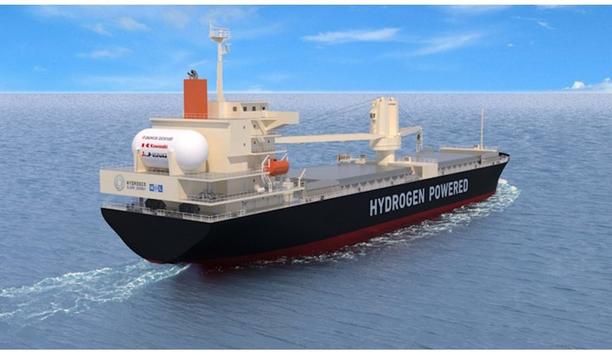
ClassNK has issued an Approval in Principle (AiP) for a parcel layout concept for a hydrogen-fueled multi-purpose vessel developed by Mitsui O.S.K. Lines, Ltd., MOL Drybulk Ltd., Onomichi Dockyard Co., Ltd., Kawasaki Heavy Industries, Ltd., and Japan Engine Corporation. This is the world’s first AiP certification for a ship equipped with a large low-speed two-stroke hydrogen-fueled engine as the main propulsion engine. Growth and building of the vessel According to the companies, demonstration operation of the vessel will be conducted for two years from around FY2027 as part of the “Development of marine hydrogen engines and MHFS,” which was adopted by the Green Innovation Funding Programme of the New Energy and Industrial Technology Development Organisation (NEDO). MOL and MOL Drybulk will be in charge of right and process management of the vessel Prior to the demonstration operation, J-ENG’s large low-speed two-stroke hydrogen-fueled engine and Kawasaki’s MHFS will be installed in the vessel by FY2026. MOL and MOL Drybulk will be in charge of ownership and operation management of the vessel and Onomichi Dockyard will be in charge of the development and building of the vessel, and they will cooperate towards the demonstration operation. Risk assessment results ClassNK carried out a review of a parcel layout concept for the MHFS based on its rules including part GF of its "Rules and Guidance for the Survey and Construction of Steel Ships" incorporating the IGF Code and risk assessment results through pre-HAZID. Upon confirming they comply with the prescribed requirements, ClassNK issued the AiP. ClassNK will contribute to the further consideration of the project for demonstration operation from the perspective of safety evaluation and will strive to support the decarbonisation of shipping.

Fleet planning as a strategic asset
Download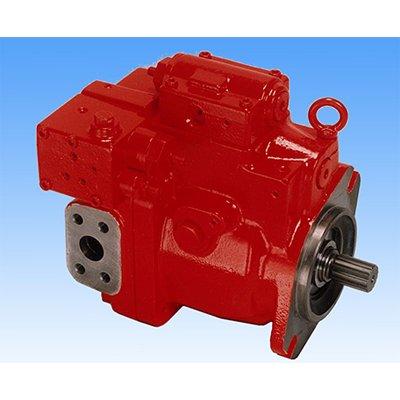
Kawasaki Heavy Industries K3VL 28 Axial Piston Pumps (Open Loop)
Kawasaki Heavy Industries K3VL 45 Axial Piston Pumps (Open Loop)
Kawasaki Heavy Industries K3VL 80 Axial Piston Pumps (Open Loop)