ICS - Experts & Thought Leaders





Latest International Chamber of Shipping news & announcements

Accelleron will launch a landmark Net Zero report at London International Shipping Week (LISW) this month, calling on shipping to join forces with other industries and pool demand for carbon-neutral fuels. The call to decarbonise shipping has sparked a technological renaissance in the past decade that has enabled vessels to slash emissions in a variety of ways and be powered by carbon-neutral fuels. But the production of such fuels at scale and at affordable prices has yet to materialise. IMO’s approaching targets Accelleron’s report fuses proprietary modelling with ample insights from peers across the shipping The result? While over a hundred billion dollars have been invested in maritime decarbonisation, carbon emissions have continued to rise, widening the gap to the IMO’s approaching targets. Accelleron’s report combines proprietary modelling with extensive insights from peers across the shipping value chain to determine the current stalemate and map a comprehensive way out: Pool demand for hydrogen-based fuels with other hard-to-abate sectors, such as aviation, steel, power and agriculture to trigger scaleable investment in production and infrastructure. Empower ports to enable change by bringing together industry to aggregate demand, orchestrate supply chains and reduce risk for investors. By catalysing cross-sector cooperation, shipping can be driver of the energy transition in hard-to-abate sectors rather than a passenger. Shipping’s 2030 emissions reduction target “The stakes are high as we strive to meet shipping’s 2030 emissions reduction target. Success hinges on implementing energy-saving technologies and going viral with fuel efficiency. But that’s just the first step in decarbonisation,” said Daniel Bischofberger, Chief Executive Officer at Accelleron. He adds, “The bigger challenge is developing carbon-neutral fuels, which are critical not only for the decarbonisation of maritime but for sectors contributing over 70% of global emissions. Solving this will require unprecedented cross-industry collaboration and a shared commitment to accelerating fuel development and adoption.” Report at LISW’s Global Hub Accelleron’s report is a call to action - and an invitation - to build the solutions already known to be possible. Accelleron will launch the report at LISW’s Global Hub on Tuesday, 16th September (1400–1600 UK time) and will host a panel discussion, followed by a Q&A, with: Patrick Verhoeven, Managing Director, International Association of Ports and Harbors Mark Simmonds, Director of Policy and External Affairs, British Ports Association Chris Waddington, Technical Director, International Chamber of Shipping Isabelle Ireland, Head of Operations, Intercontinental Energy Matt Dunlop, Group Director, Sustainability & Decarbonisation at V. Group, Strategic Partner, Secondee, Mærsk Mc Kinney Møller Center for Zero Carbon Shipping Christoph Rofka, President, Medium and Low Speed, Accelleron Martin Crawford-Brunt, Chief Executive Officer, Lookout Maritime, and Council Member, Baltic Exchange (Moderator) The panel will explore questions such as: Why shipping’s decarbonisation has stalled despite major technological advances The scale of investment required for green hydrogen as the foundation of shipping’s net-zero future How fragmented demand is blocking progress and what we can do about it The critical role of ports as a nexus for cross-sector demand aggregation How shipping can act as a catalyst for the wider cross-sector energy transition

The Industry Associations of BIMCO, ICS, IMCA, INTERCARGO, INTERTANKO & OCIMF, supported by over forty maritime stakeholders, have released a consolidated and enhanced publication, Best Management Practices (BMP) for Maritime Security (MS). As an interactive online publication, BMP Maritime Security consolidates previously published regional publications into a single, comprehensive publication with actionable insights and advice. It focuses on providing a threat and risk management process and, recognising the dynamic nature of regional security situations, provides signposts to direct users to the most up-to-date security intelligence and risk assessment information. BMP MS is now available to view on the industry website. Range of maritime security threats Seafarers operating ships around the world encounter a range of maritime security threats Seafarers operating ships around the world encounter a range of maritime security threats, which often involve aggressive state and non-state actors. Although these threats vary across regions and in their severity, they can have a traumatic effect on seafarers who face unwarranted physical and mental harm. In some cases, being held as hostages and subjected to violence and ill-treatment for extended periods. BMP Maritime Security To counter the threat, existing BMP guidance has greatly improved the industry’s ability to understand, detect, and deter maritime security threats in recent years, but the advice needs to keep pace with the rapidly evolving threat environment. In BMP Maritime Security, users can navigate easily to different sections and link directly to external sources. Additionally, the publication includes various diagrams that provide valuable learning opportunities. The publication includes a significant section detailing global authorities and, importantly, appropriate contacts and tools for seafarer welfare support. How the threats will develop in 2025 and beyond Additionally, the publication includes various diagrams that provide valuable learning opportunities BIMCO – David Loosley, BIMCO Secretary General & CEO, said: “2024 saw an unprecedented spike in attacks against merchant ships. Ships were attacked with weapons of war in the Black Sea and in the Southern Red Sea more than one hundred times, and four innocent seafarers lost their lives." "Globally, 126 seafarers were held hostage during pirate attacks and armed robberies, and 12 seafarers were kidnapped. BMP MS will reduce risks and save lives. While we cannot control how the threats will develop in 2025 and beyond, we can make sure that we have the best tools available to help protect our seafarers and world trade.” New BMP shipping industry ICS – Guy Platten, Secretary General, said: “Recent years have shown the stark security threats that seafarers and the industry can face in the service of world trade. From the conflict in Ukraine to the Red Sea Crisis, the dangers faced by shipping have increased to a severity not seen in two generations." "This new global BMP continues the shipping industry’s unswerving commitment to protecting seafarers and mitigating threats to the trade on which we all depend.” Enhance maritime security resilience IMCA – Iain Grainger, Chief Executive, said: "The maritime industry faces an ever-evolving landscape of security threats, making it essential for seafarers to have access to the most up-to-date and practical guidance. BMP Maritime Security provides a consolidated resource that helps vessels proactively manage risk, safeguard the welfare of crews, and enhance maritime security resilience worldwide." "People are our key asset, so IMCA is proud to support this initiative, ensuring that best practices continue to evolve alongside the challenges our industry faces." Safety and well-being of seafarers INTERCARGO – Kostas G. GKONIS, PhD, Director/Secretary General, said: “The new consolidated BMP guidance, developed by the maritime industry in coordination with naval forces, addresses escalating global threats to the safety and well-being of seafarers. INTERCARGO proudly supports this vital collaboration which cuts across traditional sector boundaries to deliver clear, actionable security protocols to protect those working at sea." "Through our joint work, we should collectively ensure that these practices reach and empower every vessel, requiring sustained cooperation between frontline crews, whose dedication keeps global trade moving, and security resources and expertise.” Revised BMP and related threat overviews BMP Maritime Security publication replaces previously published issues or supported guidance INTERTANKO – Tim Wilkins, Managing Director, said: “As seafarers navigate conflict and armed threats, it is our duty as shipowner representatives to provide them with the most up-to-date information and guidance to ensure their safety." "The revised BMP and related threat overviews reflect the collaborative efforts of many of our members, drawing on the hard-earned experience of the maritime industry. INTERTANKO considers BMP as being a vital reference for every vessel.” Unprecedented security challenges OCIMF – Karen Davis, Managing Director, said: “In the current heightened threat environment, where seafarers face unprecedented security challenges, the maritime community needs clear advice on how to manage threats, the risks, and the best mitigations to implement." "This publication builds on a successful series of BMPs consolidating the best information available in one publication, BMP Maritime Security.” Best Management Practice (BMP) Maritime Security publication replaces previously published issues or supported guidance.
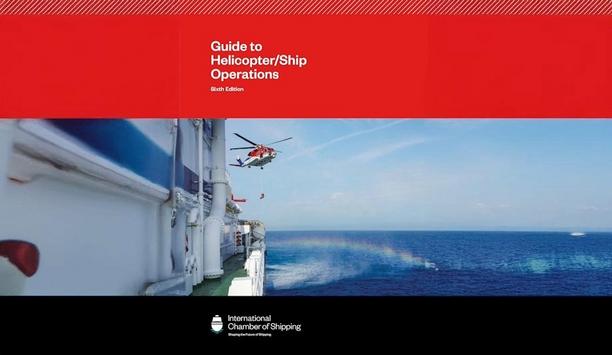
International Chamber of Shipping (ICS) Publications is proud to announce the release of the sixth edition of the ICS Guide to Helicopter/Ship Operations, an essential resource that has been setting the standard for safe and efficient helicopter/ship interactions for almost 50 years. Recognised as the go-to reference for shipping companies and crew, the Guide has been meticulously updated with input from pioneering experts in both the maritime and aviation sectors, including the Civil Aviation Authority, International Maritime Pilots’ Association, NYK Group, Knutsen LNG France, and the Japanese Shipowners’ Association. Marine pilots and helicopter operators The guide helps shoreside teams develop shipboard operating procedures and requirements This new edition reinforces its commitment to providing relevant, practical, and up-to-date guidance with a clear focus on ensuring safe and smooth operations for all parties involved. The ICS Guide to Helicopter/Ship Operations is a critical resource not only for ships’ masters, officers, and crew, but also for marine pilots and helicopter operators. The guide also helps shoreside teams develop shipboard operating procedures and requirements for the full range of helicopter operations that may be undertaken on board. Key enhancements in the sixth edition A new risk assessment framework for both landing and winching operations, further strengthening safety protocols. A concise aide-memoire for the responsible officer, ensuring clarity during high-pressure situations. A sample toolbox talk template to support preoperative briefings, fostering better crew communication and preparedness. Enhanced shipboard safety checklist for helicopter operations, with tasks now presented in chronological order to streamline execution. Further clarifications on roles and responsibilities, improving coordination between ship and helicopter teams. Updated terminology reflecting current industry standards and practices. Integration of onboard procedures Sixth edition can be used in junction with the Helicopter Operation Procedures for e-learning course Additionally, the sixth edition can now be used in conjunction with the Helicopter Operation Procedures for Ships e-learning course, available through the new ICS Academy. This alignment offers seamless integration of onboard procedures with training, ensuring crew members have access to comprehensive, practical learning tools. ICS Guide to Helicopter/Ship Operations Gregor Stevens, ICS Senior Manager-Nautical, commented on the significance of the update: "The ICS Guide to Helicopter/Ship Operations has been a cornerstone of safe practices for nearly five decades. This new edition enhances that legacy, making it easier for crews to implement procedures efficiently." "By streamlining processes and adding new tools, we’re ensuring that all personnel - whether on the ship or in the air-can operate with confidence and clarity." Reorganised structure The sixth edition is designed to be more user-friendly, with a reorganised structure that allows crews to quickly locate relevant information and implement best practices efficiently. The Guide to Helicopter/Ship Operations, Sixth Edition, is an essential publication to have on board.

Fleet planning as a strategic asset
Download