Inmarsat Global Limited - Experts & Thought Leaders

































Latest Inmarsat Global Limited news & announcements

Inmarsat Maritime, a ViaSat company, has unveiled the next phase in the evolution of its NexusWave bonded connectivity service, following the successful launch of the ViaSat-3 Flight 2 satellite and in anticipation of the launch of the ViaSat-3 Flight 3 satellite. As the two ViaSat-3 satellites are scheduled to enter service in 2026, NexusWave customers will benefit from a dramatic increase in available bandwidth via a new generation of maritime terminal, with additional capacity expected from VS3 Flight 2 over the Americas and VS3 Flight 3 over Asia-Pacific. This means that by investing in NexusWave now, maritime customers can expect a major step forward in performance, more consistent speeds, and even better flexibility to meet their evolving needs. Improved network efficiency NexusWave is Inmarsat’s fully managed, bonded multi-network service combining capacity from GEO Ka-band, LEO, LTE, and L-band networks in a single intelligent connectivity solution. With the introduction of the ultra-high-capacity, high-speed ViaSat-3 satellites, customers will enjoy faster data transfers and improved network efficiency to support digitalisation and crew welfare at scale for a truly ‘office-like’ and ‘home-like’ onboard internet experience. Incorporates multiple layers of protection The new VS60 maritime terminal, engineered by Intellian and powered by Viasat software-defined radio technology, will further strengthen NexusWave architecture and support bandwidth-intensive applications, such as enterprise networking, video streaming, crew welfare, and mission-critical operations. During recent sea trials, the VS60 terminal, purpose-built for the ViaSat-3 era, achieved download speeds exceeding 250 megabits per second. The VS60 terminal also incorporates multiple layers of protection to safeguard sensitive data and ensure operational integrity. In addition, ViaSat-3 satellites feature more than 1,000 steerable spot beams, which are designed to allow bandwidth to be moved dynamically to match demand across global shipping lanes, ports, and offshore locations. New ViaSat-3-ready terminal Gert-Jan Panken, Vice President, Inmarsat Maritime, said: “The combination of NexusWave’s bonded, multi-orbit architecture, and the new ViaSat-3-ready terminal developed with Intellian puts us in a strong position to support the operational priorities of global fleets." "It reinforces our long-term commitment to reliability, security, and customer experience at sea, and enables fleets to scale seamlessly with future capacity as the network expands.” Increasingly complex connectivity landscape Ben Palmer OBE, President, Viasat Commercial, added: “NexusWave was built to deliver consistent performance in an increasingly complex connectivity landscape." "As ViaSat-3 capacity becomes available, we’re taking another big step forward for our customers and partners by bringing more bandwidth, better flexibility, and a forward-thinking upgrade path to ensure connected confidence for the future.”

Inmarsat Maritime, a Viasat company, has signed an agreement to deliver NexusWave for longstanding customer Coastal Transportation as the family-owned shipping company seeks a reliable and cyber-secure connectivity solution for its fleet of refrigerated and general cargo ships. Operating a regular schedule between its home terminal of Seattle, Washington, and ports throughout Western Alaska, Coastal Transportation depends on stable connectivity to safeguard mission-critical and crew communications. Robust cyber-resilience With cargoes often involving complex inventory, the company is acutely aware of rising cyber threats and the need for resilient digital infrastructure. NexusWave’s secure-by-design architecture and segregated networks provide Coastal Transportation with robust cyber-resilience. The fully managed, bonded connectivity service is also designed to deliver global coverage and network availability exceeding 99.9%, helping ensure the vessels and their crew are consistently connected to high-speed internet from Seattle to Dutch Harbour and beyond. Levels of security and reliability Stephanie Grisham, Technical Program Manager, Coastal Transportation, said: "Upgrading to Inmarsat NexusWave was a natural next step for our cargo fleet." She adds, "NexusWave is the only connectivity solution on the market that delivers the levels of security and reliability we need to support safe and efficient operations from port to port. We also value the convenience it offers as a single solution from one provider that seamlessly combines the capabilities of multiple services." Fast-growing cohort of operators Logan Murray, Sales Account Manager, Inmarsat Maritime, commented: “We are delighted to extend our longstanding relationship with Coastal Transportation – the latest in a fast-growing cohort of operators that appreciate the unique value of fully managed, bonded connectivity as an enabler of safe, efficient, and secure fleet operations.”

Inmarsat Maritime, a Viasat company, is installing NexusWave on board selected Northern Marine Management Ltd (NMM) vessels operated by Stena Bulk and Proman Stena Bulk. This is part of their ongoing strategy to continually improve crew welfare through enhanced communications. Building on existing onboard connectivity provisions, NMM recognises the growing importance of high-speed internet access in attracting and retaining talent and supporting operational performance. The implementation of NexusWave reflects NMM’s commitment to deliver even better, more homelike internet experiences for its personnel. Bonded connectivity solution Inmarsat’s NexusWave is designed to deliver exceptional aggregated speeds, 99.9% availability, global coverage, secure-by-design infrastructure, and unlimited data to ensure seamless, uninterrupted crew communications wherever a ship is operating – whether in a busy shipping lane or a congested port. The fully managed bonded connectivity solution enables seafarers to enjoy improved internet access while onboard, supporting activities, such as staying in contact with family and friends, managing their finances, browsing and uploading to social media, streaming and downloading online entertainment, and undertaking remote learning courses. This enhancement supports NMM’s commitment to promoting well-being, personal growth, and job satisfaction among its seagoing workforce, strengthening its reputation as an employer of choice. Implementation of Inmarsat NexusWave on selected vessels John Cook, Ship Management Director, Northern Marine Group, said: "High-quality onboard connectivity has long been part of our approach to supporting crew welfare, recruitment, and retention. As expectations evolve, so too must our solutions. Northern Marine Management’s implementation of Inmarsat NexusWave on selected vessels represents a significant step forward for the Stena Bulk and Proman Stena Bulk vessels under our management." He adds, "We continue to explore and implement a range of connectivity solutions across our entire managed fleet, with NexusWave forming a key part of the strategy for selected vessels." Integrating NexusWave into their connectivity strategy Robert Mathieson, Sales Manager, Inmarsat Maritime, said: "By integrating NexusWave into their connectivity strategy, Northern Marine Management and Stena Bulk and Proman Stena Bulk have confirmed their status as technologically progressive industry pioneers who are committed to promoting the happiness and development of their seafarers." He adds, "The move will have a positive impact not only on crew welfare but also, as a direct consequence, on the reputation and operational performance of both companies."
Insights & Opinions from thought leaders at Inmarsat Global Limited
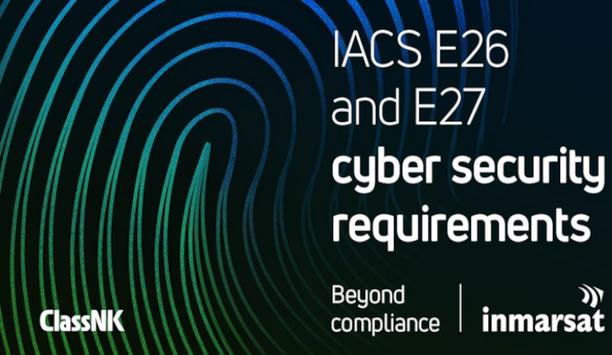
Aiming to establish minimum requirements for the cyber-resilience of newbuild vessels and their connected systems, IACS unified requirements (URs) E26 and E27 provide a new benchmark for shipping’s response to its growing exposure to cyber-attacks. Officially in force from 1 July 2024 and broadly welcomed by industry, the new URs represent another step forward in strengthening Maritime's resilience to the evolving cyber threat. However, according to a thought-provoking discussion recently hosted by Edwin Lampert, Executive Editor of Riviera in partnership with Inmarsat Maritime (a Viasat company), shipping companies must still conduct comprehensive risk assessments and implement appropriate mitigation measures. Vessel’s cyber security They ensure all stakeholders are responsible for the vessel’s cyber security Kostas Grivas, Information Security Officer, Angelicoussis Group told the ‘IACS URs E26 & E27: Bridging the gap between regulation and implementation’ session that the URs bring “obvious benefits” such as eliminating “scattered requirements”. They provide “common and crystal-clear ground for auditing and control purposes”, and establish “a solid description of the minimum technical, procedural, and other criteria that govern a vessel’s cyber resilience,” he said. Finally, they ensure “all stakeholders are responsible for the vessel’s cyber security”. Makiko Tani, Deputy Manager, Cyber Security at classification society ClassNK, also acknowledged that the new requirements will “contribute to the visibility of ever-digitalising shipboard networks and their assets”, however, as there is no one-size-fits all cybersecurity solution to all, she continued, “additional controls beyond those specified in the requirements may be necessary, depending on the vessel’s connectivity”. Digital transformation strategy To properly address the cyber risks that a specific vessel is exposed to, she said, “shipowners must conduct a thorough cyber-risk assessment. This relies on a ‘C-level commitment’ to establishing a cyber-security programme that facilitates compliance with URs E26 and E27 and any other future industry requirements while supporting the organisation’s digital transformation strategy”. The importance of looking beyond the IACS URs was also emphasised by Laurie Eve, Chief of Staff, Inmarsat Maritime, who proposed three key areas where companies should “focus and invest not only to meet new requirements but also to go beyond compliance and build good cyber resilience”. Quality management system and standards The firm should focus on training and grasping, managing user rights, investing in a regime system “The first key area, ‘people and culture’, addresses the notion that people are the weakest link in cyber security. According to a 2023 report from the United States Coast Guard as well as findings from Inmarsat’s security operations centres, phishing is the most common initial access vector in cyber-attacks. Investing in people, therefore, should be an absolute no brainer”, commented Eve. Specifically, he continued, a company should focus on training and awareness, managing user privileges, investing in a quality management system and standards such as ISO 27001, assessing suppliers’ risk-management practices, and embedding cyber-security in the organisation’s continuous improvement culture. Risk-management approach The third and final key area according to Eve is an ‘incident response plan’ (IRP). The second key area is ‘network-connected systems and services’. Given the number of attack surfaces on board a vessel and the ever-growing volumes of data moving between systems, many companies lack the time and resources to address all possible weaknesses. The solution, Eve said, is a risk-management approach in which the organisation assesses the risks, sets its risk appetite, and implements security measures according to the costs it is willing and able to bear. The third and final key area according to Eve is an ‘incident response plan’ (IRP). It’s prudent to assume that at some point there will be failures and a breach, an IRP comprises a robust set of contingencies to keep the cost of business disruption to a minimum. It requires investment in backup and data systems as well as regular staff training. “Having a plan is good; training, rehearsing, and improving the plan is better,” explained Eve. Cyber-security requirements While these recommendations apply to all ship owners, Eve acknowledged that there are differences from small to large operators in terms of the budget and internal capability invested in cyber resilience. “Inmarsat’s Fleet Secure offers a ‘one-stop shop’ for cyber-security requirements which makes it a particularly good fit for “smaller operators without the in-house capability to put together their own solutions”, he said. Inmarsat’s Fleet Secure offers a ‘one-stop shop’ for cyber-security requirements Combining three powerful components – Fleet Secure Endpoint, Fleet Secure Unified Threat Management, and Fleet Secure Cyber Awareness Training – the Fleet Secure portfolio provides the tools and facilitates a risk-management approach, supporting “compliance with the new requirements” and, more broadly, “increasing cyber resilience”, Eve added.

Fleet planning as a strategic asset
Download