Hyundai Heavy Industries (HHI) - Experts & Thought Leaders






Latest Hyundai Heavy Industries (HHI) news & announcements

ABS granted approval in principle (AIP) for VesselWise, a next-generation autonomous technology for optimising propulsion to improve fuel efficiency and enhance operational stability. The technology was developed by HD Korea Shipbuilding & Offshore Engineering (HD KSOE), HD Hyundai Heavy Industries (HD HHI) and HD Hyundai Marine Solution (HD HMS) for LNG carriers. The technology was reviewed by ABS for compliance in accordance with the ABS Requirements for Autonomous and Remote-Control Functions, recognising its semi-autonomous capabilities to integrate and coordinate autonomous functions for propulsion and auxiliary machinery as an autonomous platform. Fully autonomous vessel VesselWise aims to optimise the performance of critical machinery, including air lubrication systems “In the journey to a fully autonomous vessel, ABS is working with HD Hyundai as they work to autonomise functions onboard vessels step-by-step, starting with navigation systems and moving on to the engine room.” “This AIP is a significant step toward more autonomous operations, contributing to a safer and more efficient industry,” said Joshua Divin, ABS Senior Vice President, Marine Business Development. HD Hyundai Group says VesselWise aims to optimise the performance of critical machinery, including air lubrication systems, wind propulsion technology, generator engines and more. By leveraging real-time data from each component, the technology promises to create optimal control scenarios that could maximise fuel efficiency and improve overall operational stability. Control authority management module Byounghun Kwon, Executive Vice President and Research Director of Digital Research Lab, said: “VesselWise is an innovative control authority management module designed to optimise operations across ALS, WAPS, PTO, and GE systems on LNG carriers. Following this AiP certification, we are preparing for real-ship demonstrations in 2026, marking an important milestone toward autonomous operations.” “Building on existing smart ship technologies, this advancement enables true self-control without crew intervention, laying the foundation for remote operation in the era of autonomous shipping.”

ABS granted approval in principle (AIP) for VesselWise, a next-generation autonomous technology for optimising propulsion to improve fuel efficiency and enhance operational stability. The technology was developed by HD Korea Shipbuilding & Offshore Engineering (HD KSOE), HD Hyundai Heavy Industries (HD HHI) and HD Hyundai Marine Solution (HD HMS) for LNG carriers. ABS grants AIP for VesselWise The technology was reviewed by ABS for compliance in accordance with the ABS Requirements for Autonomous and Remote-Control Functions, recognising its semi-autonomous capabilities to integrate and coordinate autonomous functions for propulsion and auxiliary machinery as an autonomous platform. “In the journey to a fully autonomous vessel, ABS is working with HD Hyundai as they work to autonomise functions onboard vessels step-by-step, starting with navigation systems and moving on to the engine room. This AIP is a significant step toward more autonomous operations, contributing to a safer and more efficient industry,” said Joshua Divin, ABS Senior Vice President, Marine Business Development. Leveraging real-time data from each component HD Hyundai Group says VesselWise aims to optimise the performance of critical machinery HD Hyundai Group says VesselWise aims to optimise the performance of critical machinery, including air lubrication systems, wind propulsion technology, generator engines and more. By leveraging real-time data from each component, the technology promises to create optimal control scenarios that could maximise fuel efficiency and improve overall operational stability. VesselWise Byounghun Kwon, Executive Vice President and Research Director of Digital Research Lab, said: “VesselWise is an innovative control authority management module designed to optimise operations across ALS, WAPS, PTO, and GE systems on LNG carriers.” Byounghun Kwon adds, “Following this AiP certification, we are preparing for real-ship demonstrations in 2026, marking an important milestone toward autonomous operations. Building on existing smart ship technologies, this advancement enables true self-control without crew intervention, laying the foundation for remote operation in the era of autonomous shipping.” ABS ABS is the major provider of technical support for groundbreaking autonomous and remote-controlled technologies for the marine and offshore industries.

DNV and HD Hyundai Heavy Industries (HD HHI) have signed a Memorandum of Understanding (MOU) to collaborate on the development and verification of an optimised 200,000 cubic metre LNG carrier. The new design aims to deliver improved operational efficiency and enhanced terminal compatibility compared to previous vessel designs. Design verification of HD HHI Under the agreement, DNV will carry out design verification of HD HHI’s streamlined LNG carrier The MOU was signed by Vidar Dolonen, Regional Manager for Korea & Japan at DNV, and Mr. Ryu Hongryeul, Chief Technology Officer at HD HHI, during the Gastech trade fair in Milan. Under the agreement, DNV will carry out design verification of HD HHI’s streamlined LNG carrier, focusing on ensuring higher efficiency in operations and better compatibility with a wider range of terminals worldwide. Advancing ship design Hongryeul Ryu, CTO of HD HHI, said: "The dimensional optimised compact 200K LNG carrier represents our dedication to advancing ship design to meet customer needs, including terminal compatibility. Through this partnership with DNV, we will further enhance the performance and operational flexibility of our vessels." Innovation in LNG shipping Vidar Dolonen, Regional Manager for Korea & Japan at DNV, said: "This collaboration underscores DNV’s commitment to supporting innovation in LNG shipping. By working closely with HD HHI, we can combine our expertise to enhance safety, efficiency, and sustainability." Vidar Dolonen adds, "Together, we can drive innovation and support the transition to cleaner energy at sea. This collaboration reflects our shared commitment to excellence and responsible shipping. And we look forward to turning this agreement into tangible results based on our shared focus on advancing technology to enable safer, more efficient, and sustainable LNG transportation."
Insights & Opinions from thought leaders at Hyundai Heavy Industries (HHI)

As regulations on emissions become more stringent, more companies and organisations in the maritime industry will likely start to use methanol as a cleaner and more sustainable fuel. Methanol Methanol is a promising alternative fuel for the maritime industry due to its potential to reduce greenhouse gas emissions, increase energy security, and improve air quality. The future of methanol as a maritime fuel depends on several factors, including regulatory policies, technological advancements, and the availability and cost of methanol. Production One of the main advantages of methanol as a maritime fuel is that it can be produced from a variety of renewable and non-renewable sources, such as natural gas, coal, and biomass. Methanol can be produced using CCU technologies, which can help reduce the carbon footprint Methanol can also be produced using carbon capture and utilisation (CCU) technologies, which can help reduce the carbon footprint of the maritime industry. In addition, methanol is relatively easy to transport and store, making it an attractive option for use in marine vessels. Availability Methanol can be stored at room temperature and can be transported using existing infrastructure, such as pipelines and tankers. The availability of methanol at ports is an issue. In 2020, the Methanol Institute confirmed that methanol is already available in more than 100 ports around the globe and that 47 of those ports have storage facilities of over 50,000 metric tons. A further 66 ports are also storing methanol. Use of methanol in reducing GHGs Methanol can reduce greenhouse gas emissions and meet new emissions regulations when used as a marine fuel in various ways, including: Blending with marine diesel oil (MDO): Methanol can be blended with MDO to produce Methyl Diesel Fuel (MDF). MDF can be used in compression ignition engines that typically run on MDO or heavy fuel oil. Direct injection: Methanol can also be used as a direct injection fuel. In this case, methanol is injected into the engine’s combustion chamber and burned as the primary fuel. Methanol can be used in both spark-ignited and compression-ignited engines. Dual-fuel engines: Methanol can also be used in dual-fuel engines. In this case, methanol is injected into the combustion chamber along with another fuel, such as diesel. Diesel acts as the pilot fuel to ignite the methanol, which is burned as the primary fuel. Pros and cons Methanol is highly toxic and flammable, so it requires careful handling and storage to ensure safety One advantage of using methanol as a maritime fuel is that it has a high-octane rating, which can improve engine performance. Methanol is also relatively easy to produce, and it can be made from renewable sources such as biomass. However, methanol is highly toxic and flammable, so it requires careful handling and storage to ensure safety. Environmental benefits Methanol has several environmental advantages over traditional maritime fuels such as heavy fuel oil and marine diesel oil. These advantages include: Lower greenhouse gas emissions: Methanol has a lower carbon content than traditional maritime fuels, which means it produces fewer greenhouse gas emissions when burned. Methanol can reduce greenhouse gas emissions by up to 15% compared to traditional fuels. Reduced air pollution: Methanol also produces fewer emissions of harmful air pollutants such as nitrogen oxides (NOx) and particulate matter (PM) when burned. Methanol can reduce NOx emissions by up to 60% and PM emissions by up to 95% compared to traditional fuels. Biodegradability: Methanol is biodegradable, which means it can break down naturally in the environment. This is important in case of any accidental spills or leaks that may occur during fuel handling and transportation. Renewable source: Methanol can be produced from renewable sources such as biomass, which means it can be a sustainable alternative to traditional maritime fuels. Energy efficiency: Methanol has a high energy content per unit of weight, which means it can provide more energy per unit of fuel compared to traditional fuels. This can lead to improved energy efficiency and lower fuel consumption. Maritime applications Stena Line has converted one of its ferries, the Stena Germanica, to run on methanol Overall, using methanol as a maritime fuel can help reduce the shipping industry's environmental impact and promote more sustainable and responsible practices. Several companies and organisations have started using methanol for maritime applications. Stena Line, a Swedish ferry operator, has converted one of its ferries, the Stena Germanica, to run on methanol. The ferry operates between Kiel, Germany, and Gothenburg, Sweden. Nominal capacity In addition, Maersk Line, the world's largest container shipping company, has announced plans to use methanol as a marine fuel. In October 2022, Maersk announced it has ordered a further six large ocean-going vessels that can sail on green methanol. The six vessels will be built by Hyundai Heavy Industries (HHI) and have a nominal capacity of approximately 17,000 containers (Twenty Foot Equivalent - TEU). They will replace the existing capacity in the Maersk fleet. With the order, Maersk has in total ordered 19 vessels with dual-fuel engines able to operate on green methanol. Methanol engines MAN Energy Solutions, a provider of marine engines, has developed methanol engines for use in maritime applications. The engines can be used in both propulsion and auxiliary power applications. Methanol-based two- and four-stroke solutions will be relevant for the complete MAN Energy Solutions marine engine portfolio. Typical examples of the application of four-stroke engines include container ships, ferries, fishing or cruise vessels, as well as offshore solutions. Future adoption Adoption of methanol will depend on cost, availability, and the development of regulatory frameworks Stationary solutions might also be a possible area for methanol applications, for example, for small islands that lack natural gas infrastructure. However, the wider adoption of methanol as a maritime fuel will depend on several factors, including the cost of methanol production, the availability of methanol infrastructure, and the development of regulatory frameworks to support its use. Nevertheless, the future of methanol as a maritime fuel looks promising, as it offers a potential solution to the maritime industry's environmental and energy security challenges. Flexible in use Battery electric propulsion is another potential alternative to traditional maritime fuels, but it is limited by the current state of battery technology, which makes it difficult to achieve long-distance, large-scale shipping operations. Methanol can offer a longer range and greater flexibility than battery electric propulsion while still reducing emissions. Overall, while methanol is not a perfect solution, it offers several advantages over other maritime fuels and has the potential to play a significant role in reducing the environmental impact of the shipping industry.

Fleet planning as a strategic asset
Download
Hyundai Heavy Industries XCAF Cable Free Submersible Pump
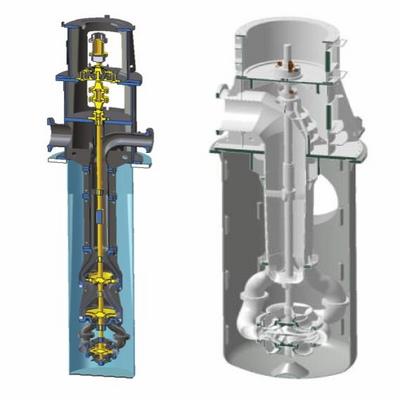
Hyundai Heavy Industries VWDB Vertical Multi Stage Pump

Hyundai Heavy Industries VK / VA Vertical Single Stage Pump