HAPAG - LLOYD AG - Experts & Thought Leaders











Latest HAPAG - LLOYD AG news & announcements

ABS hosted the second edition of the Middle East Women in Maritime Summit at the Address Dubai Mall, gathering more than 150 industry professionals to celebrate the expanding role of women in the region’s maritime sector. Themed “Advancing Women in Maritime – Challenges and Opportunities,” the summit showcased stories of leadership and mentorship across the Middle East’s fast-growing maritime ecosystem. Keynote address Guests of honour included Her Excellency Engineer Hessa Al Malek, Advisor to the UAE Minister for Maritime Transport Affairs and outgoing President of the Arab Women in Maritime Association (AWIMA), and Engineer Khalid Alhammad, President of Bahri Ship Management. In her keynote address, H.E. Eng. Hessa Al Malek reflected on her tenure leading AWIMA and announced the appointment of Noura Alqathami of Saudi Arabia’s Transport General Authority as the association’s new president. Next generation of maritime pioneers “The success of women in maritime is not a women’s issue, it is an industry success story,” said H.E. Eng. Hessa Al Malek, adding “When we include more perspectives, we strengthen safety, innovation, and competitiveness.” “This year, our commitment has been exemplified by training 25 female cadets in partnership with Sharjah Maritime Academy and under the Saudi Flag IMO NextWave Seafarers program. These talented women are now part of our fleet, setting a new standard for the region and inspiring the next generation of maritime pioneers. We also extend our sincere gratitude to ABS for their steadfast support and for hosting this important event. Together, we are shaping a more collaborative, innovative, and resilient future for maritime,” said Eng. Khalid Alhammad. Event’s panel discussion Moderated by Jessica Mahaffey, ABS Senior Vice President and Chief Marketing Officer, the event’s panel discussion featured: Eng. Mashael Al Marzooqi, Vice President of Asset Management, ADNOC Logistics & Services Alia Al Janahi, Vice President, HSE, DP World Anan Abdullatif, Senior Manager, Commercial Operations, Asyad Shipping Natalie Sallaum, Chief Relationship Officer, Sallaum Lines Nicolai Friis, CEO, Adani Ports & Harbour Services International How collaboration fuels innovation The panel explored how collaboration fuels innovation, how companies can establish structured career pathways for women, and how mentorship can help more women succeed in maritime careers. The program also featured a fireside chat, “Leading the Way: Stories of Female Trailblazers in Maritime,” with Dr. Carolin Stumm, Area Managing Director at Hapag-Lloyd Middle East; Maria Kristina Javellana, General Manager – Head of Fleet at Hafnia Chemical Tankers, and Bahri cadets Dr. Mariam Alshaikh and Anoud Al-Blooshi, who shared first-hand experiences from life at sea and the importance of mentorship in shaping the next generation. Collaboration across industry “Each story we heard today — whether from seasoned pioneers or new cadets — shows that talent, not gender, defines excellence,” said Dheeraj Sharma, ABS Vice President, Marine & Offshore Regional Business Development (MEA). He adds, “This summit continues to grow because collaboration across our industry is making real change possible.”
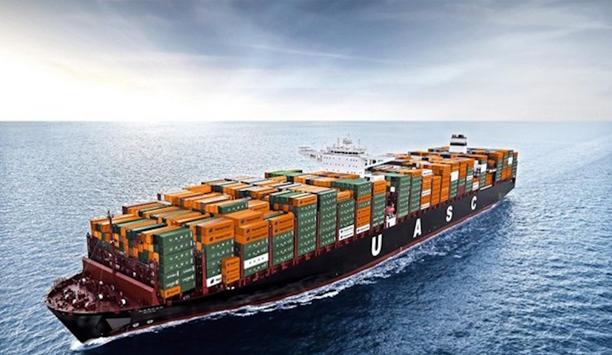
MacGregor has secured an order from Hapag-Lloyd for its fully automatic twistlocks (ACV-1) “Hippo”, designed to improve cargo handling efficiency. Twistlocks are used to secure containers on ships, ensuring stability and safety during transport. This order will support Hapag-Lloyd’s A19-series ships, which include six 19,900 TEU vessels: Al Nefud, Al Dahna Express, Barzan, Al Muraykh, Al Zubara, and Tihama. The order was booked in the first quarter 2025. The first set of Hippos is planned to be delivered beginning the second quarter of 2025 and to be completed by the fourth quarter of 2026. Collaboration between MacGregor and Hapag-Lloyd This order highlights the collaboration between MacGregor and Hapag-Lloyd to increase cargo capacity This order highlights the collaboration between MacGregor and Hapag-Lloyd to increase cargo capacity, enhance operational efficiency, and reduce environmental impact. With this action, Hapag-Lloyd aims to improve cargo operations while reinforcing its leadership in the competitive container shipping market. "At Hapag-Lloyd, we continuously strive for innovative solutions that further advance efficiency in our operations. MacGregor’s Hippo fully automatic twistlocks align perfectly with our commitment to operational excellence," says Dr.-Ing. Christoph Thiem, Director Fleet Innovation & Technology, Hapag-Lloyd. "We look forward to seeing these Hippos in action and further strengthening our long-term partnership with MacGregor." Strengthening the partnership "We are proud to further strengthen our partnership with Hapag-Lloyd by delivering innovative and reliable fully automatic twistlocks that meet their high operational standards," says Magnus Sjöberg, Senior Vice President, Equipment and Solutions Division, MacGregor. "This order underscores our commitment to supporting Hapag-Lloyd’s success and leadership in the industry." Commitment to innovation and collaboration MacGregor continues to develop advanced cargo securing solutions for the container shipping segment With a strong commitment to innovation and collaboration, MacGregor continues to develop advanced cargo securing solutions for the container shipping segment, tailored to the evolving needs of the industry. This includes lashing equipment, which consists of rods, turnbuckles, and other securing devices that keep containers safely in place during transport. This latest order further solidifies MacGregor’s position as a trusted partner in delivering high-quality, efficient, and safe container handling solutions for global shipping companies.

The English Commercial Court (the “Court”) has provided helpful clarity on the extent of damages available to a claimant shipowner for the late redelivery of a vessel under a time charter where there is evidence that the owner of the vessel would have been unable to enter into a subsequent charter for the vessel. In such circumstances, only nominal damages will be recoverable, as no actual loss has been suffered. Background Hapag-Lloyd AG (the “Charterers”) entered into two materially identical time charters (the “Charters”) in respect of the MV ‘Skyros’ and the MV ‘Agios Minas’ (the “Vessels”) with Skyros Maritime Corporation and Agios Minas Shipping Company (the “Owners”). By the terms of the Charters, the Vessels were required to be redelivered on 30 May 2021 (in respect of the MV ‘Skyros’) and 31 May 2021 (in respect of the MV ‘Agios Minas’); Prior to the redelivery dates, the Owners entered into two MOAs for the sale of the Vessels to MSC Shipping SA and Maersk A/S, respectively. Under these MOAs, the Owners were precluded from entering into subsequent charters following the expiry of the Charters; Both vessels were subsequently redelivered late by the Charterers, with the MV ‘Skyros’ being about two days late, and the MV ‘Agios Minas’ being about seven days late. At this time, the market rate which would have been offered for the Vessels was considerably higher than the rates in the Charters; As per the Charters, the Charterers continued to pay hire during the period of delay. However, they remained in breach of their obligations under the Charters to re-deliver the Vessels on time. As such, the Owners argued that they were deprived of a more profitable charter opportunity and sought substantial damages, seeking the difference between the rate of charter hire actually paid and the higher market rate at the end of the charter period; and Following two arbitral decisions (both of which contained the same reasons), the Owners were deemed entitled to recover substantial damages, compensation, remuneration or other monetary relief. The Charterers subsequently appealed in Court. Key issues Owners were entitled to claim the difference between the charter rate and the market rate The key issue to be considered by the Court was whether, as a matter of legal principle, the Owners were entitled to claim the difference between the charter rate and the market rate, notwithstanding the fact that they would not have been better off, in monetary terms, if there had been no breach (due to their inability to enter into subsequent charters under the MOAs). The Owners presented three key arguments, based on the principles of quantum meruit, user damages and negotiated damages, all of which were accepted by the arbitrators in their decision. A further set of arguments were also put forth in favour of the doctrine of res inter alios acta, as canvassed in Transfield Shipping Inc v Mercator Shipping Inc (2008) UKHL 48 (“The Achilleas”), which the Owners used to suggest that the MOAs, and consequently the restriction preventing the entry into further fixtures, should be disregarded as irrelevant in the assessment of damages. Decision The Court allowed the Charterers’ appeal, and in doing so, found as follows: Quantum meruit The quantum meruit argument was swiftly rejected on the basis that this principle is one of restitution/unjust enrichment, which can only apply where services are rendered without any agreement as to their renumeration. In this case, the claim was for breach of the redelivery obligations; the hire was earned and paid at the charter rate. Therefore, the agreement for all the services rendered was properly abided by and the Charterers did not receive a service that was outside of the contemplation of the Charters, hence making quantum meruit inapplicable. User damages The Court displayed similar dissatisfaction with the user damages argument The Court displayed similar dissatisfaction for the user damages argument. This principle allows for parties to claim more than nominal damages where their property has been wrongfully used. It was held that whilst the failure to deliver the Vessels on time was wrongful, this did not constitute improper use of property. Further, the Owners had not been deprived of possession of the Vessels, even if the Charterers also had simultaneous use of the Vessels in the sense of being able to issue voyage instructions. It was stated that the applicability of user damages to contract is highly limited. Negotiating damages The third line of arguments from the owners, i.e., negotiating damages, was also deemed inappropriate. Negotiating damages are generally only available where a claimant has been deprived of the economic value of a right which has been breached (for example, the breach of an intellectual property agreement would deprive the claimant of the economic value of a right). The economic value of the right is treated as a valuable asset. The Court agreed with the proposition put forth by leading commentaries that the obligation to make timely redelivery cannot be said to create or protect a valuable asset. In other words, timely redelivery did not provide the Owners with a right of any economic value. Remoteness and the principle of res inter alios acta Owners had made a further and separate view during the arbitration process that the MOAs with the buyers The Owners had made a further and separate argument during the arbitration process that the MOAs with the buyers were res inter alios acta, i.e., the MOAs were too remote to be taken into account in determining the claim for damages. The core disagreement between the parties turned on the issue of whether the doctrine of remoteness can operate to increase, rather than reduce, damages, with the Charterers arguing that remoteness cannot expand recovery to allow an innocent party to recover damages for losses it has not suffered. Owners’ interpretation of the judgement The Owners had first relied on the judgement in The Achilleas, a case in which an owner was held not to be entitled to claim an increase in damages by relying on a subsequent fixture. The Court disagreed with the Owners’ interpretation of the judgement and deemed it to be “wholly unrealistic”. Further, the Court held that The Achilleas had been decided on an orthodox application of the principles of remoteness to prevent an award of damages for loss that was not foreseeable. In doing so, the court in The Achilleas had abided by the usual rules of the compensatory principle, through which subsequent contracts not contemplated by the parties cannot be considered in the calculation of damages. It was deemed inappropriate to suggest that the effects of this analysis would be to allow for recovery of damages by a claimant who has suffered no loss at all. MOAs market opportunities The MOAs could not be ignored for being too remote or unrelated to the case at hand It was ultimately held that the principle of res inter alios acta had little to do with the present case. The MOAs could not be ignored for being too remote or unrelated to the case at hand, as their provisions directly resulted in there being no actual loss suffered. The Court concluded by providing support for the views expressed in various textbooks; where owners have not lost the opportunity to take advantage of the market rate during the period of overrun, there is no scope for substantial compensation of this kind to arise. Importantly, the Court found that because it was the MOAs that prevented the Owners from entering the market, they had suffered no recoverable loss from missed market opportunities. Owners were therefore not entitled to recover substantial damages because of the late redelivery and were only entitled to nominal damages. Key takeaways As a starting point, shipowners should be aware that the default measure of damages is that damages arising from late redelivery are typically calculated as the difference between the charter rate paid by the charterers during the overrun period and the market rate; Shipowners should be cognisant of the possibility that the default measure of damages may only be potentially departed from in the event where Owners are able to demonstrate that there were, in fact, actual losses arising from circumstances where an opportunity to fix the vessel in question at the market rate has been lost; The legal principle of res inter alios acta, which operates to make extraneous contracts irrelevant to the calculation of damages awarded, will only apply in strict circumstances; it is highly unlikely that it will intervene to increase damages awarded by disregarding the actual loss suffered, which remains of paramount importance in assessing quantum; Remoteness operates primarily to reduce damages available, and a reversal of this principle to increase damages instead is likely to be met with judicial scepticism. The principle of remoteness operates primarily to reduce the available damages. It is highly unlikely that the legal principle of res inter alios acta, as per The Achilleas, will apply to increase damages awarded by disregarding the actual loss suffered. An attempt to rely on remoteness in this way is likely to be met with judicial scepticism; Shipowners should be aware that where charterers redeliver late, their ability to claim substantial damages could be limited by the existence of any contractual obligations that prevent entry into further fixtures; and On the other hand, this decision leans in favour of charterers and serves as a useful precedent wherein a shipowners’ claim for damages could be limited if such claim by shipowners is predicated on speculative losses and/or if there are other causative reasons (such as pre-existing contractual obligations) apart from the charterers’ breach preventing the subsequent employment of the vessel.

Fleet planning as a strategic asset
Download