AkzoNobel - Experts & Thought Leaders




Latest AkzoNobel news & announcements

A strategic agreement has been signed between AkzoNobel’s International® marine coatings, and Winning Shipping in China which will help accelerate the maritime industry’s transition to lower carbon operations.The two companies have been partners since 2016 and the expanded collaboration will involve AkzoNobel supplying a significant volume of International® coatings for a number of drydocking projects in 2026. Focused on six vessels, it will enhance the fleet’s operational efficiency and environmental performance. Agreement details At the core of the latest agreement is Intersleek® 1100SR by International®– the world’s first biocide-free fouling control coating to feature patented “slime release” technology. It delivers outstanding fouling control and significantly reduces hull resistance, helping fleets to save fuel and cut greenhouse gas emissions.“The outstanding performance of International® has been fully validated in our existing fleet, delivering significant fuel savings and enhancing our market competitiveness,” says Yu Shan, General Manager of Qingdao Winning International Ship Management Co., Ltd.“This is why we’ve chosen to extend and deepen our partnership. Through this drydocking cooperation, we look forward to more vessels benefiting from these advanced more sustainable technologies, jointly contributing to a greener future for the industry.” Optimising energy efficiency Following the International Maritime Organization’s introduction of emission reduction regulations, shipping companies are addressing their carbon footprint and actively adopting measures to optimise energy efficiency. China is also speeding up the implementation of its “Dual Carbon” strategy in the maritime sector, promoting the widespread adoption of more sustainable technologies. Supporting the development “We’re honored to continue and deepen our strategic cooperation,” adds Rob Leslie, Commercial Director of AkzoNobel Marine and Protective Coatings in Greater China. “Winning Shipping’s unwavering pursuit of more efficient operations aligns perfectly with our philosophy of helping customers through sustainable innovation. We look forward to providing solid support for the long-term operational efficiency and sustainable development goals of its fleet.” Antifouling coating In addition to Intersleek 1100SR, International® will also supply the project with its Intercept® 8500 LPP antifouling coating, which combines linear polishing with an optimised biocide package. This is the highest performing antifouling product within the International® range, specifically designed for deep sea vessels. The agreement was signed during the recent Marintec China 2025 event last week, one of the foremost maritime industry exhibitions.
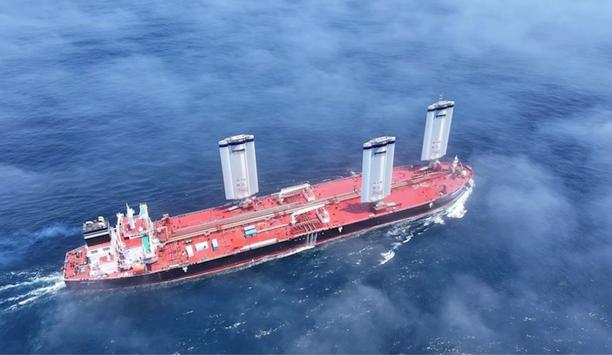
The world’s first Aframax oil tanker to use wind-assisted propulsion has been built in China, with AkzoNobel making an important contribution to the landmark project by supplying 350,000 litres of International® marine coatings. The Brands Hatch is regarded as a major innovation in sustainable shipping technology and the entire vessel – including the underwater hull, deck and cargo oil tanks – features the company’s high-performance products. They’ll provide comprehensive protection and critical technical assurance for the tanker’s eco-efficient operation. Intelligent fibreglass sails Built by Shanghai Waigaoqiao Shipbuilding Co., Ltd., it has three intelligent fibreglass sails which are projected to reduce fuel consumption by around 12% a year and slash annual carbon emissions by 5,000 tons under normal operating conditions. “We’re very proud to have contributed to this landmark project,” says Rob Leslie, Commercial Director of Marine and Protective Coatings for AkzoNobel Greater China. “The successful application of our coatings not only validates the performance of our International® fouling control and anti-corrosive technologies, but also demonstrates the company’s commitment to enabling decarbonisation through sustainable innovation.” Linear polishing technology Advanced coating delivers consistent and effective performance for a clean, foul-free hull The products used included Intercept® 8500 LPP – one of the highest-performing fouling control technologies in the International® range – which was applied to the vessel’s underwater hull. This advanced coating delivers consistent and effective performance for a clean, foul-free hull. By combining linear polishing technology with an optimised biocide package, the coating contributes to significant fuel savings and reduced CO₂ emissions. Ultra-deep-sea drilling vessel Built for UK shipping company Union Maritime, the Brands Hatch is an Aframax ship, a type of oil tanker with a capacity between 80,000 and 120,000 deadweight tons. They’re primarily used for short to medium-haul crude oil transportation. It's the third milestone vessel built in China to be coated by AkzoNobel in recent years. The company also supplied more than 300,000 litres of International marine coatings for Dream – the country’s first domestically designed and built ultra deep-sea drilling vessel – while Intersmooth® fouling control technology was used on Adora Magic City, the first large cruise ship to be constructed in China.

International®, AkzoNobel's marine coatings brand, has published a new whitepaper on how data collaboration between fouling control coating experts and vessel operators can drive more informed decision-making, enhance vessel performance reliability and support sustainability goals for the fleet. The research includes a detailed case study of three Liquid Natural Gas (LNG) vessels tracked over a 60-month service period, all coated with Intersleek® 1100SR, an ultra-high performance fouling release coating based on biocide-free silicone technology. Results of the Intersleek 1100SR scheme Impressive results of the Intersleek 1100SR scheme over the 60-month period The whitepaper demonstrates, following a series of joint performance reviews, impressive results of the Intersleek 1100SR scheme over the 60-month period, and concludes that the vessels performed in compliance with agreed performance limits regarding energy efficiency and emissions expectations, including the Carbon Intensity Indicator (CII) rating. The application of Intersleek 1100SR on these vessels significantly contributed to maintaining a smooth and clean hull condition. Fleet of vessels and operations Underwater inspections further confirmed the exceptional performance of Intersleek 1100SR, with minimal biofouling observed across all vessels despite their exposure to challenging environments. The paper also explores how achieving consistency across a fleet of vessels and operations is complex and can yield different results despite similarities between vessel types and operational profiles. This requires high levels of communication, multiple methods of verification, and specialised expertise to support decision-making both before docking investments and while vessels are in-service. Carbon emissions and vessel efficiency Inaccurate data and insufficient transparency of data perpetuates a lack of trust between shipowners According to a report by the Global Maritime Forum, inaccurate data and insufficient transparency of data perpetuates a lack of trust between shipowners and those that supply data, such as charterers. This whitepaper highlights the necessity of companion datasets, like hull inspections to more accurately diagnose performance issues. At a time when increasing regulatory pressures to reduce fleet carbon emissions and improve vessel efficiency is paramount, the tailored and collaborative approach with vessel operators taken by International® contributed positively to long-term sustainability decisions and regulatory compliance. Hull and propeller inspections International® has developed a methodology aligned with ISO 19030 "Measurement of changes in hull and propeller performance" combining vessel performance metrics, Average Hull Roughness (AHR) measurements, underwater hull and propeller inspections, and operational data analysis which, the company says, allow for more accurate interpretation of performance trends and therefore more informed decisions for customers. International® is releasing the whitepaper, titled: ‘Optimising Vessel Performance for Decarbonisation Goals: Managing the Complexities of Hull Efficiency and Fouling Control with Data-Driven Decision Making’, whilst attending Sea Asia 2025 in Singapore, which takes place from 25-27 March. Performance of marine vessels International® has set a methodology aligned with ISO 19030, combining vessel performance metrics Dr Barry Kidd, Vessel Performance Manager at AkzoNobel, said: “This whitepaper emphasises the importance of collaboration with experts to enhance data transparency and confidence in inspection data, which is crucial for effective decision making.” “When it comes to analysing the performance of marine vessels, data is often variable, inconsistent, or incomplete. This makes it more difficult for ship operators to make informed decisions based on the best available information." Use of digital forecasting tool Barry Kidd added: "As the shipping industry faces increasing regulatory pressures to reduce carbon emissions, a tailored approach and partnership mentality to coating selection and fleet management is essential.” “Through our innovative coatings, hull performance team, data-driven insights and the use of our digital forecasting tool, we are uniquely positioned to be a reliable partner to shipowners, assisting them in making informed decisions in regulatory compliance and efficiency.”
Insights & Opinions from thought leaders at AkzoNobel

Marine industry pioneers gathered at Nor-Shipping in June, with a focus on the key challenges and opportunities driving the transition to a lower-carbon future. With regulations such as the Carbon Intensity Indicator (CII), FuelEU Maritime, the EU Emissions Trading System (EU ETS) and the upcoming International Maritime Organisation (IMO) carbon levy, fouling control systems continue to play a vital role in the shipping industry as the regulatory bodies chart a course towards net-zero emissions by 2050. Fouling control systems Vessel operators will have to navigate a new challenge on the horizon after a global deal agreement These fouling control systems help reduce fuel consumption and CO₂ emissions, enabling vessels to maintain favourable efficiency ratings and avoid penalties. Vessel operators will have to navigate a new challenge on the horizon after a global deal agreement was passed at the UN's IMO MEPC 83 meeting in April, following almost a decade of negotiations. Carbon-intensive fuels From 2028, owners of large vessels will have to reduce their carbon-intensive fuels or face fines of up to $380 per tonne of carbon dioxide emissions from burning fuel. Shipping has become the first industry in the world with internationally mandated targets to reduce emissions and according to maritime consultancy UMAS, the historic agreement could result in an eight percent reduction in emissions by 2030. Fouling control coatings Vessel operators need to consult coating companies with proven expertise in fouling control coatings The deal is a historic moment for the industry and will further drive home the importance of cutting fuel consumption. Marine coatings and technologies, in isolation, are not enough for shipowners to comply with the regulations. Vessel operators need to consult coating companies with proven expertise in high-performing fouling control coatings and a strong track record of in-service performance, to support data-driven and well-informed investment decisions. Underwater hull schemes We’ve supported customers with their CII ratings and have helped them offset the EU ETS surcharge, which came into effect last year. In 2024, shipowners were responsible for 40% of their emissions costs, increasing to 70% this year and set to reach 100% from 2026. Last year, a record number of customers engaged with us to identify the most suitable underwater hull schemes to aid CII compliance, highlighting the growing demand for tailored fouling control solutions from International® marine coatings. Our solutions not only ensure regulatory compliance but also enhance vessel performance and sustainability. Vessel fuel consumption and CO2 emissions Application of Intercept® 8500 LPP on a trading VLCC vessel led to a removal of carbon emissions For example, the application of Intercept® 8500 LPP on a globally trading VLCC vessel led to a reduction of carbon emissions of approximately 8,500 tonnes over the five years in service. As a result, this vessel maintained a CII ‘A’ grade rating throughout the study, which resulted in the customer achieving both performance and decarbonisation targets. Furthermore, we have seen increased demand for Intertrac® Vision, our big data prediction tool that enables ship owners and operators to assess the impact of fouling control coatings on vessel fuel consumption and CO2 emissions while in transit. This digital tool allows our experts to collaborate closely with vessel operators to assess the return on investment of various coating schemes, tailored to vessel type and operating conditions. It simplifies the coatings selection process and delivers data-driven insights for more informed decision-making. Hull performance expertise and data-driven insights The carbon levy passed at the IMO meeting in April is scheduled for implementation in 2028. With steeper penalties, it is expected to impact global shipping routes if vessel operators do not reduce their reliance on carbon-intensive fuels. However, there are steps that shipowners can take to invest in regulation compliances and minimise penalties. With nearly 150 years of experience serving the marine industry, offering high-performance coatings, hull performance expertise and data-driven insights, we are uniquely positioned to help shipowners achieve regulatory compliance while maintaining operational efficiency.

Given the diverse stakeholders in the maritime industry, it is understandable that collaboration is a challenge. However, the interconnected ecosystem of maritime makes collaboration essential. From ship owners and operators to port authorities, from shippers to shipbuilders, from classification societies to marine service providers and others, there are vast opportunities to work together and cooperate. To gain insight, we asked our Expert Panel Roundtable: How can the maritime industry increase collaboration, and what are the benefits?

Fleet planning as a strategic asset
Download