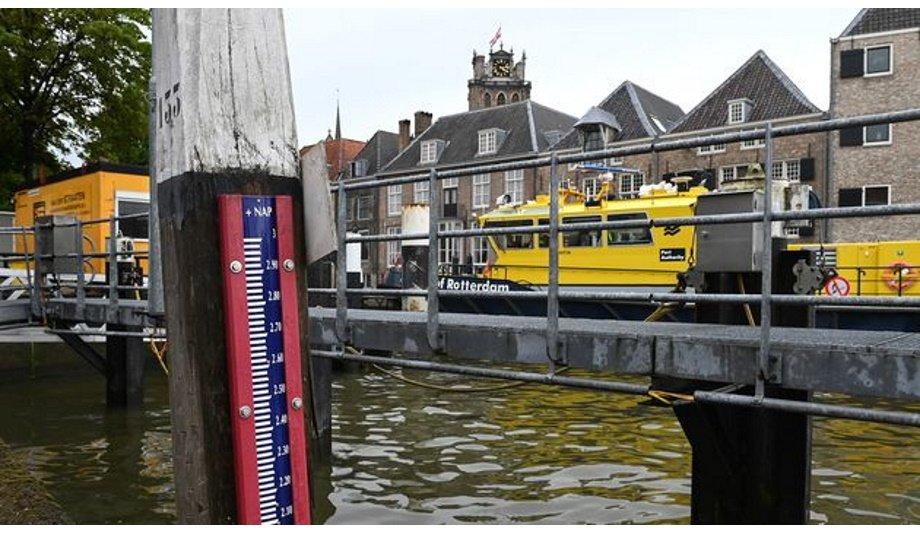

The Normal Amsterdam Water Level (NAP) has been used as the basis for Vessel Traffic Services in the port of Rotterdam for approximately 200 years now. On 1 July, 2022, the Port of Rotterdam Authority will abandon the Normal Amsterdam Water Level (NAP) in shipping communication.
Effective from July 1, 2022, the Port of Rotterdam Authority will use the Approximate Lowest Astronomical Tide (ALAT) as a reference for water depths and water levels in the admission policy. Internationally, this reference is common practice in shipping.
The adjustment is in line with the Port Authority’s aim to come to a high degree of international standardisation"
“The adjustment is in line with the Port Authority’s aim to come to a high degree of international standardisation, as this is a major condition for digitising Vessel Traffic Services,” said René de Vries, (State) Harbour Master of Rotterdam at the Port of Rotterdam Authority.
More efficiency and safety
ALAT is the lowest tide level forecast under astronomic conditions. The new reference came about in collaboration with the Directorate-General for Public Works and Water Management (Rijkswaterstaat) and the Hydrographic Office.
The port joins the users of this international language for water depths and water levels, with more efficiency and safety, as a result. For the time being, the water depths and levels will be indicated in both - Approximate Lowest Astronomical Tide (ALAT) and Normal Amsterdam Water Level (NAP), in the various documents issued by the Port of Rotterdam Authority.
Port Call Optimisation
Port Call Optimisation is the international cooperation between the Port Authority, shipping companies and other ports, in order to make the port call process more efficient. Meanwhile, the first port information has become standardised according to international criteria.
This information concerns berth information, the exact determination of maximum draught for every berth position on the basis of real-time information and automatic calculation of tidal windows.