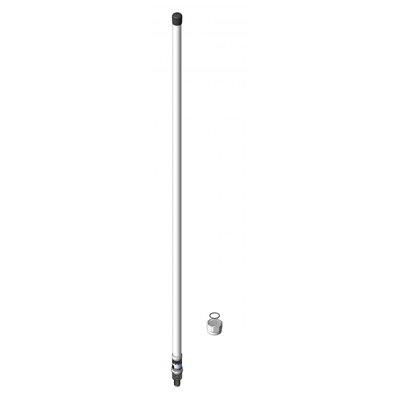
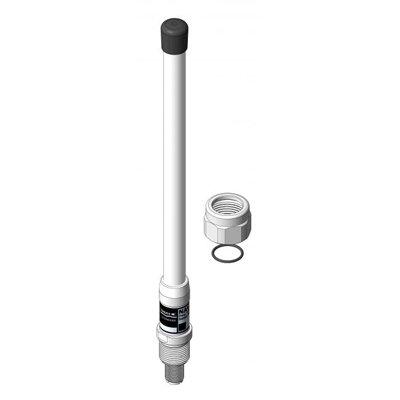
Maersk has in collaboration with the National Meteorological Service of Germany, Deutscher Wetterdienst (DWD), installed automated weather stations on 50 of its vessels. While crossing the largest oceans, the vessels transmit live data helping forecast weather and climate.
In the largest project of its kind, A.P. Moller - Maersk has installed automated weather stations (AWS) on 50 of its vessels creating a pulsating oceanic web of weather and climate observations. All collected data is transmitted live to the National Meteorological Service of Germany, DWD, supporting their weather forecasts and climate science.
Maersk’s ESG strategy
Maersk and DWD have collaborated on the project since 2019 with the German service providing the 50 systems being installed on the vessels.
As a part of Maersk’s ESG strategy, the company has committed itself to contribute to climate science. Maersk vessels have also for years been operating within the global Voluntary Observing Ship (VOS) Scheme under the Global Ocean Observing System (GOOS) providing regular weather observations, but it has been done manually resulting in a slow process of data sharing.
standardized data
By implementing AWS, the vessels can deliver precise high-quality and standardized data in real-time giving DWD useful insights about the current meteorological situation at sea. The data provided is shared globally with all members of the World Meteorological Organization (WMO).
Weather and sea state observations have been gathered and shared on a systematic basis for over 150 years. They provide essential data on meteorological conditions at sea for weather forecasts and, over long-time scales, help climate scientists understand climate change. Ship observations, alongside other ocean, land-based, and satellite observations, are used in global and regional climate analyses, and are combined with atmospheric-ocean climate models, that depict the evolution of our environment. These observations also help to ensure safety at sea by allowing better forecasting of storms and other extreme ocean-related events for seafarers and nations.