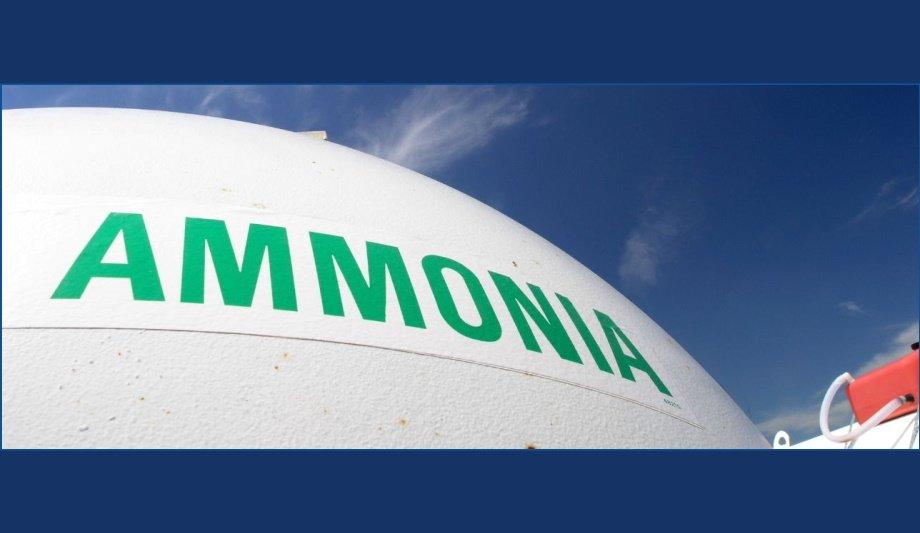

To support the pursuit of IMO’s decarbonisation targets, DNV has joined forces with 22 companies by entering into a Memorandum of Understanding (MoU) on a joint cross-industry study of common issues concerning ammonia as an alternative marine fuel.
Partners include representatives from the fields of energy, mining, power utility, chemical, terminal, shipping, shipbuilding, manufacture, bunkering, and classification.
Transitioning to a low carbon future
Transitioning to a low carbon future requires collaboration across shipping’s entire value chain"
Stian Erik Sollied, the Country Manager – Japan at DNV Maritime, stated “Transitioning to a low carbon future requires collaboration across shipping’s entire value chain, combined with an openness to explore all alternatives to fuels, which emit harmful emissions.”
He adds, “When it comes to the use of ammonia as a marine fuel, big questions concerning safety, availability and a regulatory framework remain unanswered – despite the high level of industry excitement this fuel is currently generating. DNV is, therefore, proud to lend its expertise to the work of this consortium in seeking to answer some of these questions and, in doing so, help the industry navigate its way from uncertainty to confidence.”
Founding signatories of the ‘joint study’ framework
The 23 founding signatories of this ‘joint study’ framework include ABS, Anglo American, Class NK, DNV, Equinor, FMG, Genco, JERA, K-Line, MAN Energy Solutions, Mitsui E&S Machinery, Nihon Shipyard, NS United, Pavilion Energy, Total Energies, Trafigura, UBE Industries, Uyeno Transtech, Uniper SE, Vale, Vopak Terminal Singapore, ITOCHU ENEX and ITOCHU.
In line with the agreed procedure, common issues, including (1) Safety assessment of NH3 fuel ship under guideline, (2) Safety assessment of NH3 bunkering, (3) NH3 fuel specification, and (4) NET CO2 emission at NH3 production will be explored, as part of the joint study framework.
Moreover, the framework may ask some of NH3 producers, relevant international organisations and port authorities/regulators in potential bunkering countries to share their opinion, view, expertise, and experience.
IMO’s GHG strategy
The IMO’s GHG strategy sets targets to reduce CO2 emissions per transport work – as an average across international shipping – by at least 40% by 2030 (compared to 2008 levels); to reduce CO2 emissions by 50% by 2050; and to phase them out entirely during this century.
With an eye to achieving these goals, the early adoption of ammonia as a suitable zero emission, alternative marine fuel is an approach gaining increasing industry interest.