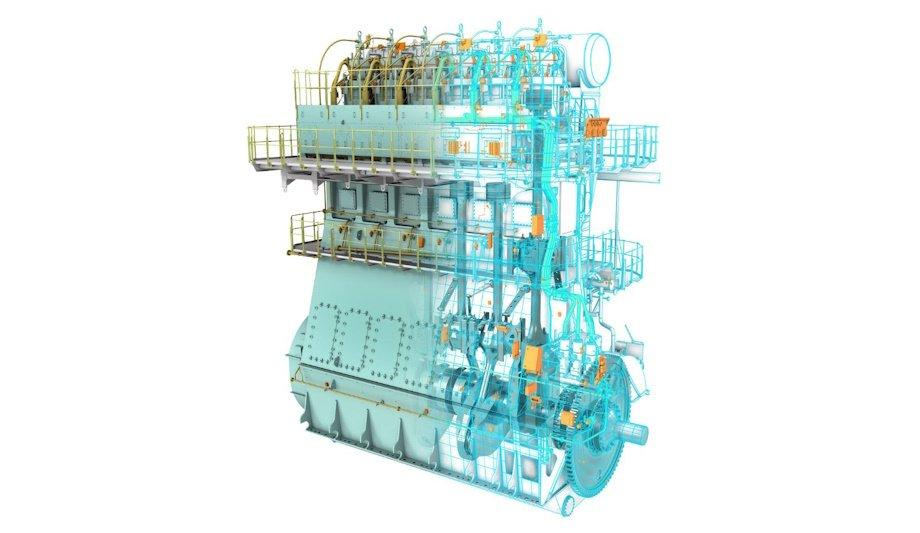

Swiss marine power company - WinGD has introduced an option for its X-DF-A ammonia-fuelled engines to be delivered capable of running on liquified petroleum gas (LPG).
The ‘pre-fit’ solution will be of particular interest to vessels under construction for the anticipated global trade in ammonia, which will also be capable of transporting LPG.
LPG’s primary component
The engine, designed and optimised for ammonia fuel, will offer reliable and efficient running on LPG
Named X-DF-P for the propane that is LPG’s primary component, the solution will be released to enable first engine deliveries in 2027, when operators are likely to be considering in detail their anticipated balance between the LPG and ammonia trades.
The engine, designed and optimised for ammonia fuel, will offer reliable and efficient running on LPG, with a minor modification preparing it to run on ammonia at a later date.
X-DF-A ammonia engine
WinGD Vice President R&D - Sebastian Hensel, said: "This development highlights our continuous innovation in support of smarter sustainable ship power solutions."
He adds, "Our X-DF-A ammonia engine is already enjoying wide uptake amongst bulk carriers and gas carriers; the X-DF-P offers a valuable intermediate step for gas carrier operators who are keen to participate in the emerging ammonia trade but are uncertain about the timing and impact on vessel engines and fuels."
Renewable energy production
The ammonia trade worldwide is expected to grow significantly thanks to the chemical’s properties as an efficient energy carrier, which make it a viable medium in which to transport hydrogen from distant renewable energy production sites to areas of demand across the globe. The X-DF-P package will also enable operators using ammonia fuel to decide to use LPG in the future.
WinGD’s X-DF-A engine has already received multiple orders from operators planning to participate in the trade through the construction of multi-gas carriers, very large gas carriers or dedicated very large ammonia carriers.
Material requirements
Its injection system can be adjusted for LPG with only minor modifications, while the material requirements of the two fuels mean that similar components can be used for each. Engine sizes under development are those typically used by trade-relevant vessels, including 52- and 62-bore.