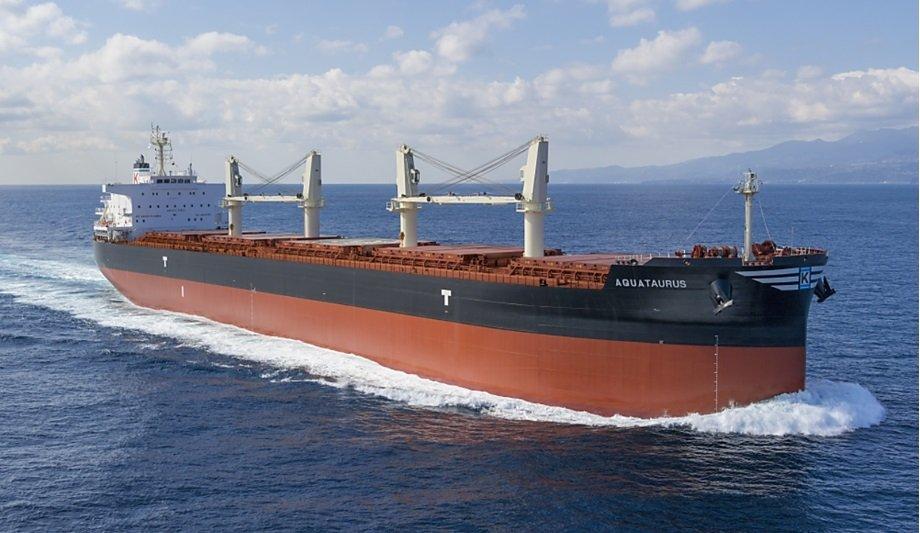

Carras (Hellas) S.A. is taking the next step in its sustainability journey by receiving the ABS Biofuel-1 notation for its Aquataurus Ultramax bulk carrier, the first vessel in the world to qualify.
The notation is assigned to vessels that use a biofuel blend of up to and including 30 percent biofuel in compliance with IMO and ABS requirements.
Biofuel usage
Biofuels are liquid hydrocarbon fuels with similar composition and properties to fuel oil, but they are produced from renewable sources such as crops, agricultural and forestry waste, animal waste, or vegetable and animal fats.
Therefore, they can offer greenhouse gas (GHG) emissions reductions from well to tank. Carras (Hellas) S.A. plans to use biofuels nominated up to B30, where 70 percent is fossil fuel and 30 percent is biomass coming from either hydrotreated vegetable oil (HVOs) or fatty acid methyl esters (FAME).
Sustainability strategy
Aquataurus is equipped with a Wartsilla main engine and three auxiliary Yanmar engines
Biofuels’ suitability with existing power generation systems makes them a drop-in solution without the need for equipment retrofits or vessel redesign. The Aquataurus is equipped with a Wartsilla main engine and three auxiliary Yanmar engines and will serve trade routes worldwide.
“We are very proud to support Carras (Hellas) S.A. in their initiative to use biofuels as part of their sustainability strategy,” said Stamatis Fradelos, ABS Vice President of Regulatory Affairs.
Drop-in biofuels
"Drop-in biofuels are a ‘here-now’ solution since they take advantage of existing fuel transport and bunkering infrastructure. ABS is well-positioned to use our deep industry knowledge of alternative fuels to support clients along their decarbonisation journey," added Fradelos.
“Carras (Hellas) S.A. is pleased to be working with ABS to support our common goal of reducing fleet emissions for the benefit of the environment,” said Captain Costas Liadis, President of Carras (Hellas) S.A.
Reducing fleet carbon intensity
"The use of biofuels allows shipowners to reduce their fleet carbon intensity without the cost of expensive retrofits or investments in newbuildings, and we are excited to be pioneers, together with ABS, of obtaining the assignment of the Biofuel-1 notation to Aquataurus."
ABS provides industry-pioneering guidance to assist owners as well as services and solutions regarding alternative fuels, including biofuels. An ABS-led consortium, including CE Delft and Arcsilea, published a 360-degree view of biofuels for the European Maritime Safety Agency (EMSA).